About this artwork
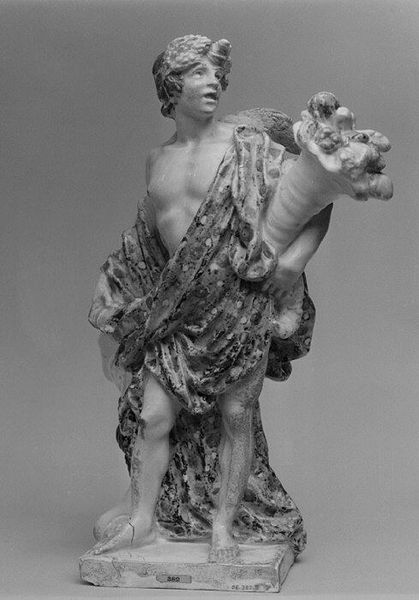
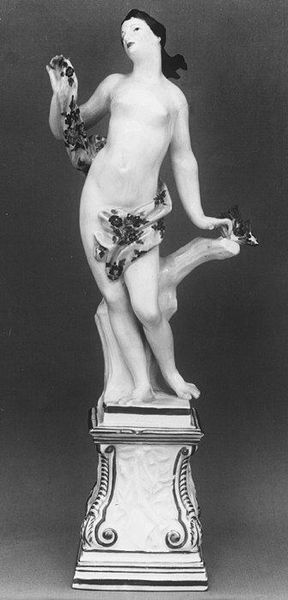
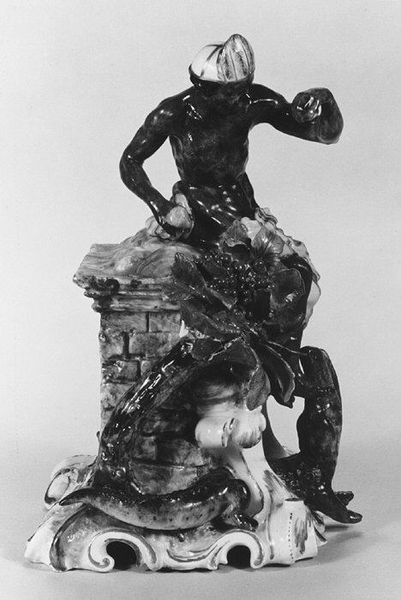
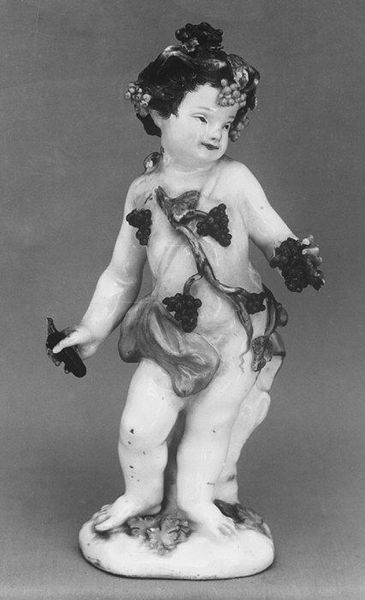
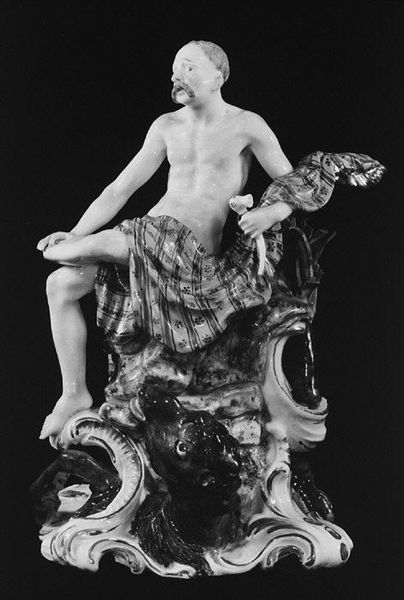
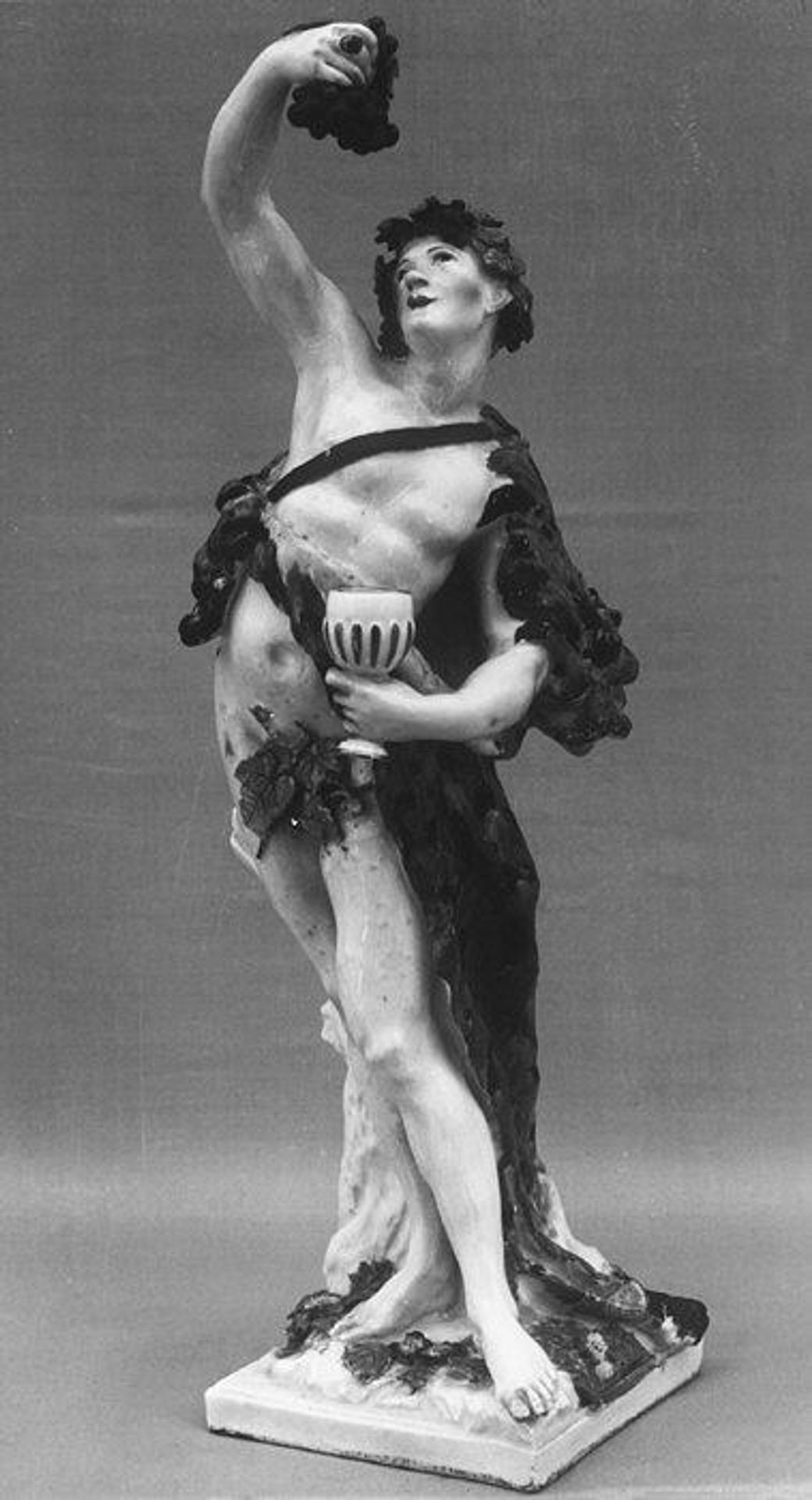
This is a porcelain sculpture of Bacchus, created by the Meissen Manufactory. The figure strikes a dynamic pose; one arm raises a cluster of grapes overhead, while the other steadies a goblet. Note how the sculpture captures a sense of forward movement. The artist carefully models the figure's drapery, contrasting this with the smooth, idealized form of Bacchus himself. This is a striking example of the rococo style. The sensuality and emotive qualities of the period are conveyed through the sculpture's curving lines. In his time, Bacchus, the god of wine and ecstasy, signified the destabilization of order. This reading resonates with the sculpture's overall asymmetry, which disrupts any sense of classical balance. Ultimately, this sculpture invites us to consider how material and form can be used to represent complex ideas about culture, divinity, and the human experience.
Bacchus 1755 - 1765


Artwork details
- Medium
- ceramic, porcelain, sculpture
- Dimensions
- Height: 14 1/8 in. (35.9 cm)
- Location
- Metropolitan Museum of Art, New York, NY
- Copyright
- Public Domain
Tags
sculpture
ceramic
porcelain
figuration
classicism
ancient-mediterranean
sculpture
black and white
monochrome
decorative-art
monochrome
Comments
No comments
About this artwork
This is a porcelain sculpture of Bacchus, created by the Meissen Manufactory. The figure strikes a dynamic pose; one arm raises a cluster of grapes overhead, while the other steadies a goblet. Note how the sculpture captures a sense of forward movement. The artist carefully models the figure's drapery, contrasting this with the smooth, idealized form of Bacchus himself. This is a striking example of the rococo style. The sensuality and emotive qualities of the period are conveyed through the sculpture's curving lines. In his time, Bacchus, the god of wine and ecstasy, signified the destabilization of order. This reading resonates with the sculpture's overall asymmetry, which disrupts any sense of classical balance. Ultimately, this sculpture invites us to consider how material and form can be used to represent complex ideas about culture, divinity, and the human experience.
Comments
No comments