About this artwork
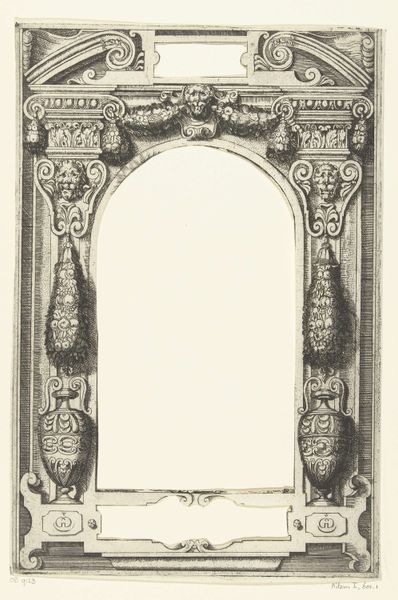
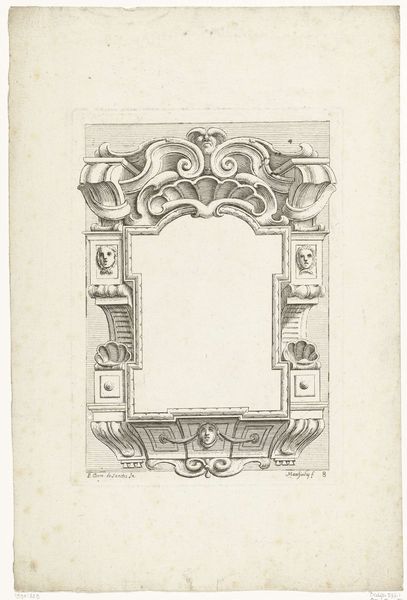
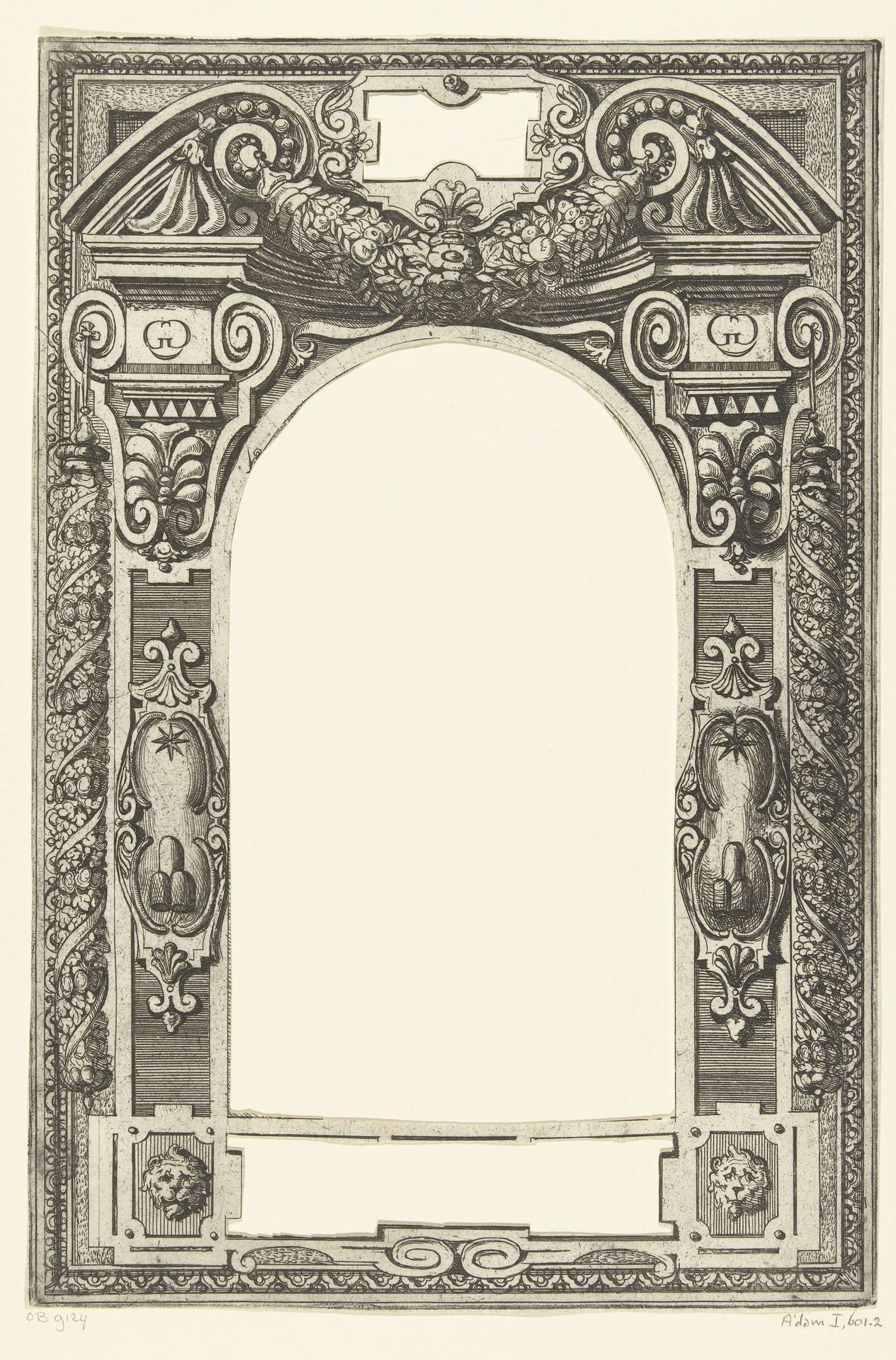
Curator: This print, currently housed here at the Rijksmuseum, is by Giovanni Guerra. Titled "Poort met een gebroken fronton op twee pilasters," it dates back to somewhere between 1550 and 1618. Guerra was quite taken with architecture, wouldn't you say? Editor: It certainly is captivating, isn't it? There's an imposing nature to it. The intricate details make me think of stages and the performance of power. Curator: An astute observation. These decorative engravings showcasing architectural elements gained prominence during the Renaissance. Consider its function: circulating ideas about design and asserting cultural values throughout Europe. It's a fragment, divorced from a building, that wields significant influence. Editor: Right. By presenting an ideal—though fractured, note the broken pediment—architectural form through print, its social impact multiplies. How did printmaking affect these designs' distribution to a wider audience, influencing not only architectural practices but also popular understanding of aesthetics? Curator: The academic style prevalent in Guerra’s piece ensured a degree of uniformity in taste among elites. Disseminating images like this standardized aesthetic preferences and showcased classical antiquity’s continuing cultural dominance, but with twists. The broken fronton itself implies a questioning of tradition. Editor: Absolutely. While honoring the classical past, this choice evokes a certain instability and hints at change. The door itself promises access but seems more like a frame for… what exactly? A promise that can't quite be fulfilled. I also note the lions; it really is a performance. Curator: You highlight a central point, there's no real entrance; it serves as a frame to showcase power and learning. Editor: Yes. A doorway that’s ultimately about barriers and hierarchies. Thank you, that brings the piece's significance into a clear light. Curator: Indeed, a valuable and quite telling print in Giovanni Guerra's portfolio. It showcases how art in print served the purpose of educating society, while embedding deeper ideas about power dynamics.
Poort met een gebroken fronton op twee pilasters c. 1550 - 1618

Giovanni Guerra
1544 - 1618Location
RijksmuseumArtwork details
- Medium
- drawing, print, engraving, architecture
- Dimensions
- height 297 mm, width 198 mm
- Location
- Rijksmuseum
- Copyright
- Rijks Museum: Open Domain
Tags
drawing
11_renaissance
geometric
academic-art
engraving
architecture
Comments
No comments
About this artwork
Curator: This print, currently housed here at the Rijksmuseum, is by Giovanni Guerra. Titled "Poort met een gebroken fronton op twee pilasters," it dates back to somewhere between 1550 and 1618. Guerra was quite taken with architecture, wouldn't you say? Editor: It certainly is captivating, isn't it? There's an imposing nature to it. The intricate details make me think of stages and the performance of power. Curator: An astute observation. These decorative engravings showcasing architectural elements gained prominence during the Renaissance. Consider its function: circulating ideas about design and asserting cultural values throughout Europe. It's a fragment, divorced from a building, that wields significant influence. Editor: Right. By presenting an ideal—though fractured, note the broken pediment—architectural form through print, its social impact multiplies. How did printmaking affect these designs' distribution to a wider audience, influencing not only architectural practices but also popular understanding of aesthetics? Curator: The academic style prevalent in Guerra’s piece ensured a degree of uniformity in taste among elites. Disseminating images like this standardized aesthetic preferences and showcased classical antiquity’s continuing cultural dominance, but with twists. The broken fronton itself implies a questioning of tradition. Editor: Absolutely. While honoring the classical past, this choice evokes a certain instability and hints at change. The door itself promises access but seems more like a frame for… what exactly? A promise that can't quite be fulfilled. I also note the lions; it really is a performance. Curator: You highlight a central point, there's no real entrance; it serves as a frame to showcase power and learning. Editor: Yes. A doorway that’s ultimately about barriers and hierarchies. Thank you, that brings the piece's significance into a clear light. Curator: Indeed, a valuable and quite telling print in Giovanni Guerra's portfolio. It showcases how art in print served the purpose of educating society, while embedding deeper ideas about power dynamics.
Comments
No comments