About this artwork
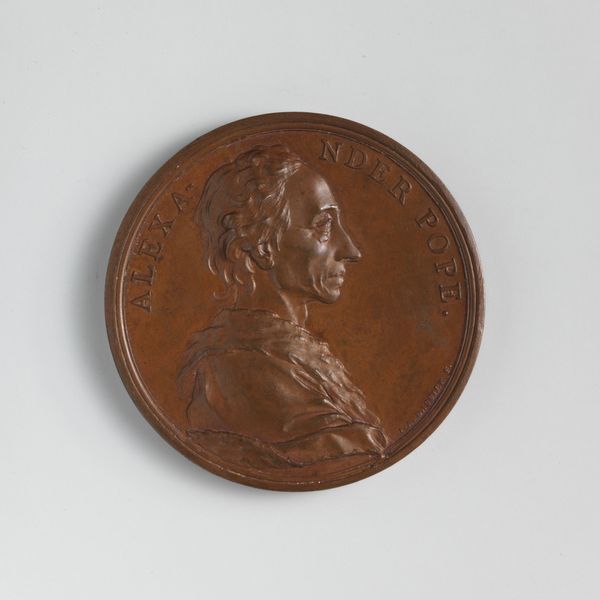
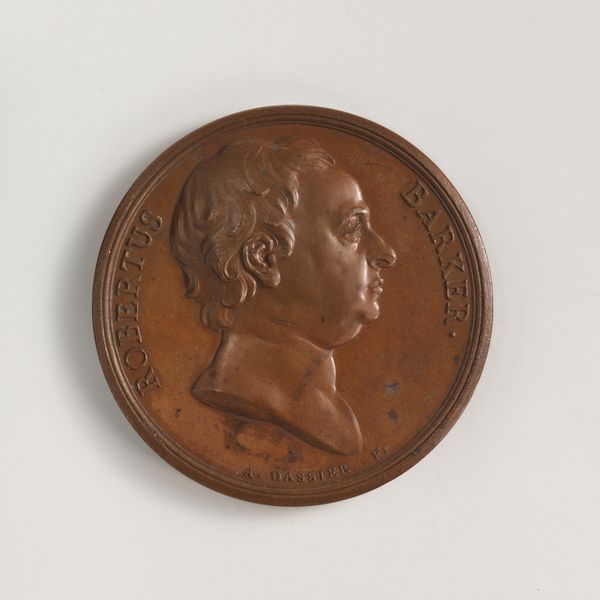
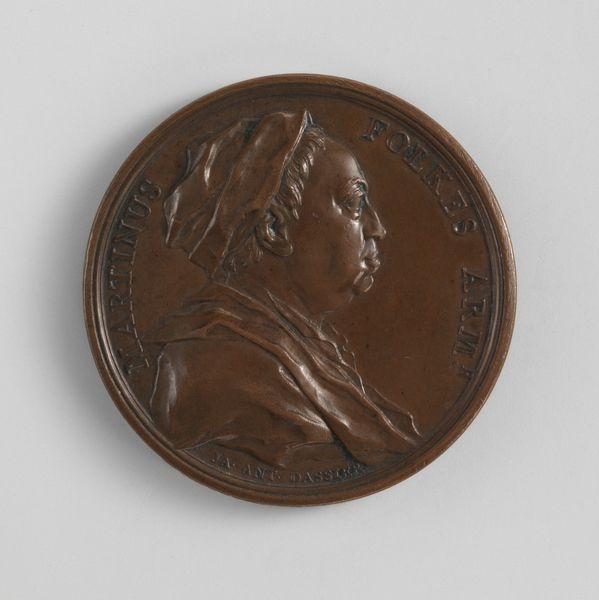
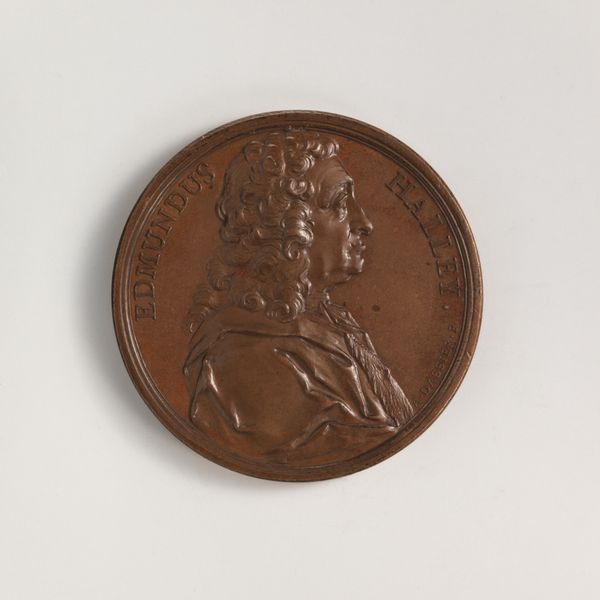
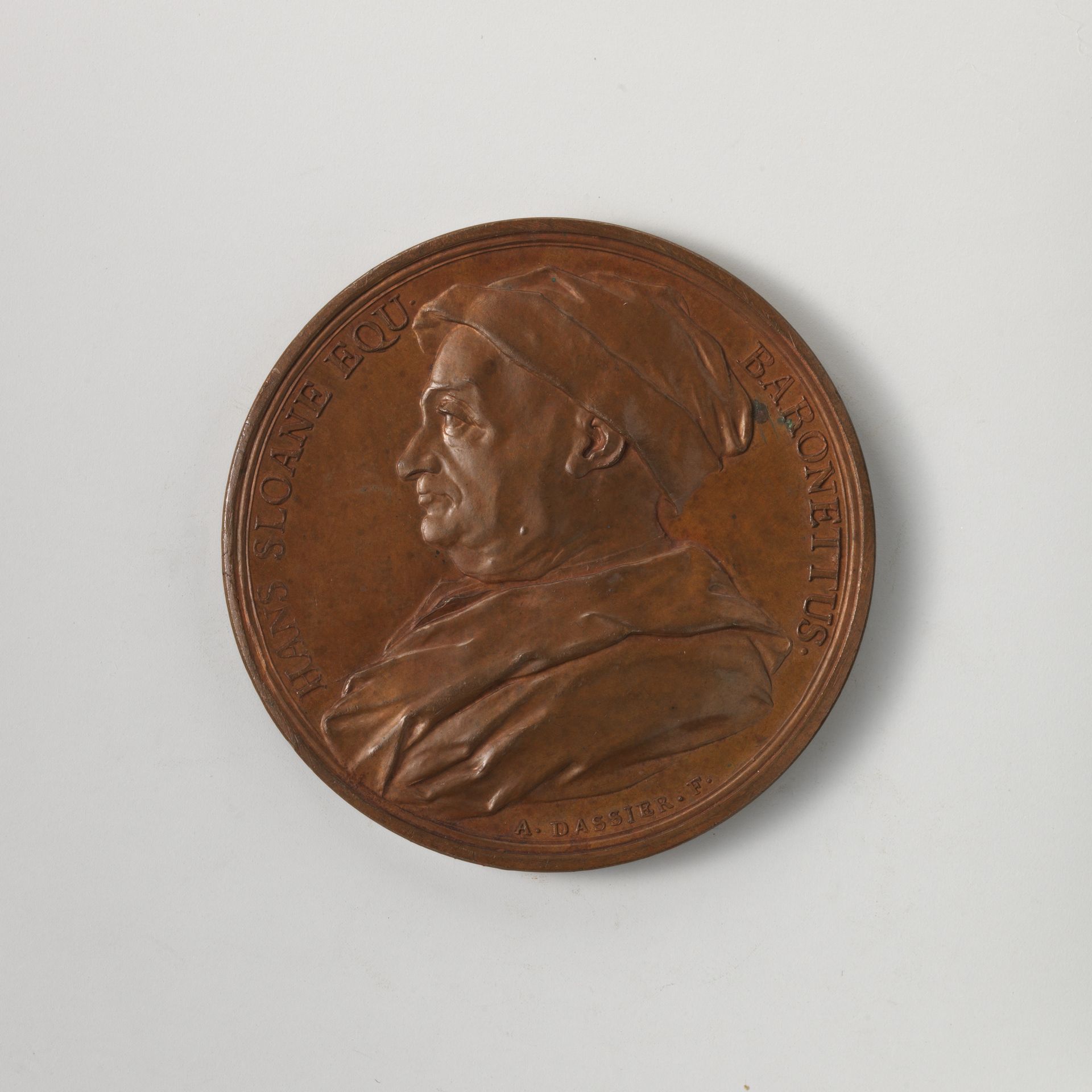
Editor: Here we have Jacques-Antoine Dassier’s bronze medal from 1744 depicting Sir Hans Sloane. It’s so small and unassuming, but there's a stillness about it. A real sense of quiet dignity, wouldn't you say? I'm curious, what details stand out to you in this work? Curator: That stillness resonates, doesn’t it? Medals like these were miniature monuments. Notice how Dassier captures Sloane’s profile – the determined set of his jaw, the weight of his cap. It’s not just a likeness; it's a statement. And have you considered the implications of bronze as a medium? It’s lasting, it’s solid, it has weight – quite literally! Editor: I guess I hadn't considered the choice of bronze that deeply! It really does lend a sense of permanence. What do you think Dassier wanted to communicate about Sloane? Curator: Ah, the big question! Well, Sloane was a physician, a naturalist, and, crucially, a collector. His collection became the foundation of the British Museum. This medal, I think, whispers of that legacy. The Baroque style itself lends grandeur. It says, "Here is a man of substance, a figure of history." Editor: It's like a pocket-sized monument to enlightenment. I see that historical weight you mentioned! Is that Baroque styling typical for Dassier's medals? Curator: It's certainly present, but I'd argue Dassier tempers it. He pulls back from excessive ornamentation, focusing on a clean, almost neoclassical line. It's a nod to Sloane's own rational, scientific spirit, perhaps. So, it’s both a celebration of the man and a carefully considered artistic choice. Don't you think that is pretty cool? Editor: I do. Now that you mention the almost neoclassical styling, I see it, too. It's amazing how a small thing can contain so much! Thank you for helping me unpack it! Curator: The pleasure's all mine! It's always in those small details, isn’t it? Now, let’s go ponder something else!
Sir Hans Sloane, 1st Baronet (1660–1753)
1744

Jacques-Antoine Dassier
1715 - 1759
The Metropolitan Museum of Art
Metropolitan Museum of Art, New York, NYArtwork details
- Medium
- metal, bronze, sculpture
- Dimensions
- Diameter: 54 mm
- Location
- Metropolitan Museum of Art, New York, NY
- Copyright
- Public Domain
Tags
Comments
Share your thoughts
About this artwork
Editor: Here we have Jacques-Antoine Dassier’s bronze medal from 1744 depicting Sir Hans Sloane. It’s so small and unassuming, but there's a stillness about it. A real sense of quiet dignity, wouldn't you say? I'm curious, what details stand out to you in this work? Curator: That stillness resonates, doesn’t it? Medals like these were miniature monuments. Notice how Dassier captures Sloane’s profile – the determined set of his jaw, the weight of his cap. It’s not just a likeness; it's a statement. And have you considered the implications of bronze as a medium? It’s lasting, it’s solid, it has weight – quite literally! Editor: I guess I hadn't considered the choice of bronze that deeply! It really does lend a sense of permanence. What do you think Dassier wanted to communicate about Sloane? Curator: Ah, the big question! Well, Sloane was a physician, a naturalist, and, crucially, a collector. His collection became the foundation of the British Museum. This medal, I think, whispers of that legacy. The Baroque style itself lends grandeur. It says, "Here is a man of substance, a figure of history." Editor: It's like a pocket-sized monument to enlightenment. I see that historical weight you mentioned! Is that Baroque styling typical for Dassier's medals? Curator: It's certainly present, but I'd argue Dassier tempers it. He pulls back from excessive ornamentation, focusing on a clean, almost neoclassical line. It's a nod to Sloane's own rational, scientific spirit, perhaps. So, it’s both a celebration of the man and a carefully considered artistic choice. Don't you think that is pretty cool? Editor: I do. Now that you mention the almost neoclassical styling, I see it, too. It's amazing how a small thing can contain so much! Thank you for helping me unpack it! Curator: The pleasure's all mine! It's always in those small details, isn’t it? Now, let’s go ponder something else!
Comments
Share your thoughts