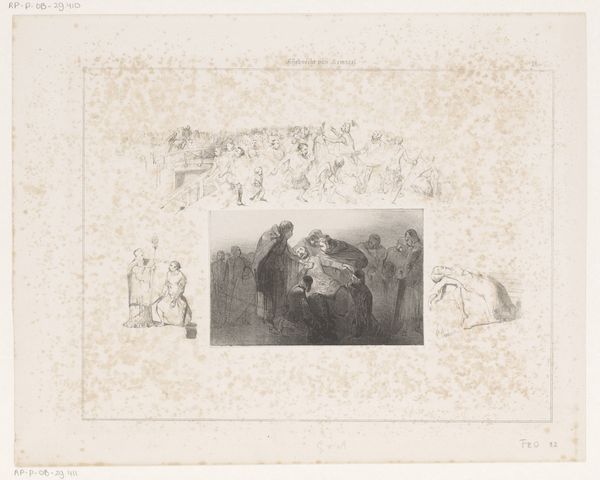
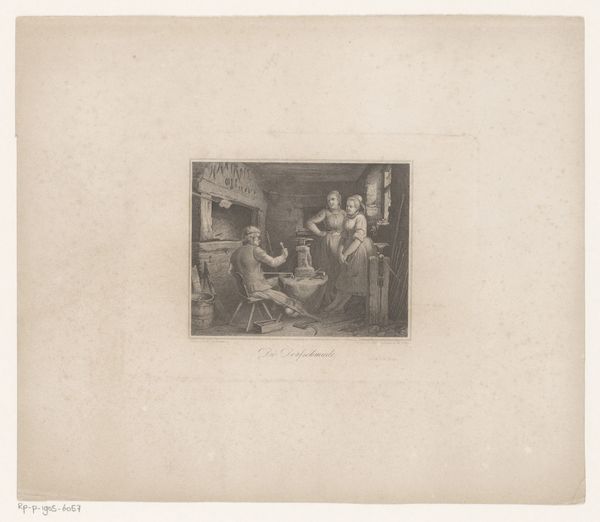
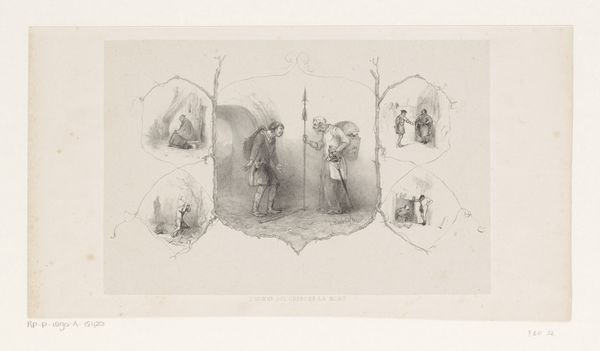
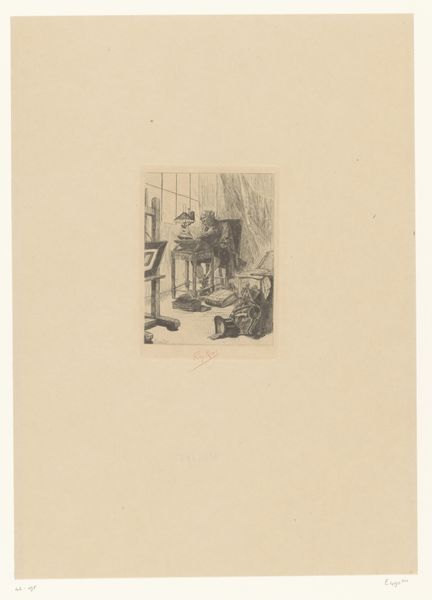
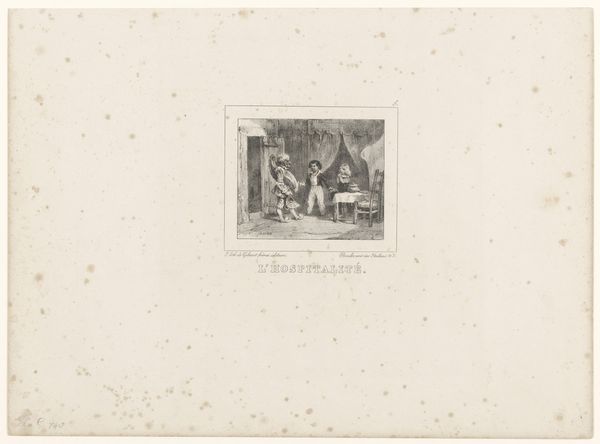
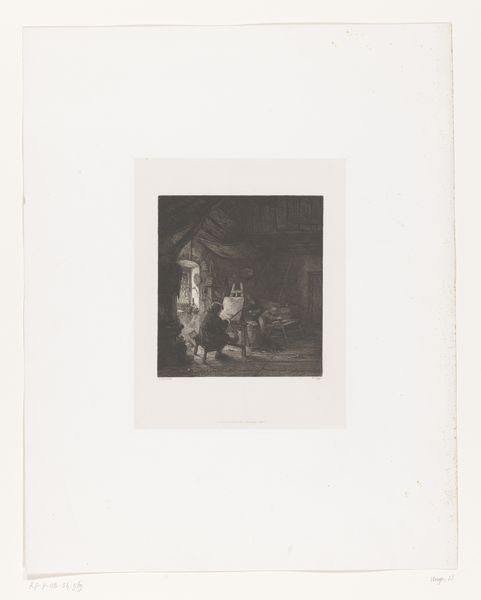
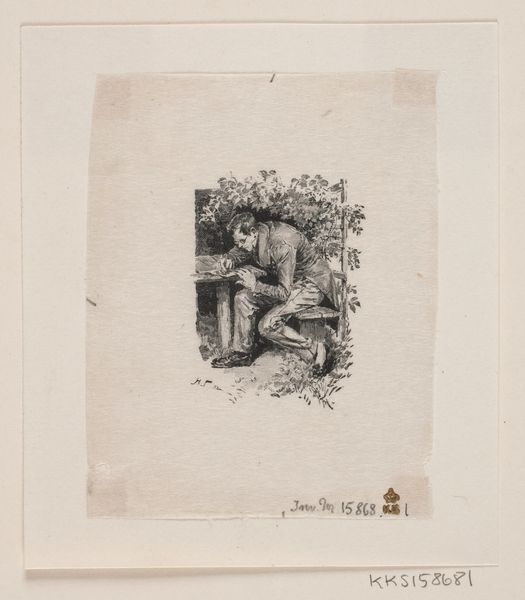
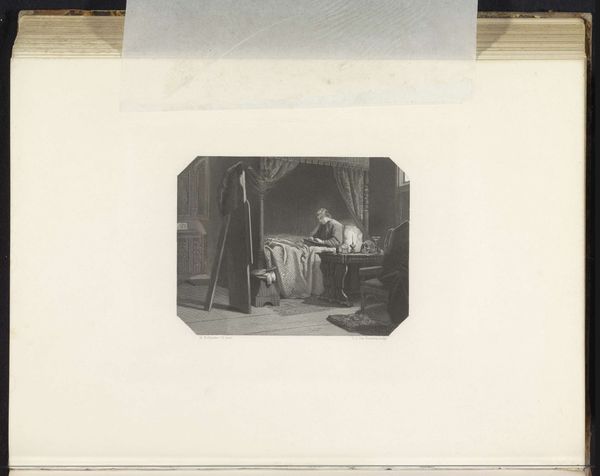
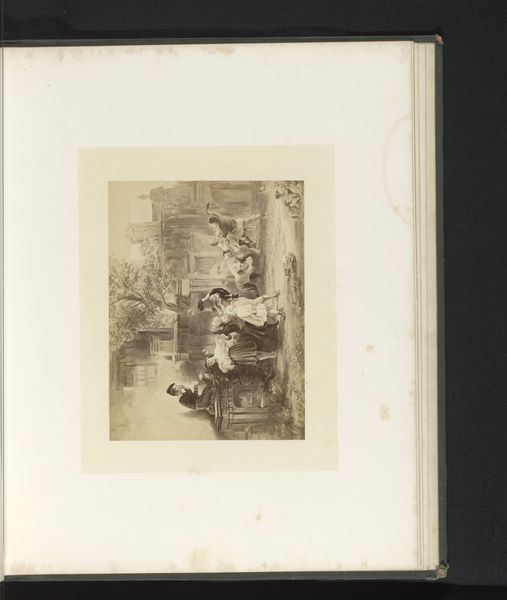
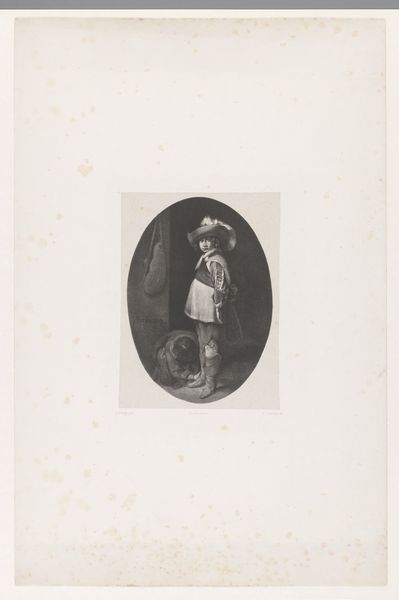
Vrouw op balkon kijkt naar lichaam dat binnen wordt gedragen before 1842

charlesrochussen
Rijksmuseum
drawing, paper, pencil
pencil drawn
drawing
aged paper
toned paper
light pencil work
narrative-art
pencil sketch
figuration
paper
pencil
line
history-painting
watercolor
realism
Dimensions: height 273 mm, width 363 mm
Copyright: Rijks Museum: Open Domain
Editor: This drawing by Charles Rochussen, titled "Vrouw op balkon kijkt naar lichaam dat binnen wordt gedragen" or "Woman on a balcony looking at a body being carried inside", dates back to before 1842. Executed in pencil on paper, it feels like a glimpse into a theatrical tragedy, like we're seeing a single panel in a storyboard for something larger. What jumps out at you when you look at it? Curator: What jumps out? Well, I’m struck by its quiet intensity. There’s a certain... softness, even with such a heavy subject. It feels like witnessing a memory, perhaps a cherished and painful one. The artist captures the scene, yet frames it with these vignette-like insets to create these different levels of viewing or telling a story in pieces. Why frame a scene with small circles on either side, you know? What is the artist alluding to there? Editor: That’s a lovely interpretation, almost dreamlike. I see what you mean, but it feels a bit like those family crests from long ago, so maybe about family, but also about death or loss as well? Curator: Interesting observation... crests, heraldry... perhaps the artist is suggesting that this personal tragedy echoes a wider societal or historical narrative. The sketch feels like the visual equivalent of poetry, offering us fragments and hinting at broader stories through tone, texture and symbolic arrangement. It prompts us to see the universal in the particular, or the historical resonance of what could be seen as a familiar and current day tragedy. It doesn't necessarily point in one particular direction though! Editor: So, it’s more about the *feeling* of history than any specific event? Curator: Exactly! We're left to connect with those feelings ourselves, letting the artwork become a mirror to our own experiences. Editor: I never would have thought to look at it that way. I initially saw only the surface, but it really makes you wonder what you're actually looking at. Curator: Which I would call "a good start", truly. Because it all ends with you deciding for yourself in the end.
Comments
No comments
Be the first to comment and join the conversation on the ultimate creative platform.
 React
React Comment