About this artwork
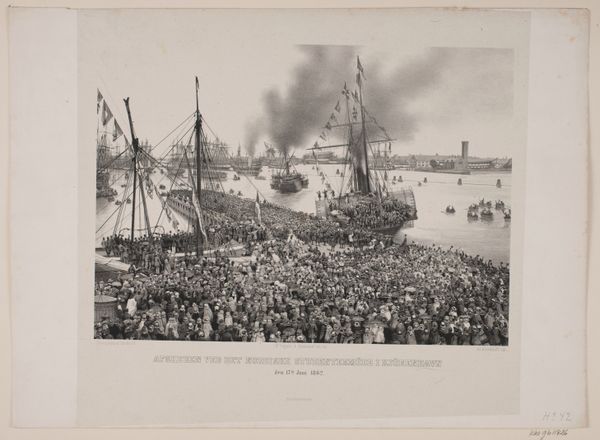
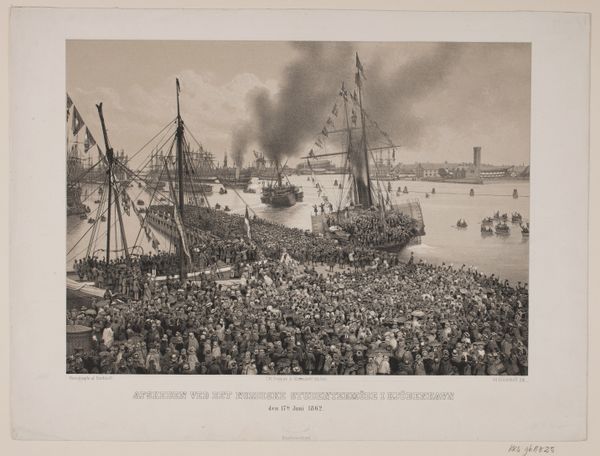
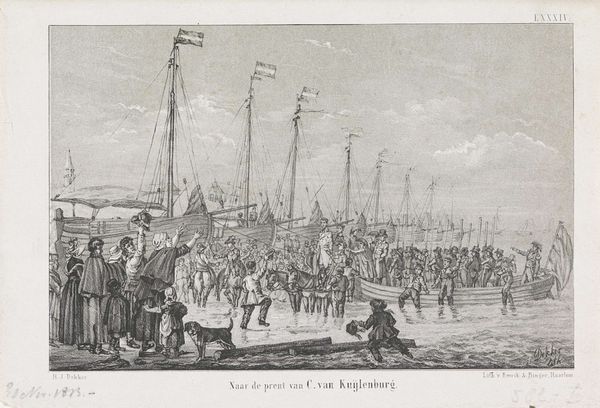
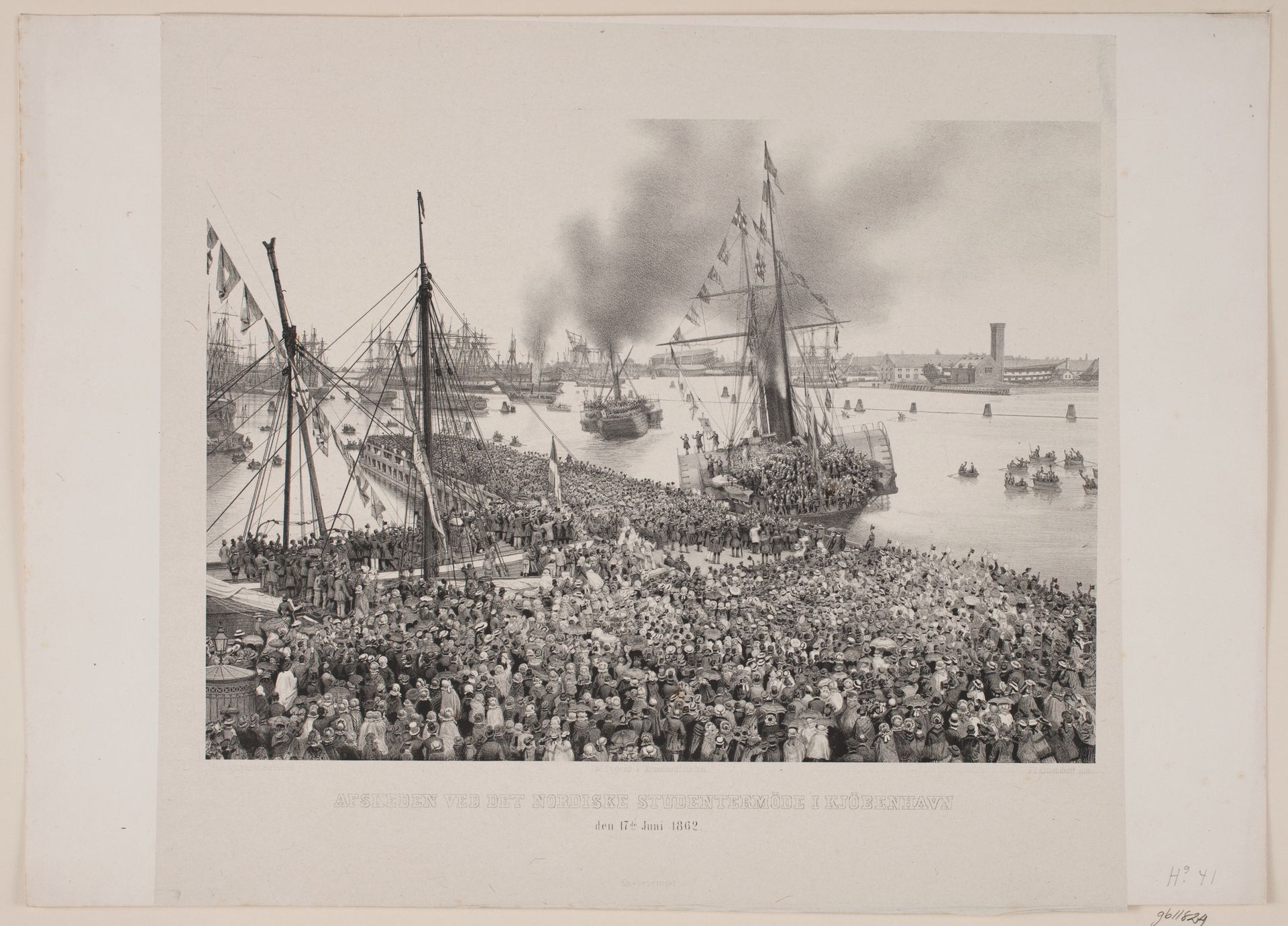
Adolph Kittendorff made this print of the Farewell to the Nordic Student Meeting in Copenhagen, using etching on paper. This image depicts a pivotal moment of pan-Scandinavianism, a movement that sought to unify the cultures and politics of Denmark, Norway, and Sweden. The Nordic Student Meetings were key events in forging these connections, promoting a shared sense of identity among the intellectual elite. Kittendorff’s print captures the fervor of the 1845 farewell in Copenhagen. A massive crowd gathers at the harbor, waving flags, a demonstration that speaks to the cultural and political ideals of the time. The ships that carry the students away symbolize the reach and ambition of this movement. We can see here how the artist, working in mid-nineteenth century Denmark, was keenly aware of the rising tide of nationalism and the role of cultural institutions in shaping collective identity. To fully appreciate this, it’s essential to delve into archives, political pamphlets, and period newspapers to understand the complex interplay of social forces and institutional agendas that shaped this artwork.
Afsked ved det nordiske studentermøde i København
1862


Artwork details
- Dimensions
- 283 mm (height) x 311 mm (width) (bladmaal)
- Location
- SMK - Statens Museum for Kunst
Comments
Be the first to share your thoughts about this work.
About this artwork
Adolph Kittendorff made this print of the Farewell to the Nordic Student Meeting in Copenhagen, using etching on paper. This image depicts a pivotal moment of pan-Scandinavianism, a movement that sought to unify the cultures and politics of Denmark, Norway, and Sweden. The Nordic Student Meetings were key events in forging these connections, promoting a shared sense of identity among the intellectual elite. Kittendorff’s print captures the fervor of the 1845 farewell in Copenhagen. A massive crowd gathers at the harbor, waving flags, a demonstration that speaks to the cultural and political ideals of the time. The ships that carry the students away symbolize the reach and ambition of this movement. We can see here how the artist, working in mid-nineteenth century Denmark, was keenly aware of the rising tide of nationalism and the role of cultural institutions in shaping collective identity. To fully appreciate this, it’s essential to delve into archives, political pamphlets, and period newspapers to understand the complex interplay of social forces and institutional agendas that shaped this artwork.
Comments
Be the first to share your thoughts about this work.