About this artwork
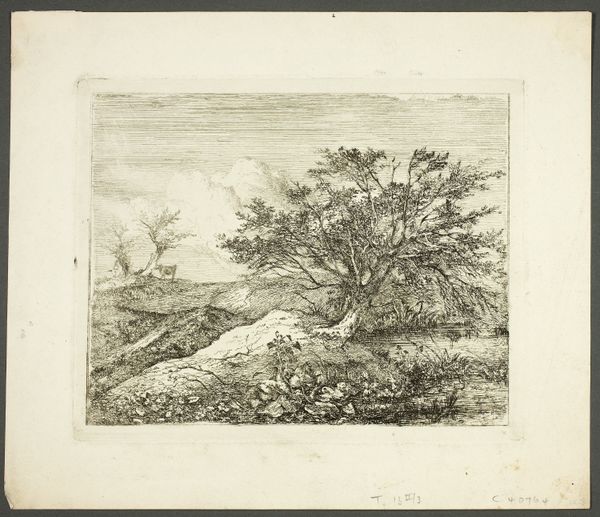
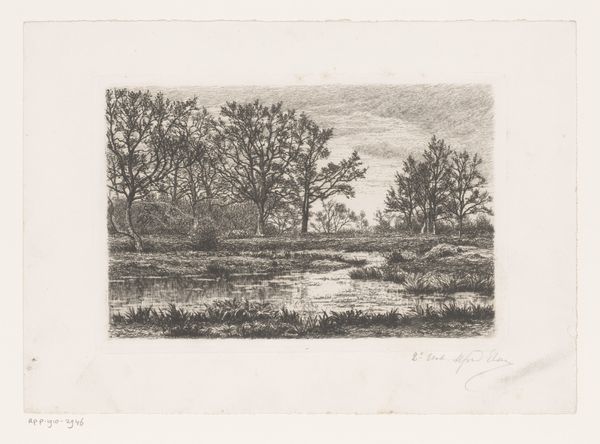
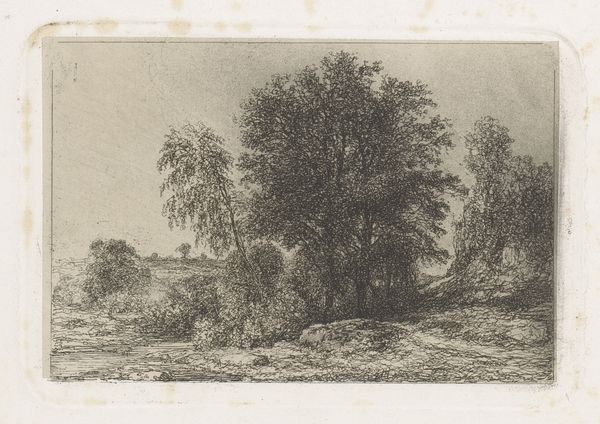
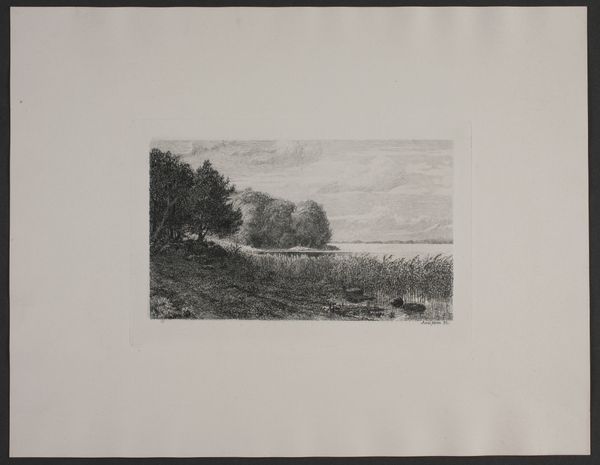
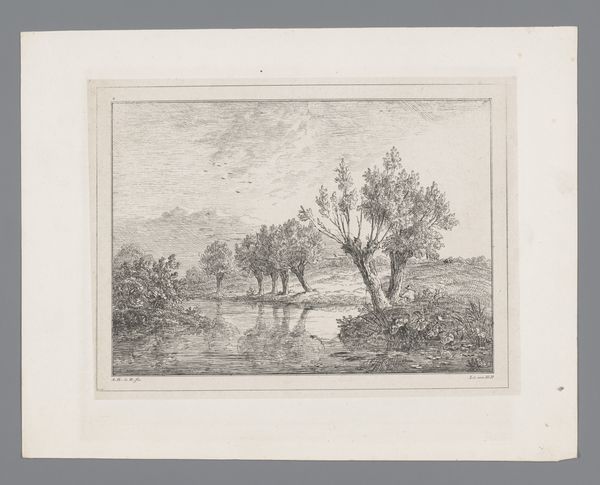
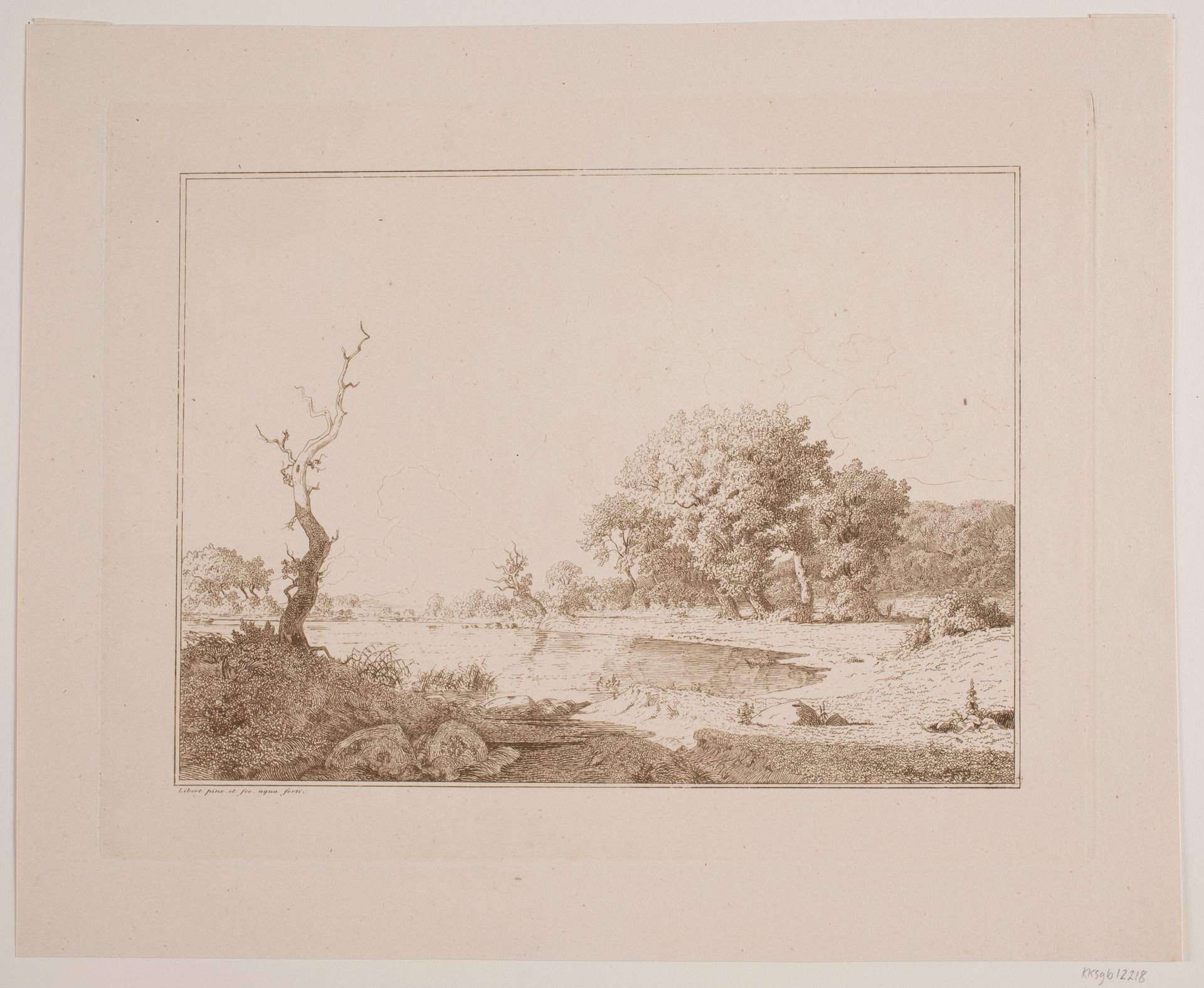
Curator: Georg Emil Libert created this etching, titled "Landskab," back in 1841. It's a compelling piece, held in the collection of the SMK - Statens Museum for Kunst. Editor: The landscape feels serene and muted, doesn't it? I immediately notice the quiet stillness—a melancholic echo almost. The limited color palette enhances the dreamlike quality. Curator: I'm struck by the dead tree to the left. Its stark silhouette against the tranquil water could symbolize the transience of life, a potent symbol particularly relevant in a period grappling with social and political upheaval. The reflection on the water reinforces this theme of fleeting existence. Editor: Exactly. Reflections are loaded with meaning! Think of Narcissus, but also the cultural memory we associate with mirroring – do we see our true selves, a distorted version, or even something completely new? What do you make of the trees across the lake seeming so dense? Almost impenetrable. Curator: The density you observe, I believe, anchors the composition within the artistic and political context of burgeoning Romantic nationalism in Denmark at the time. These forests become coded emblems of cultural resilience and self-determination. In that context, that dying tree on the bank, perhaps a comment about that era. Editor: An intriguing interpretation. Speaking to artistic lineage, I notice how the texture created with engraving suggests the older printmaking tradition – which in turn references a collective and enduring visual language tied to nature and nation. Curator: I concur. Furthermore, placing this landscape into a broader scope, particularly using eco-critical and environmental historical perspectives, pushes our comprehension about humankind's relationship with nature to interrogate further what these environmental images communicate about shifting values during industrialization. Editor: Looking again, I am struck how the print's understated beauty speaks of themes as relevant today as they were almost two centuries ago—memory, identity, and the impact we leave behind on this world. Curator: Indeed, that speaks to its enduring relevance, its continuing ability to encourage new dialogues about our collective histories and environmental future.
Landskab
1841


Artwork details
- Medium
- print, etching, engraving
- Dimensions
- 205 mm (height) x 265 mm (width) (plademaal)
- Location
- SMK - Statens Museum for Kunst
Tags
Comments
Share your thoughts
About this artwork
Curator: Georg Emil Libert created this etching, titled "Landskab," back in 1841. It's a compelling piece, held in the collection of the SMK - Statens Museum for Kunst. Editor: The landscape feels serene and muted, doesn't it? I immediately notice the quiet stillness—a melancholic echo almost. The limited color palette enhances the dreamlike quality. Curator: I'm struck by the dead tree to the left. Its stark silhouette against the tranquil water could symbolize the transience of life, a potent symbol particularly relevant in a period grappling with social and political upheaval. The reflection on the water reinforces this theme of fleeting existence. Editor: Exactly. Reflections are loaded with meaning! Think of Narcissus, but also the cultural memory we associate with mirroring – do we see our true selves, a distorted version, or even something completely new? What do you make of the trees across the lake seeming so dense? Almost impenetrable. Curator: The density you observe, I believe, anchors the composition within the artistic and political context of burgeoning Romantic nationalism in Denmark at the time. These forests become coded emblems of cultural resilience and self-determination. In that context, that dying tree on the bank, perhaps a comment about that era. Editor: An intriguing interpretation. Speaking to artistic lineage, I notice how the texture created with engraving suggests the older printmaking tradition – which in turn references a collective and enduring visual language tied to nature and nation. Curator: I concur. Furthermore, placing this landscape into a broader scope, particularly using eco-critical and environmental historical perspectives, pushes our comprehension about humankind's relationship with nature to interrogate further what these environmental images communicate about shifting values during industrialization. Editor: Looking again, I am struck how the print's understated beauty speaks of themes as relevant today as they were almost two centuries ago—memory, identity, and the impact we leave behind on this world. Curator: Indeed, that speaks to its enduring relevance, its continuing ability to encourage new dialogues about our collective histories and environmental future.
Comments
Share your thoughts