1873 - 1885
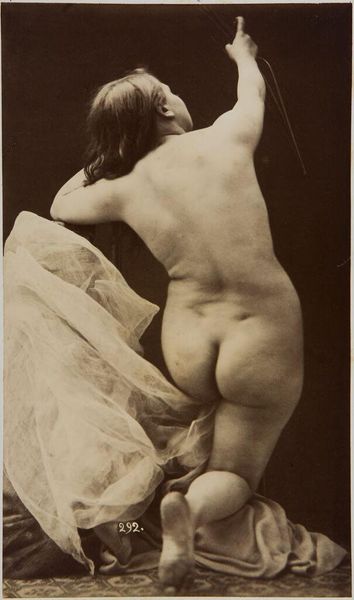
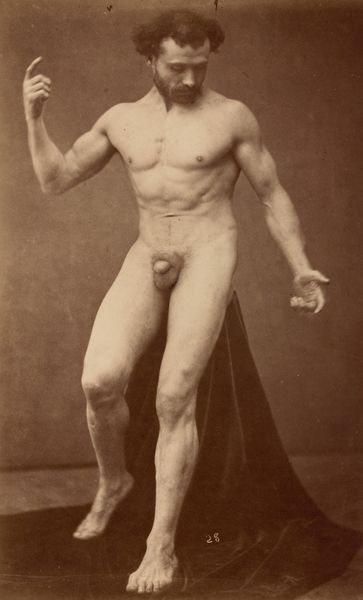
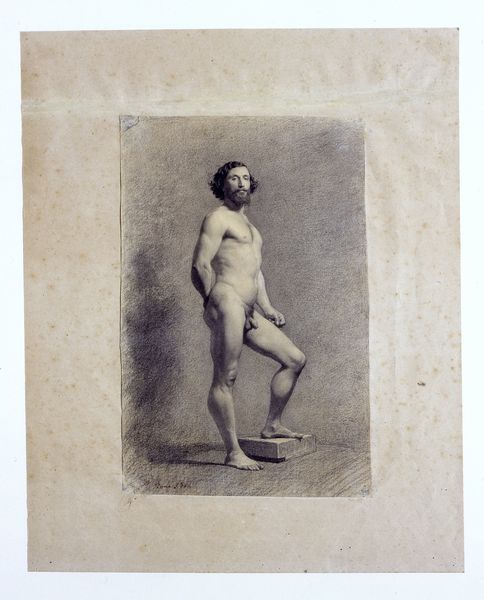
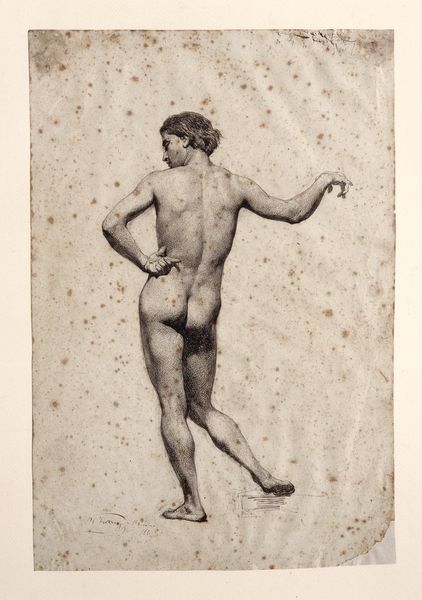
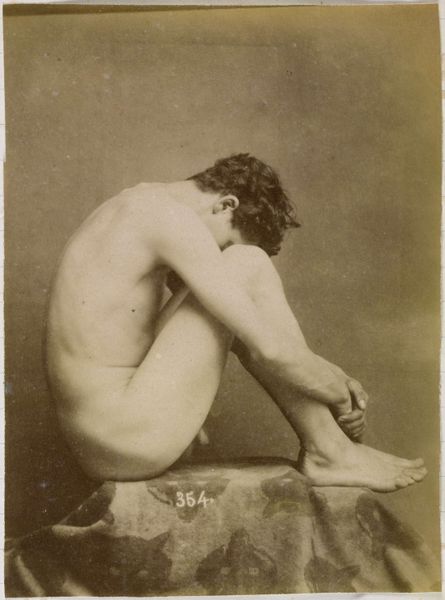
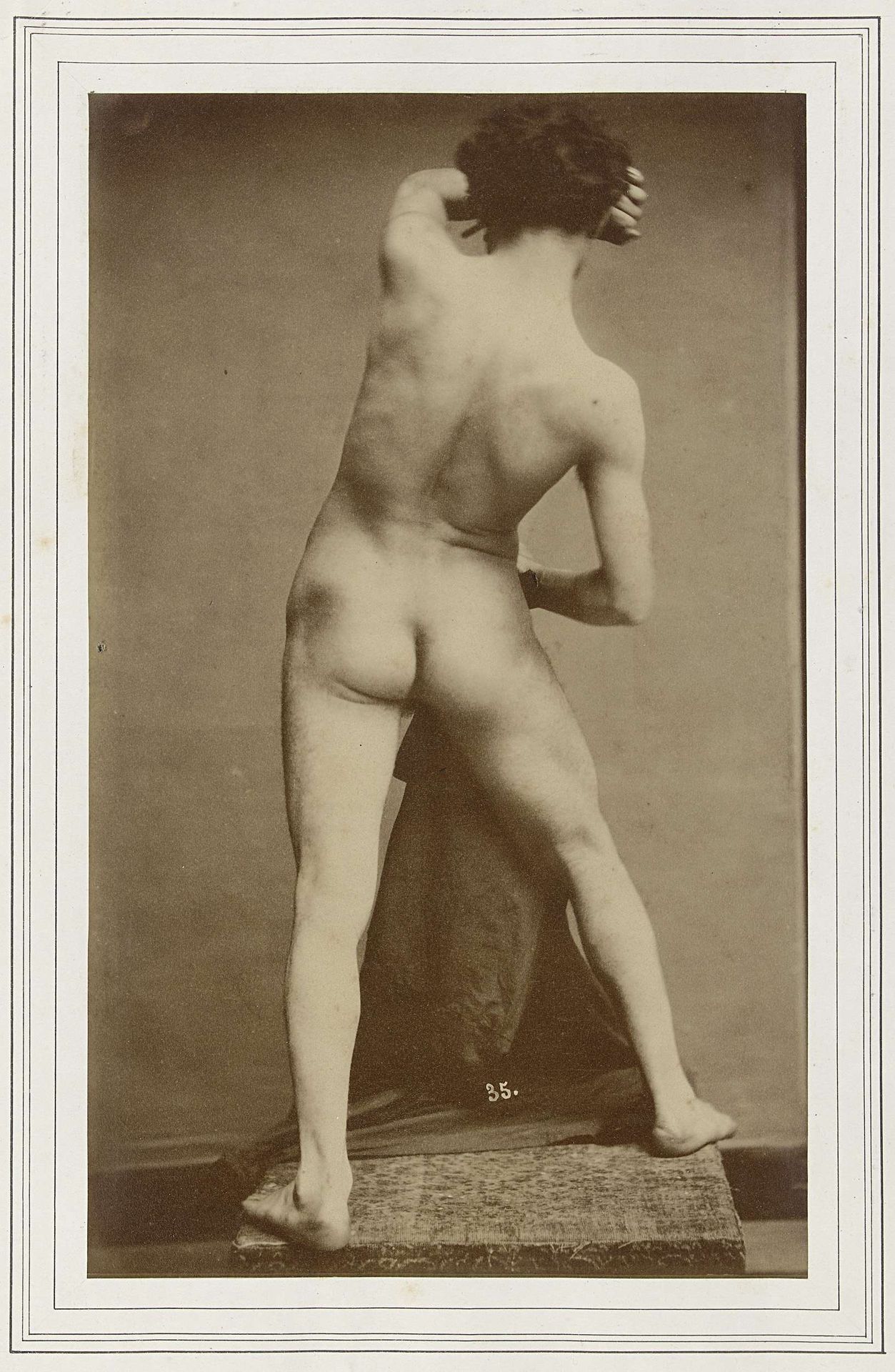
Figuurstudie van mannelijk naakt, op de rug gezien

Listen to curator's interpretation
Curatorial notes
Editor: Here we have "Figure Study of a Male Nude, Seen from the Back," a gelatin silver print from sometime between 1873 and 1885 by Gaudenzio Marconi. The subdued tones and the model's pose almost make it feel like a classical sculpture. What do you make of this piece? Curator: As a materialist, I am most drawn to how photography itself, especially in this period, democratized image making. Consider the labor involved: the model's time, the photographer's technical expertise and studio setup. Marconi isn’t just depicting the male form, he's engaging with the burgeoning industry of image production and consumption. Editor: So you’re saying it’s not just about the art, but also the process and what it meant to produce images at the time? Curator: Precisely. How does the accessibility of photography shift art's value? Does it democratize representation or simply commodify the body further? This gelatin-silver print isn't just an artistic expression, but a material object born from specific industrial and social conditions. Think about who was consuming these images, and why. Editor: That makes me consider how easily we create images now, with phones… It feels like a completely different world in terms of labor and access. It also pushes me to consider how a photograph of a nude might circulate today. Curator: Exactly! Consider also the purpose of the photograph - was it produced as an artwork in itself or was it intended as an aide-memoire to the artist? And how would that distinction have shaped its value, production and reception at the time? Editor: This has definitely shifted my perspective; I see it now as less about an individual artist’s skill and more about the wider world of image making at the time. Thanks! Curator: My pleasure! Thinking about art through the lens of materials and production opens up whole new avenues of understanding.