About this artwork
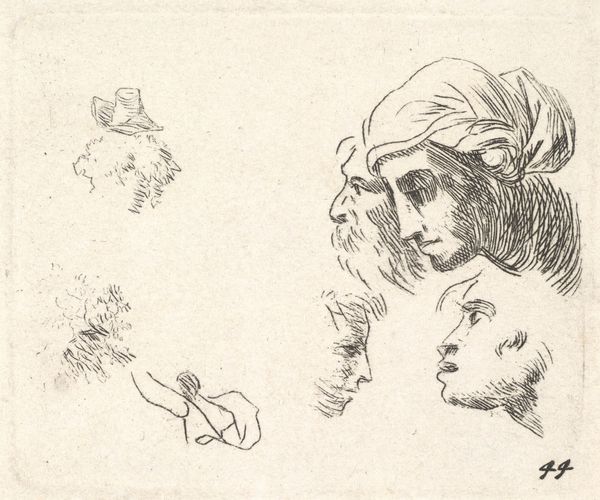
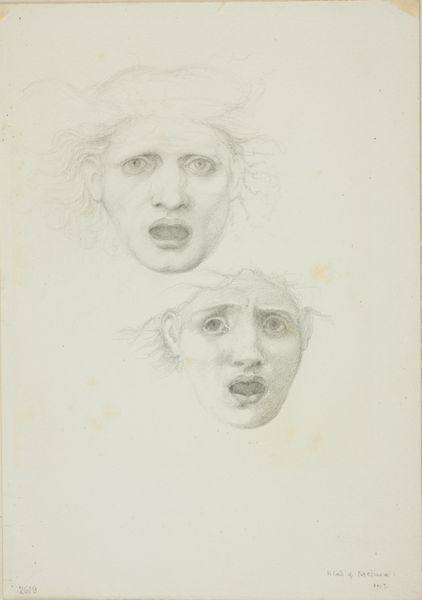
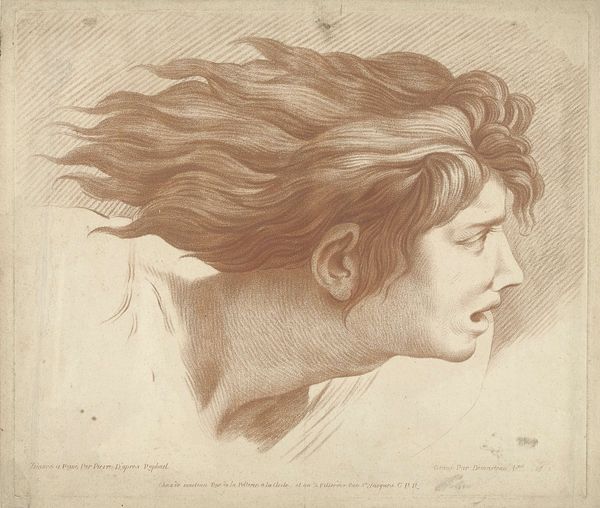
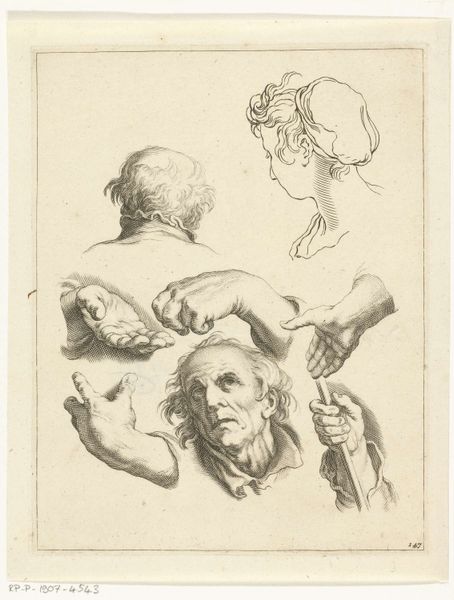
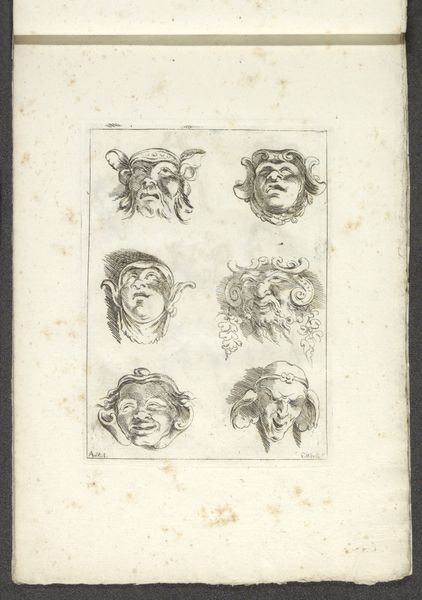
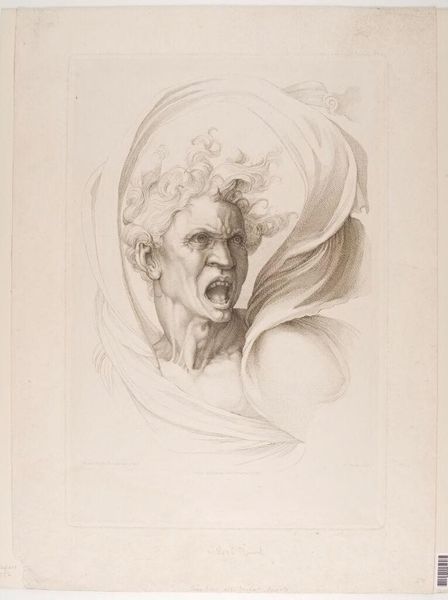
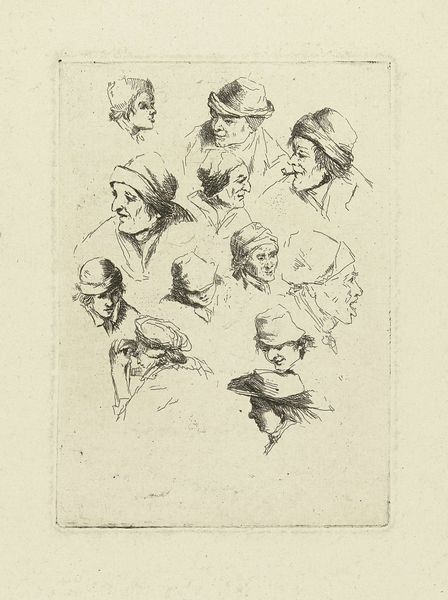
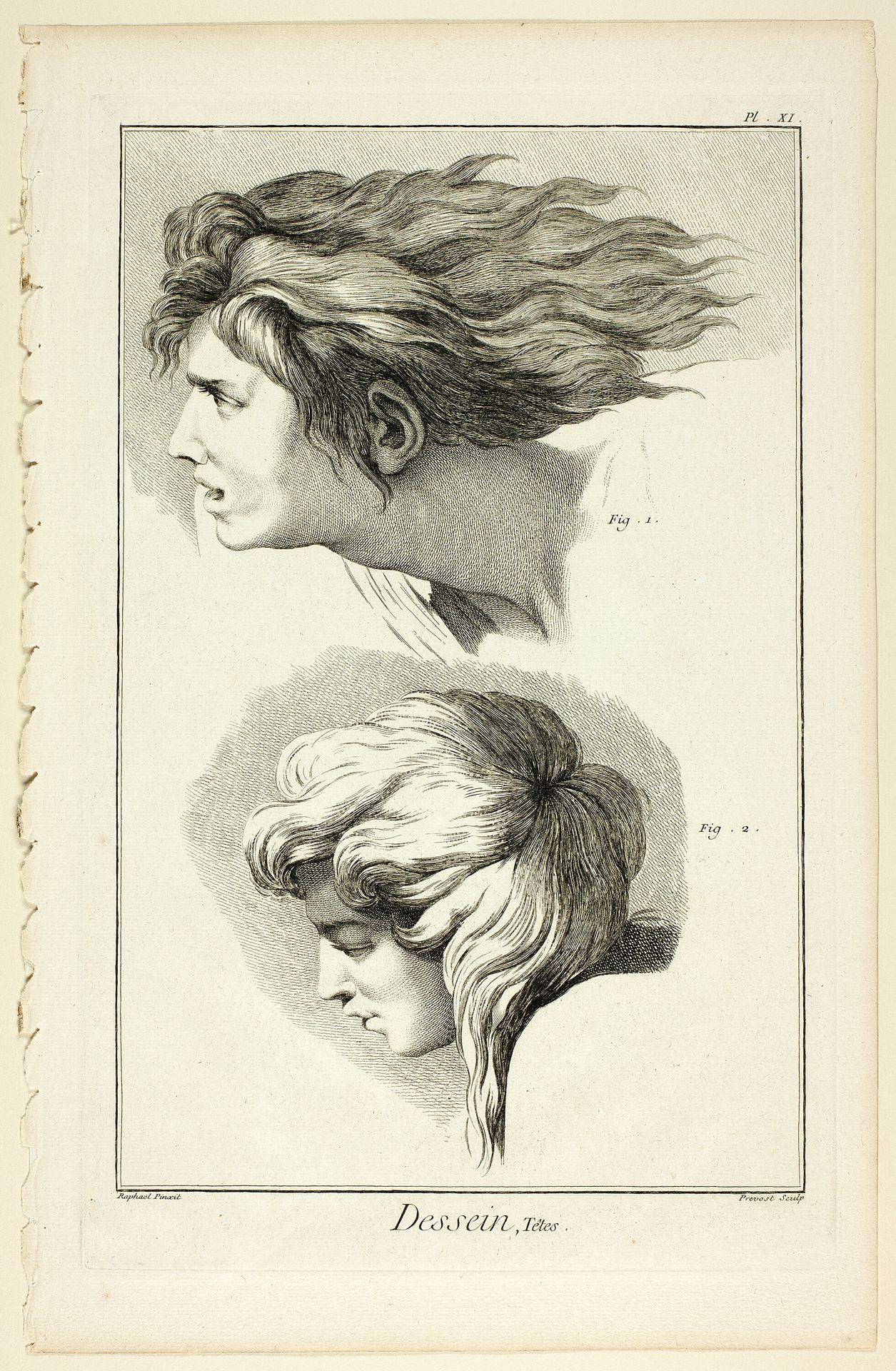
Benoit Louis Prevost created this print, "Design: Heads," for the "Encyclopédie." Note the stark contrast between the two heads, achieved through the precise use of line and shading. The upper figure, with its animated expression and wild, flowing hair, contrasts sharply with the lower one, which conveys a sense of introspection through its downward gaze and neatly styled hair. Prevost uses these contrasting styles to explore different facets of human expression. The meticulous detail in rendering each strand of hair and the subtle gradations of tone create a sense of depth and realism. Consider how these stylistic choices reflect broader artistic and philosophical concerns of the Enlightenment, a period marked by the valuing of reason and empirical observation. The composition prompts us to question fixed meanings and categories, suggesting that human emotion and expression are complex and multifaceted. The print invites ongoing interpretation and re-interpretation, challenging us to consider the interplay between form and content in shaping our understanding of the human condition.
Design: Heads, from Encyclopédie
1762 - 1777


Artwork details
- Medium
- drawing, print, etching, paper
- Dimensions
- 321 × 207 mm (image); 355 × 227 mm (plate); 400 × 260 mm (sheet)
- Location
- The Art Institute of Chicago
- Copyright
- Public Domain
Tags
Comments
Share your thoughts
About this artwork
Benoit Louis Prevost created this print, "Design: Heads," for the "Encyclopédie." Note the stark contrast between the two heads, achieved through the precise use of line and shading. The upper figure, with its animated expression and wild, flowing hair, contrasts sharply with the lower one, which conveys a sense of introspection through its downward gaze and neatly styled hair. Prevost uses these contrasting styles to explore different facets of human expression. The meticulous detail in rendering each strand of hair and the subtle gradations of tone create a sense of depth and realism. Consider how these stylistic choices reflect broader artistic and philosophical concerns of the Enlightenment, a period marked by the valuing of reason and empirical observation. The composition prompts us to question fixed meanings and categories, suggesting that human emotion and expression are complex and multifaceted. The print invites ongoing interpretation and re-interpretation, challenging us to consider the interplay between form and content in shaping our understanding of the human condition.
Comments
Share your thoughts