About this artwork
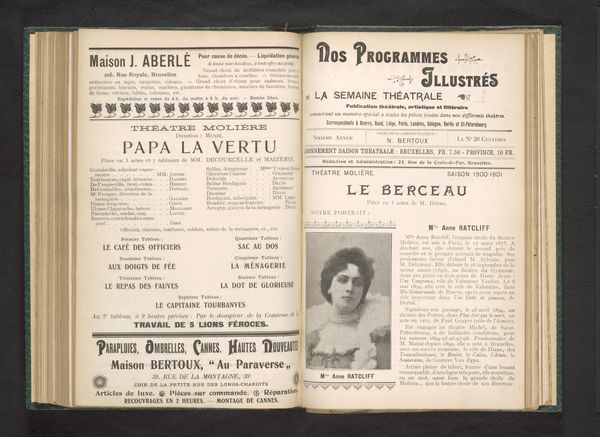
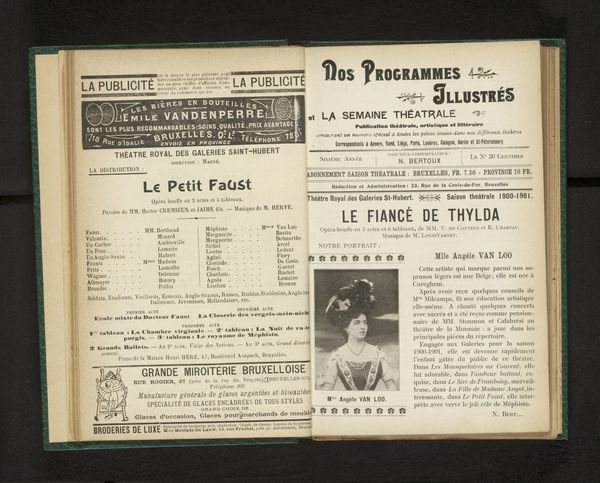
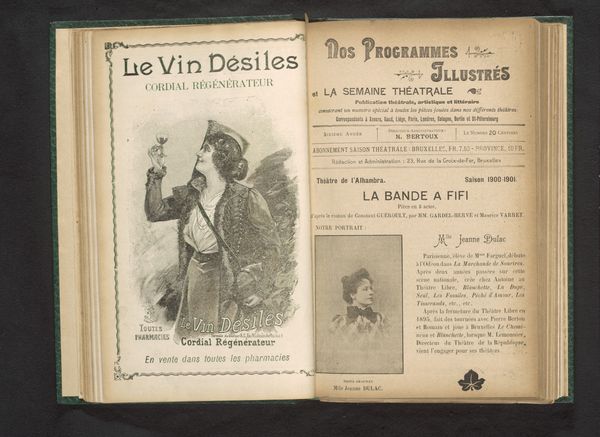
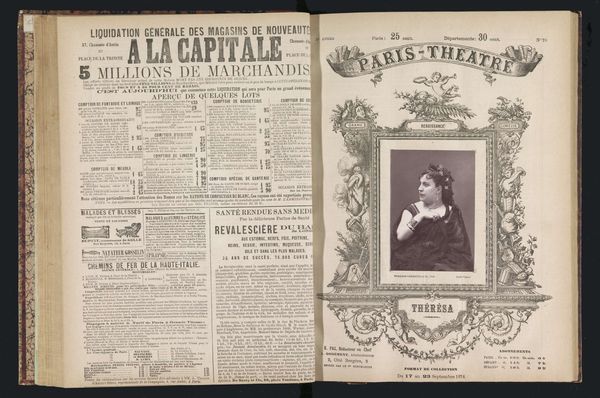
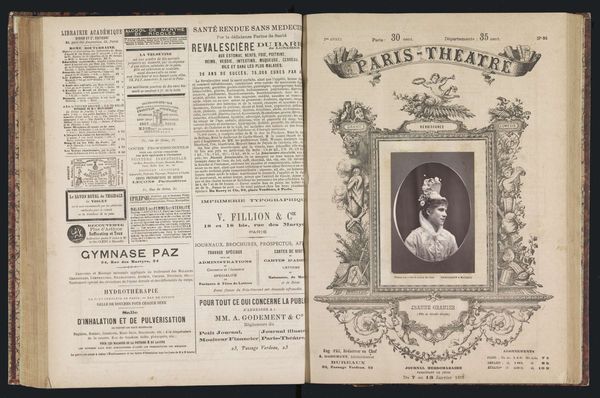
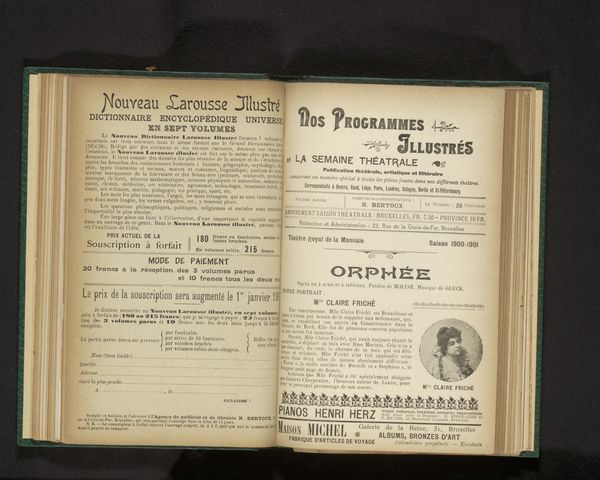
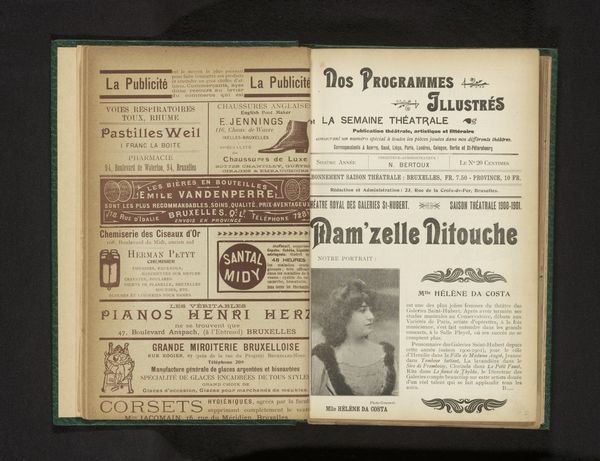
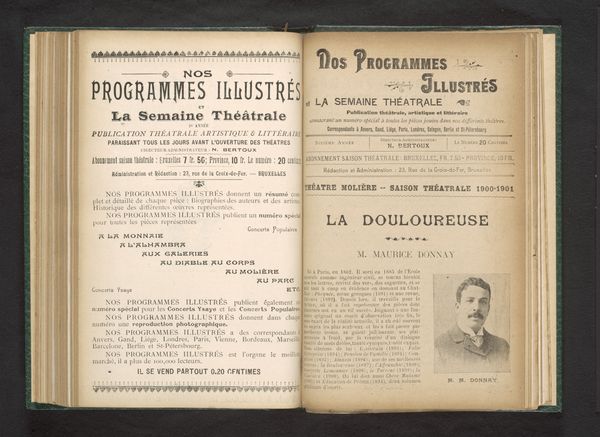
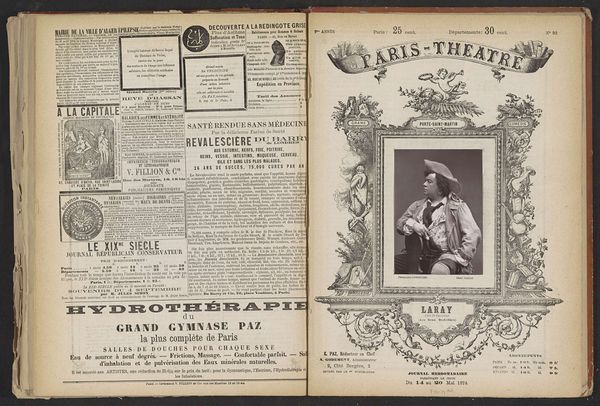
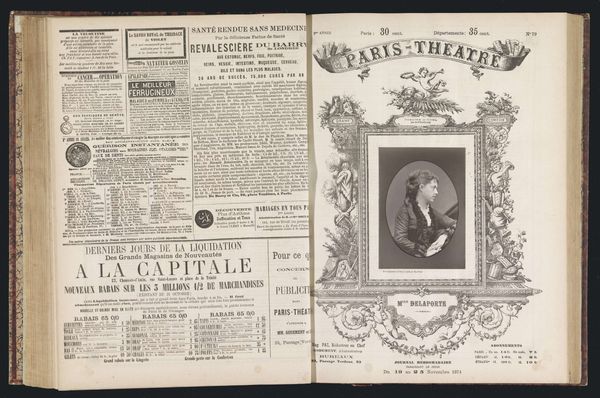
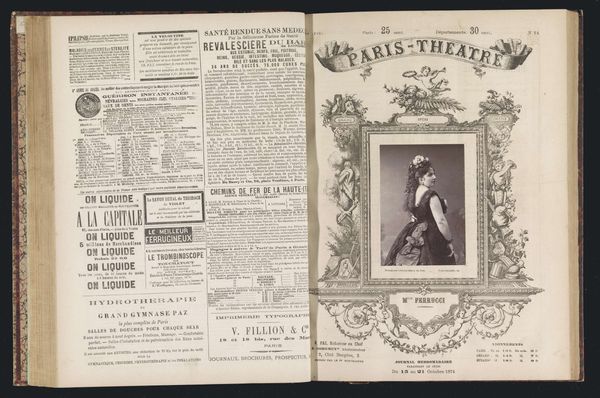
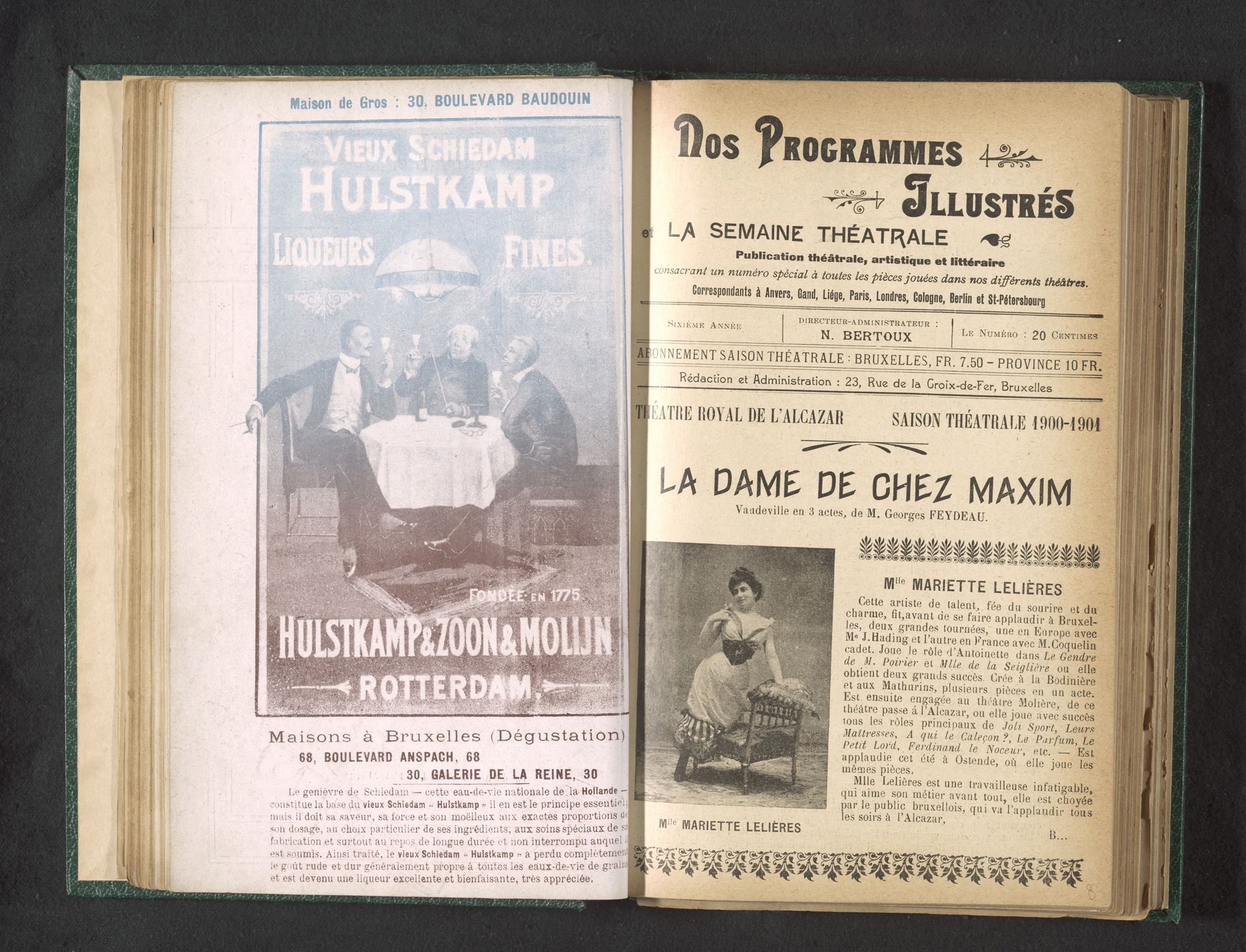
Here, etched into the pages of a program for the Théâtre Royal de l'Alcazar around 1900-1901, we see Mariette Lelières, an artist of talent. In her portrait, she is seated next to a chair. Seated, a pose reminiscent of classical muses, she appears to allude to antiquity. This motif of the muse traces back to ancient Greece, where they were believed to inspire creativity and knowledge. But, her occupation marks a shift. Once, muses were considered divine figures of inspiration; here, in a world moving towards modernity, Lelières is a very real artist, not a spiritual guide. Think of Botticelli's Venus rising from the sea, or Titian's reclining nudes - images of idealized beauty. The pose, the gaze, both are echoes of something deep and ancient, resurfacing in modern forms. This is the power of images, how they constantly reemerge, transformed, in the cultural landscape.

Artwork details
- Medium
- print, photography, poster
- Dimensions
- height 69 mm, width 55 mm
- Copyright
- Rijks Museum: Open Domain
Tags
Comments
Share your thoughts
About this artwork
Here, etched into the pages of a program for the Théâtre Royal de l'Alcazar around 1900-1901, we see Mariette Lelières, an artist of talent. In her portrait, she is seated next to a chair. Seated, a pose reminiscent of classical muses, she appears to allude to antiquity. This motif of the muse traces back to ancient Greece, where they were believed to inspire creativity and knowledge. But, her occupation marks a shift. Once, muses were considered divine figures of inspiration; here, in a world moving towards modernity, Lelières is a very real artist, not a spiritual guide. Think of Botticelli's Venus rising from the sea, or Titian's reclining nudes - images of idealized beauty. The pose, the gaze, both are echoes of something deep and ancient, resurfacing in modern forms. This is the power of images, how they constantly reemerge, transformed, in the cultural landscape.
Comments
Share your thoughts