About this artwork
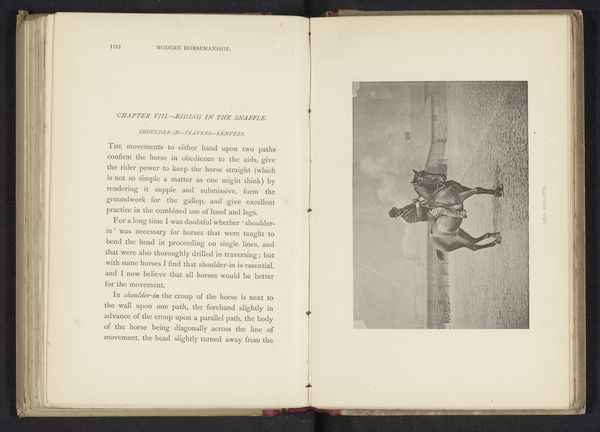
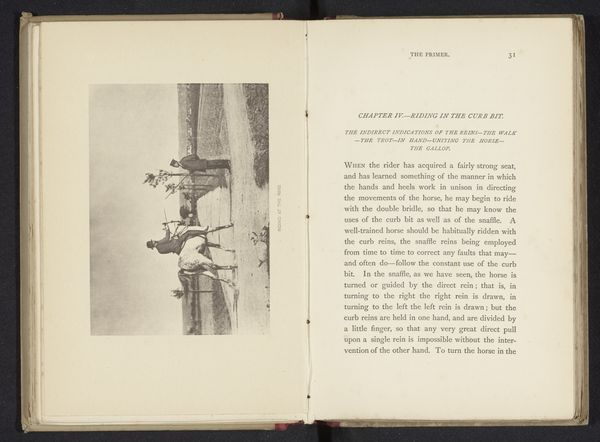
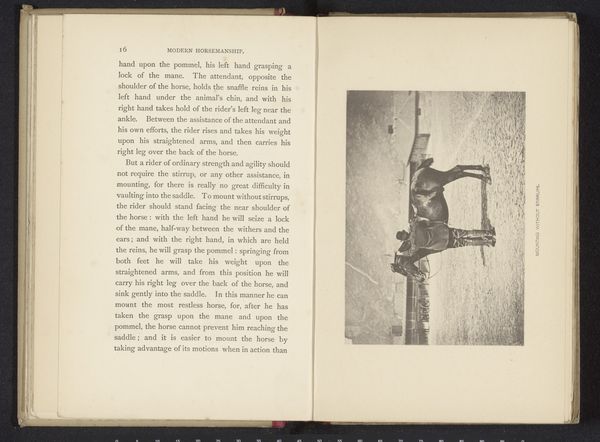
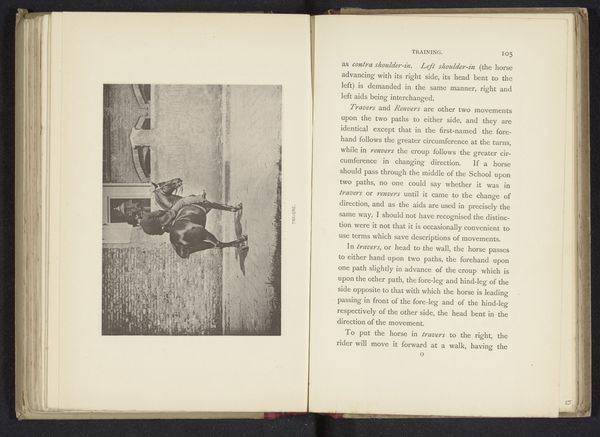
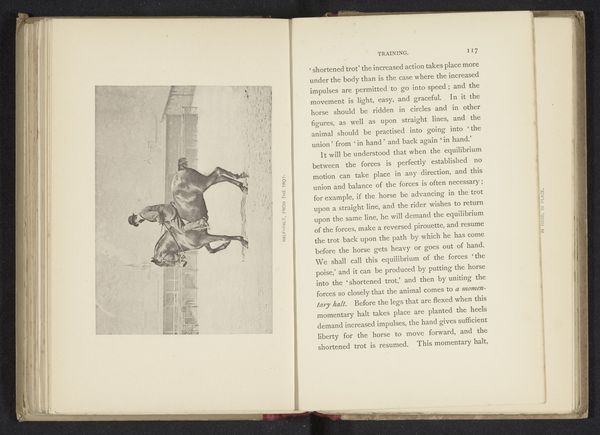
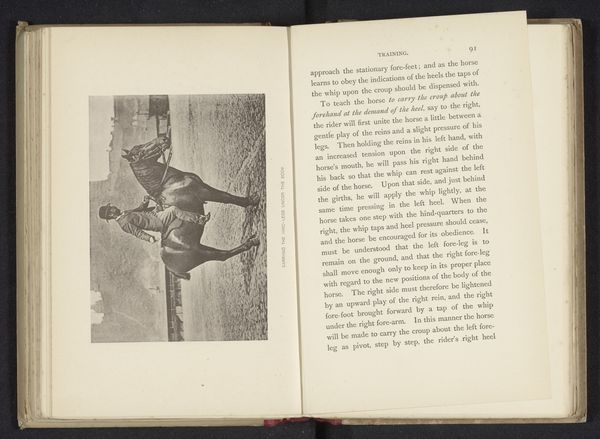
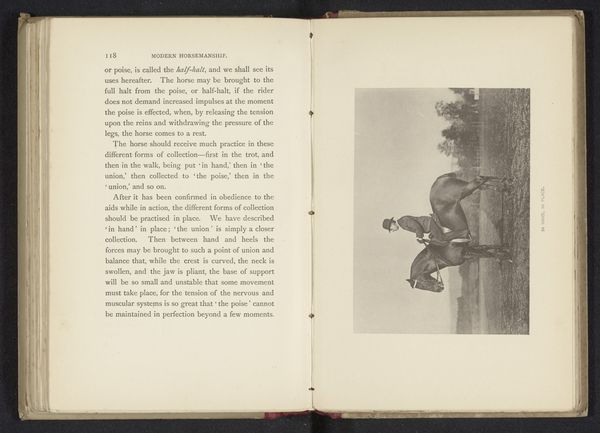
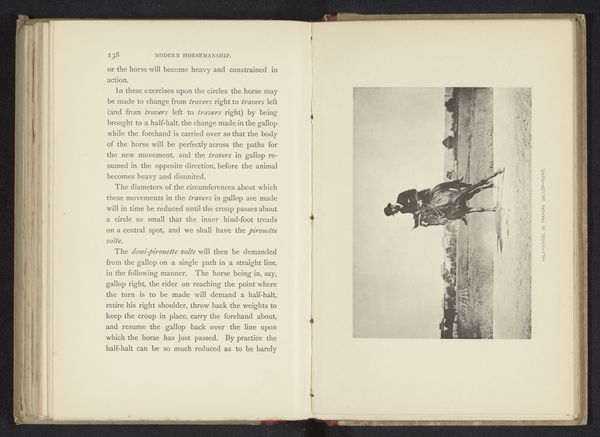
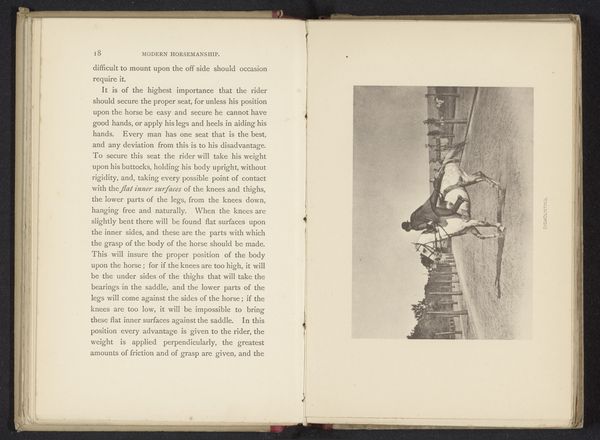
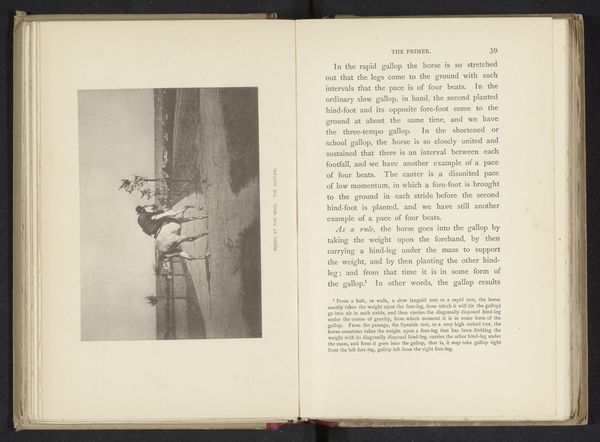
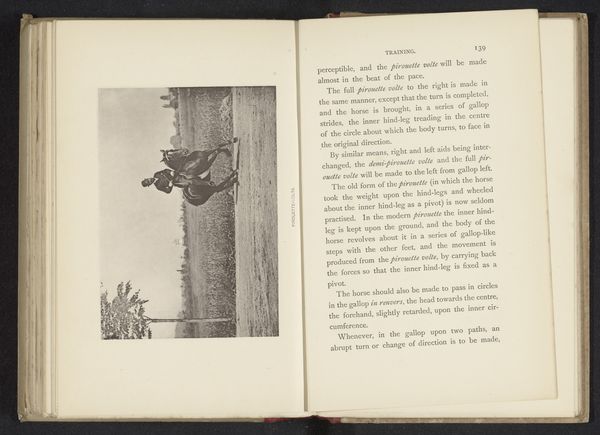
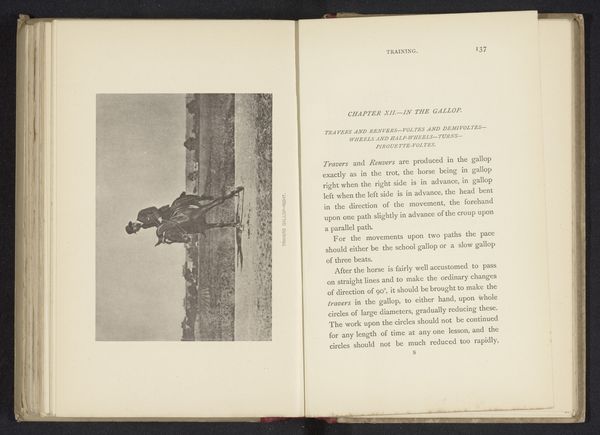
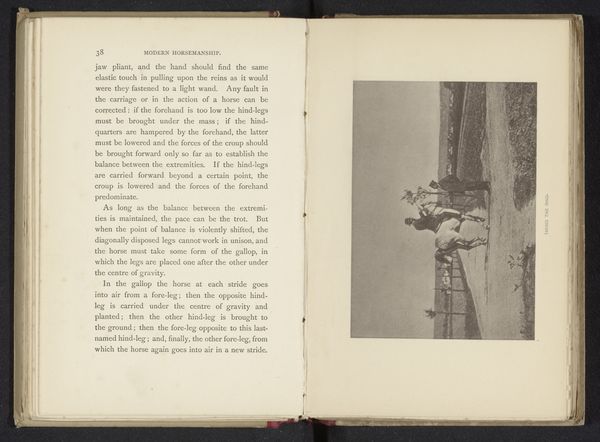
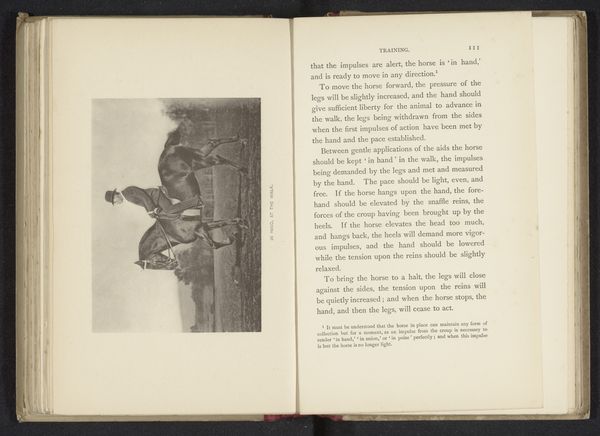
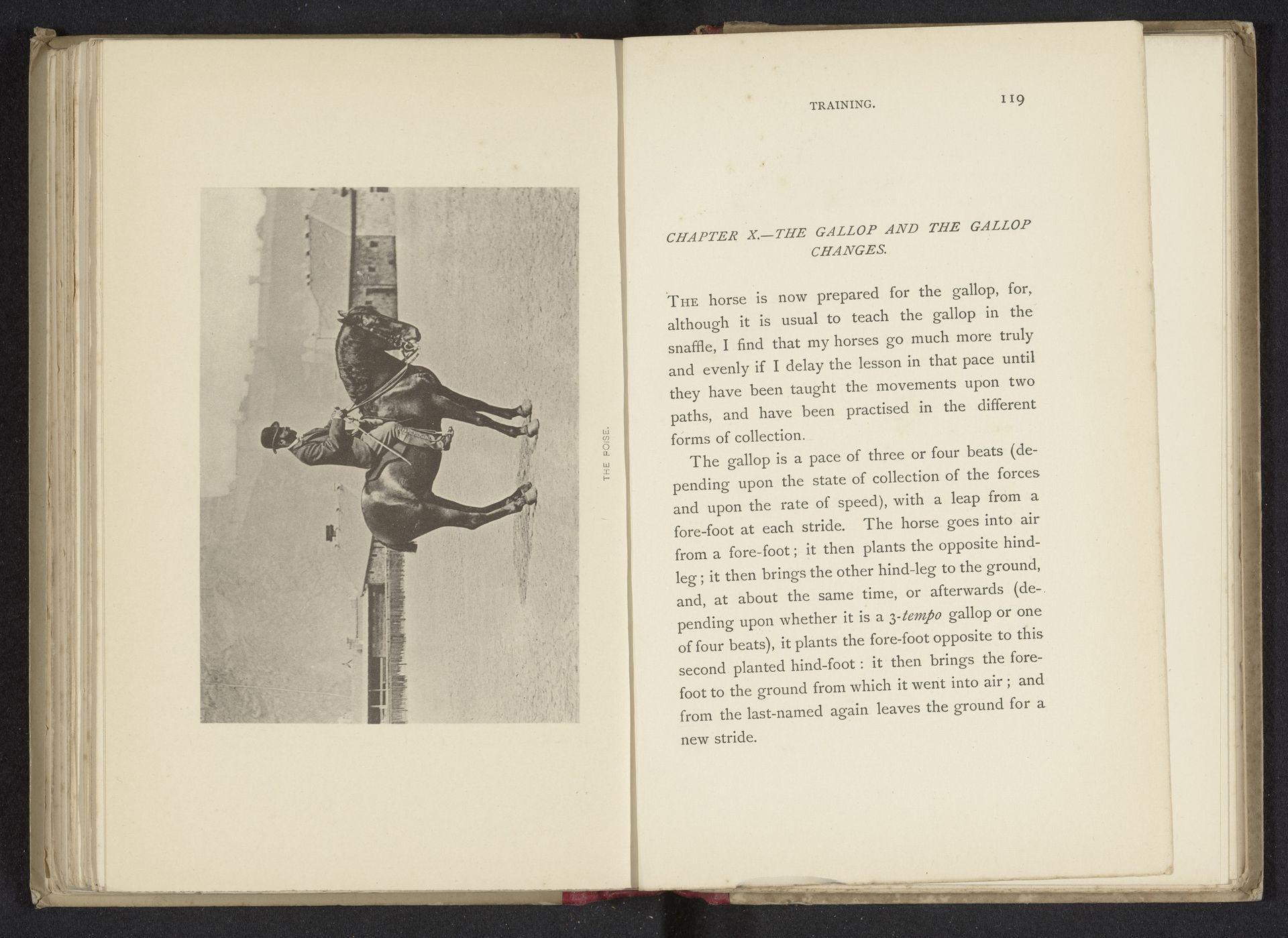
This photographic illustration by Alexander Nicol features a horse and rider, made with a monochrome palette that emphasizes form. The image, printed on a page of what appears to be a training manual, captures the horse in a dynamic pose. The composition uses a stark tonal range, creating strong contrast that defines the shapes and textures. Light and shadow play across the musculature of the horse, highlighting its movement. The photograph’s graphic quality is striking, freezing a moment of equestrian action within the structured environment of the book. The work seems to explore the semiotics of horsemanship, perhaps aiming to codify aspects of training. Nicol’s illustration operates as a sign, referring to the cultural practices and physical dynamics of riding. It invites us to consider how we assign value and meaning to the representation of movement, and how this representation relates to the physical reality. It’s a dynamic interplay between the image and its reception.

Artwork details
- Medium
- print, photography, gelatin-silver-print
- Dimensions
- height 97 mm, width 137 mm
- Copyright
- Rijks Museum: Open Domain
Tags
Comments
Share your thoughts
About this artwork
This photographic illustration by Alexander Nicol features a horse and rider, made with a monochrome palette that emphasizes form. The image, printed on a page of what appears to be a training manual, captures the horse in a dynamic pose. The composition uses a stark tonal range, creating strong contrast that defines the shapes and textures. Light and shadow play across the musculature of the horse, highlighting its movement. The photograph’s graphic quality is striking, freezing a moment of equestrian action within the structured environment of the book. The work seems to explore the semiotics of horsemanship, perhaps aiming to codify aspects of training. Nicol’s illustration operates as a sign, referring to the cultural practices and physical dynamics of riding. It invites us to consider how we assign value and meaning to the representation of movement, and how this representation relates to the physical reality. It’s a dynamic interplay between the image and its reception.
Comments
Share your thoughts