19th-20th century
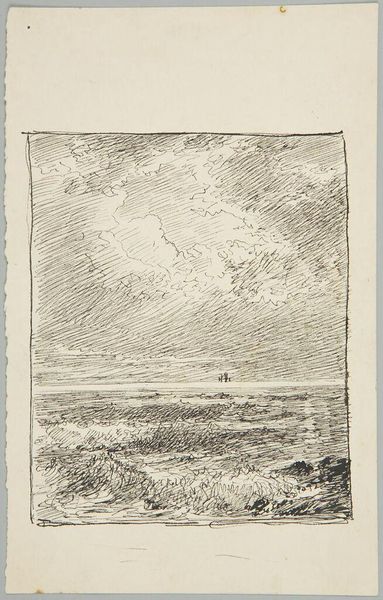
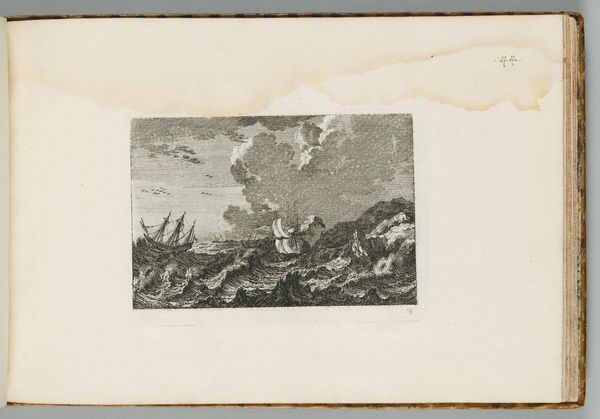
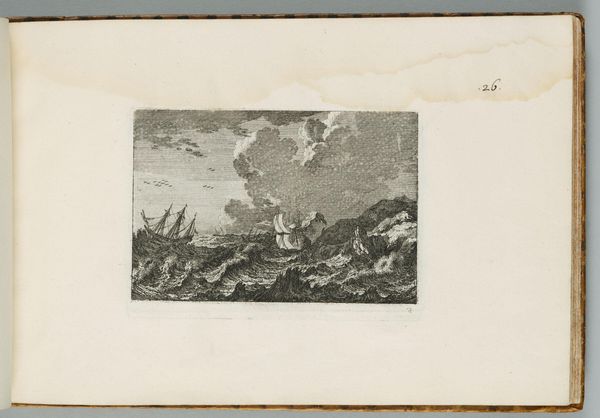
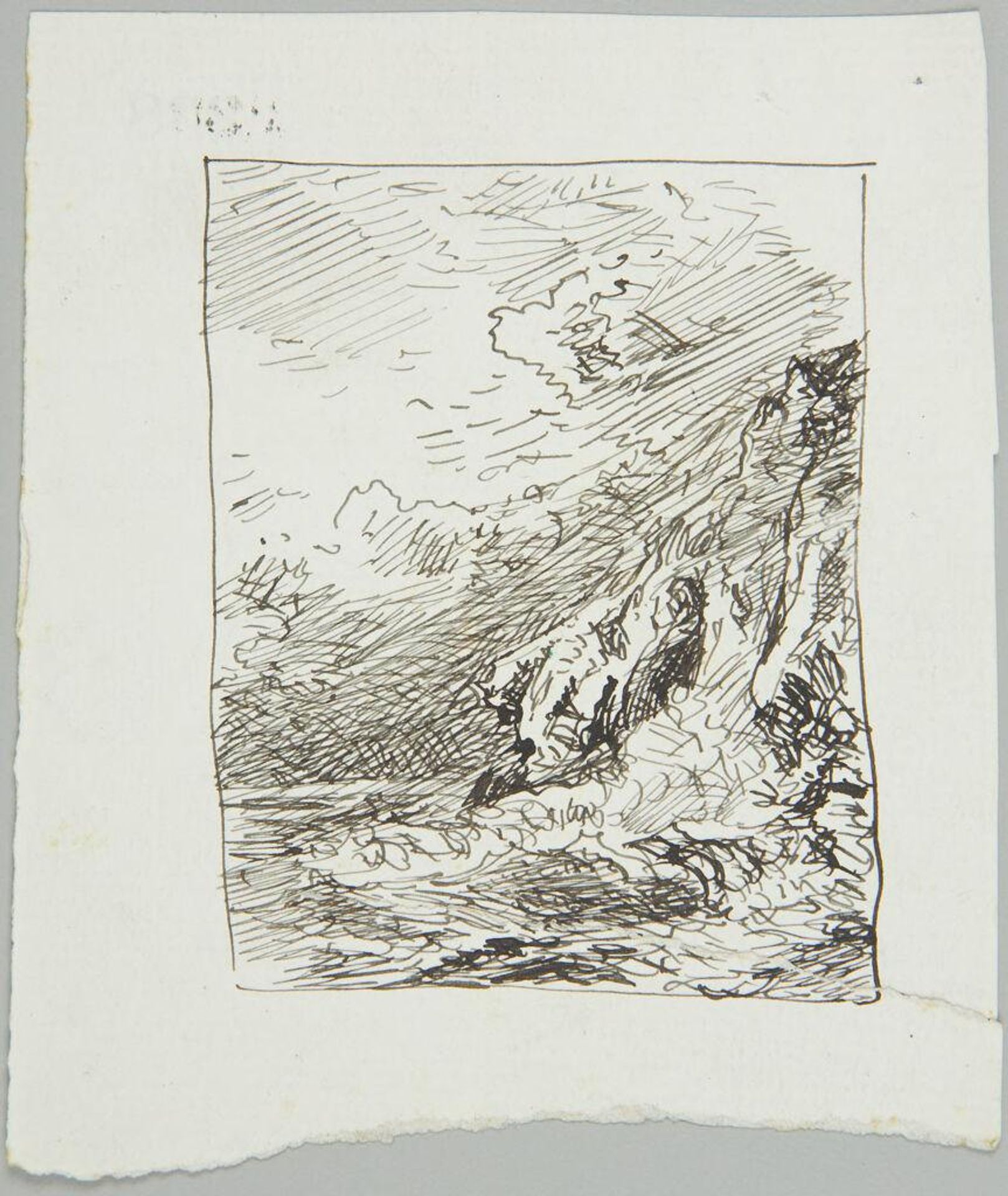
Seascape


Listen to curator's interpretation
Curatorial notes
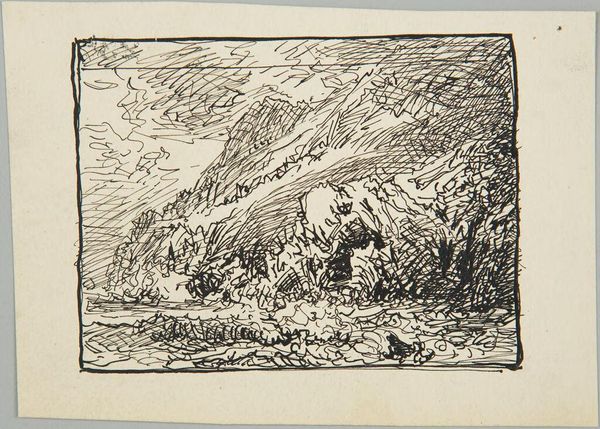
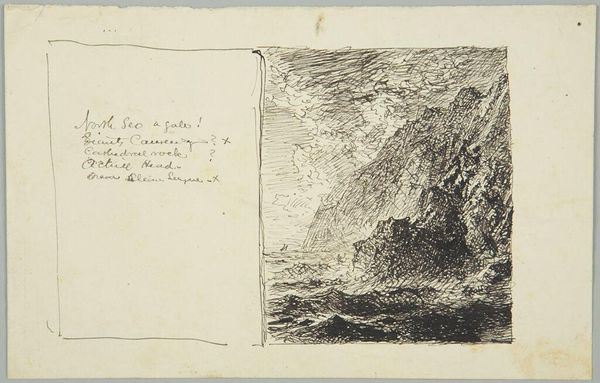
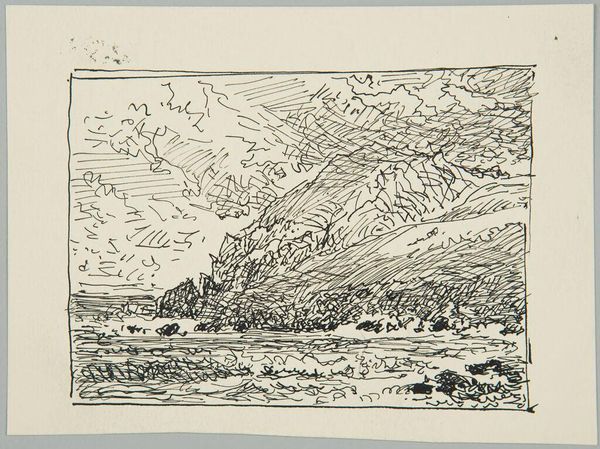
Curator: This is William Trost Richards' "Seascape," held here at the Harvard Art Museums. There’s no date listed, but Richards lived from 1833 to 1905. Editor: It feels immediate, like a quick impression captured in ink. Very dynamic, with those hurried lines suggesting movement. I sense a brewing storm. Curator: Absolutely. The cross-hatching gives the sky a sense of weight, almost oppressive. I wonder what it meant for Richards to focus on the sea in this way. Editor: Well, landscapes, seascapes in particular, weren't just pretty pictures. They often mirrored the social anxieties of the time, especially concerning industrialization and humanity's relationship with nature. Curator: So the storm here could symbolize unrest? Or perhaps the sea as a force that can’t be controlled, even by human progress? Editor: Precisely. And it's not just about dominance but also fragility. Think about coastal communities, historically and now, facing the brunt of climate change. Curator: That’s a powerful reading. It gives this little sketch so much depth. Editor: These images can become points of reflection, prompting us to reconsider what the relationship to nature really means.