About this artwork
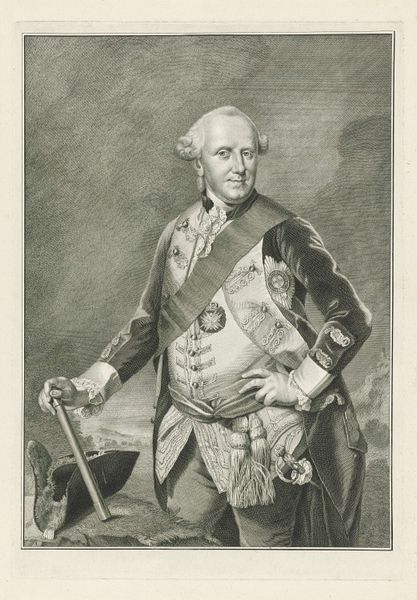
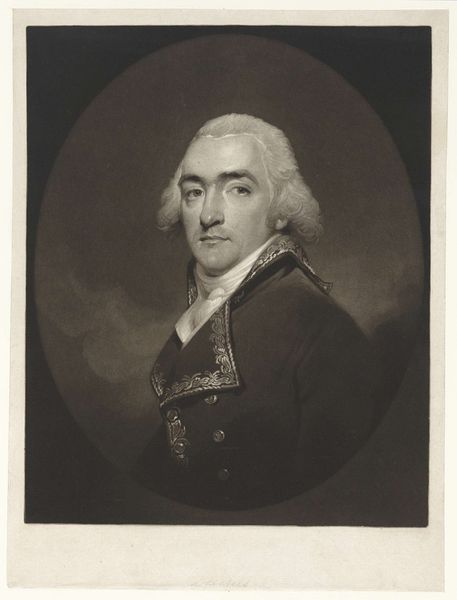
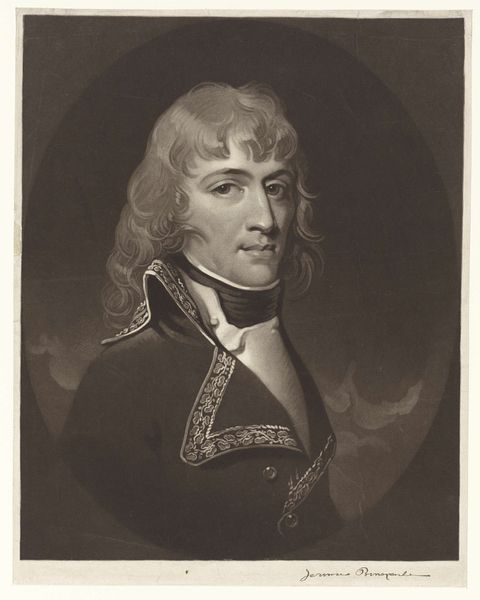
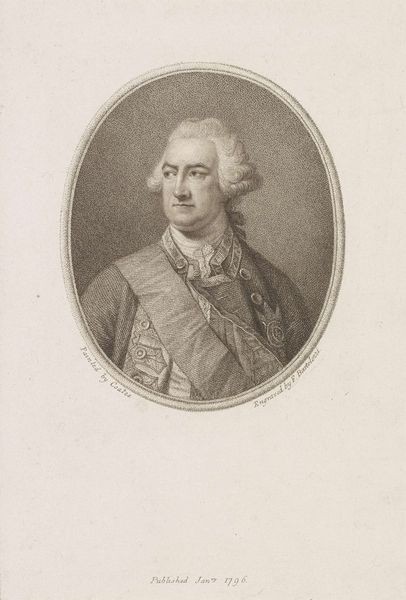
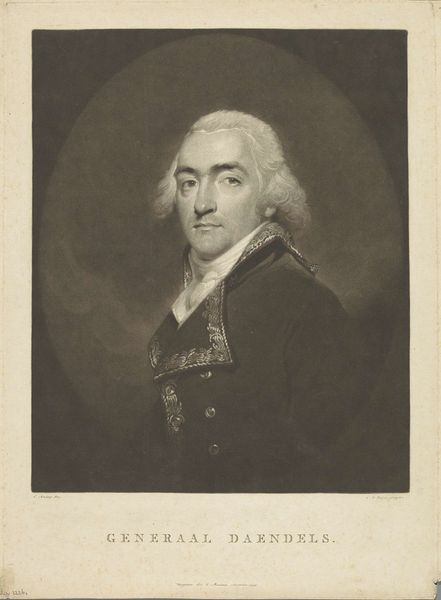
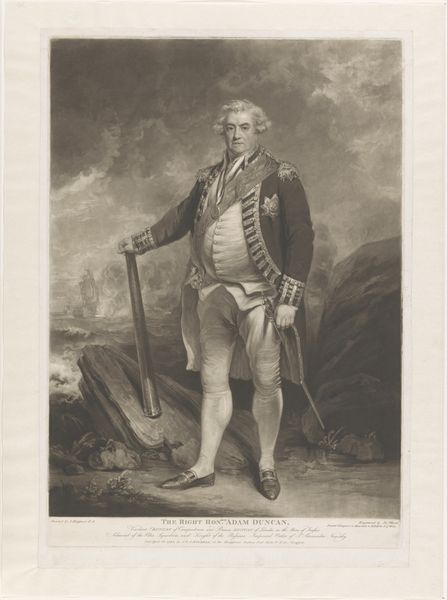
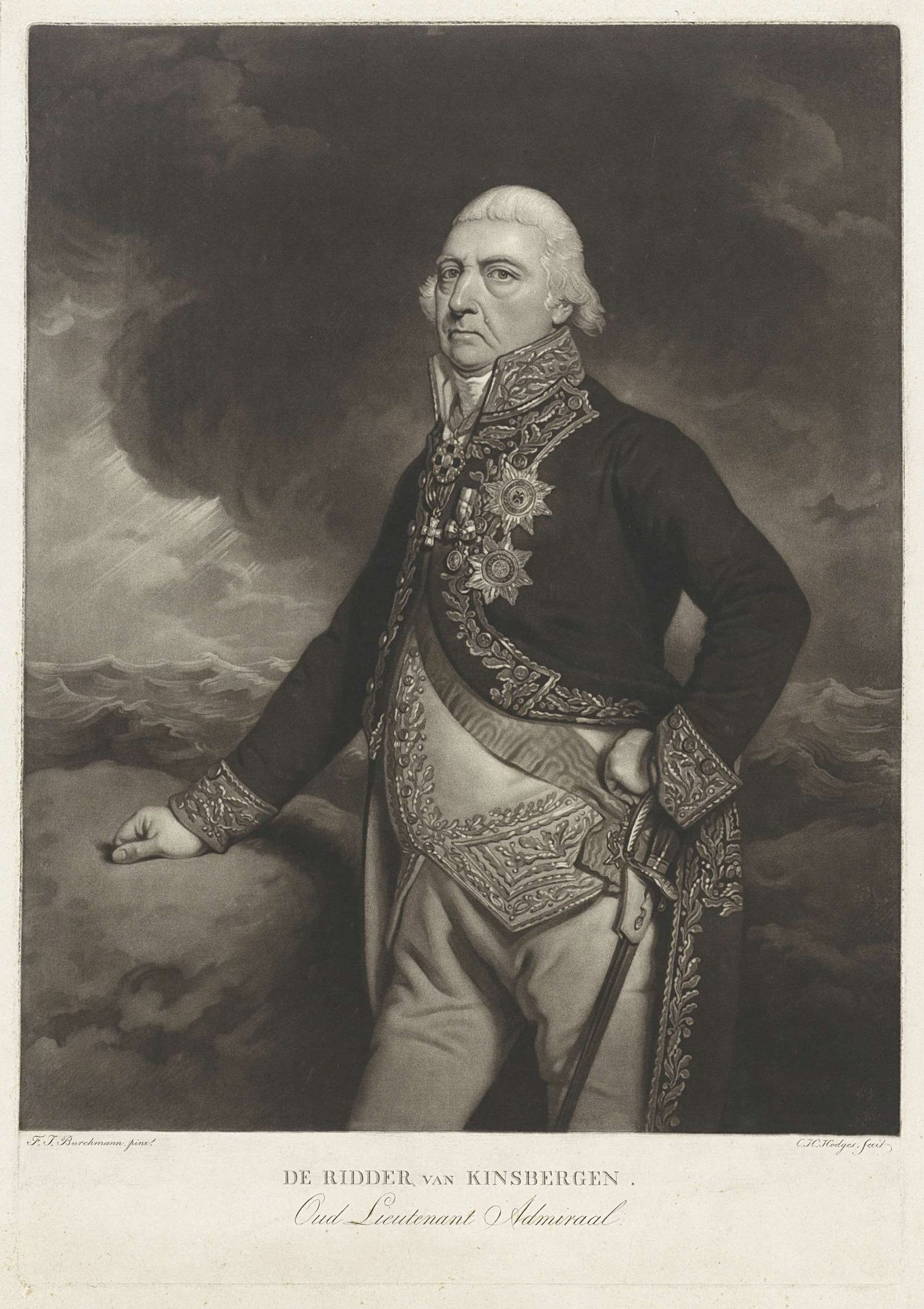
Editor: Here we have Charles Howard Hodges' portrait of Admiral Jan Hendrik van Kinsbergen, engraved sometime between 1788 and 1837. There’s a real weight to this portrait, a sense of established power and seriousness in his gaze, even with that rather dramatic stormy backdrop. What do you see in this piece? Curator: I see a representation deeply embedded in the power structures of its time. This portrait, beyond being a likeness, is a careful construction of authority. Kinsbergen's identity is tied to the navy and to the nation, to its imperial project and to the ideals of masculine leadership that upheld it. Do you notice how the symbols of rank – the uniform, the medals – operate as claims to legitimacy? Editor: Yes, the medals are almost blinding, but does that say something about… propaganda, perhaps? Curator: Precisely! It’s critical to recognize this image as participating in the visual language of empire. The storm behind him suggests both the challenges he has overcome and the dominance he exerts over the seas, reinforcing a narrative of Dutch naval prowess. How might this image have served to reinforce social hierarchies? Editor: I suppose it puts the Admiral on a pedestal, literally and figuratively, further distancing him from the general public while cementing his importance in society. It's a one-sided story. Curator: Exactly. And we must critically engage with those one-sided stories. By understanding the social and political contexts, we can unravel the ways in which art, even seemingly straightforward portraiture, participates in shaping and reinforcing power dynamics. Editor: This really highlights the importance of questioning what appears at face value in art, and to think about the impact that images like this have had on constructing our understanding of history. Curator: Agreed. Analyzing visual representations like this allows us to challenge dominant narratives.
Portret van admiraal Jan Hendrik van Kinsbergen
1788 - 1837

Charles Howard Hodges
1764 - 1837Location
RijksmuseumArtwork details
- Medium
- engraving
- Dimensions
- height 511 mm, width 358 mm
- Location
- Rijksmuseum
- Copyright
- Rijks Museum: Open Domain
Tags
Comments
Share your thoughts
About this artwork
Editor: Here we have Charles Howard Hodges' portrait of Admiral Jan Hendrik van Kinsbergen, engraved sometime between 1788 and 1837. There’s a real weight to this portrait, a sense of established power and seriousness in his gaze, even with that rather dramatic stormy backdrop. What do you see in this piece? Curator: I see a representation deeply embedded in the power structures of its time. This portrait, beyond being a likeness, is a careful construction of authority. Kinsbergen's identity is tied to the navy and to the nation, to its imperial project and to the ideals of masculine leadership that upheld it. Do you notice how the symbols of rank – the uniform, the medals – operate as claims to legitimacy? Editor: Yes, the medals are almost blinding, but does that say something about… propaganda, perhaps? Curator: Precisely! It’s critical to recognize this image as participating in the visual language of empire. The storm behind him suggests both the challenges he has overcome and the dominance he exerts over the seas, reinforcing a narrative of Dutch naval prowess. How might this image have served to reinforce social hierarchies? Editor: I suppose it puts the Admiral on a pedestal, literally and figuratively, further distancing him from the general public while cementing his importance in society. It's a one-sided story. Curator: Exactly. And we must critically engage with those one-sided stories. By understanding the social and political contexts, we can unravel the ways in which art, even seemingly straightforward portraiture, participates in shaping and reinforcing power dynamics. Editor: This really highlights the importance of questioning what appears at face value in art, and to think about the impact that images like this have had on constructing our understanding of history. Curator: Agreed. Analyzing visual representations like this allows us to challenge dominant narratives.
Comments
Share your thoughts