About this artwork
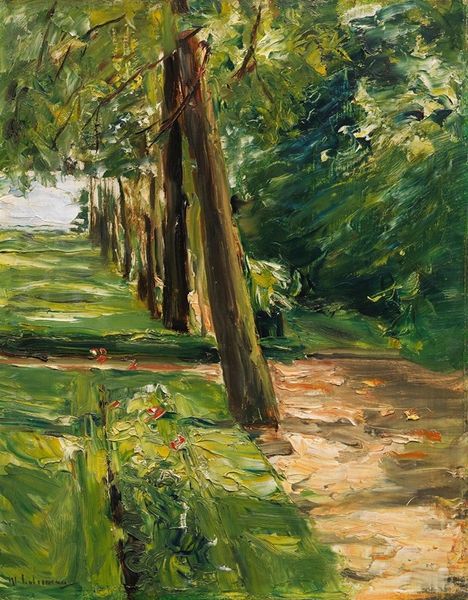
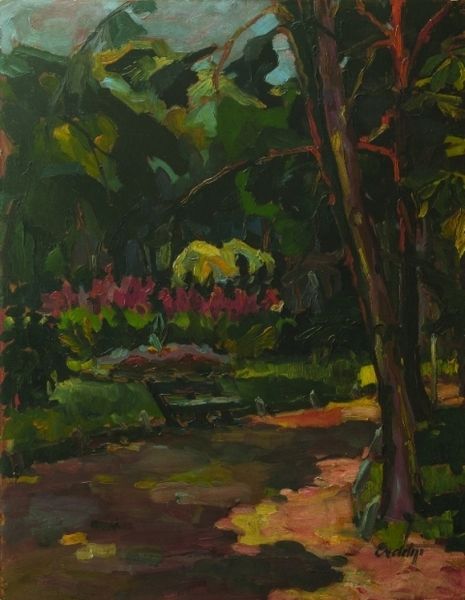
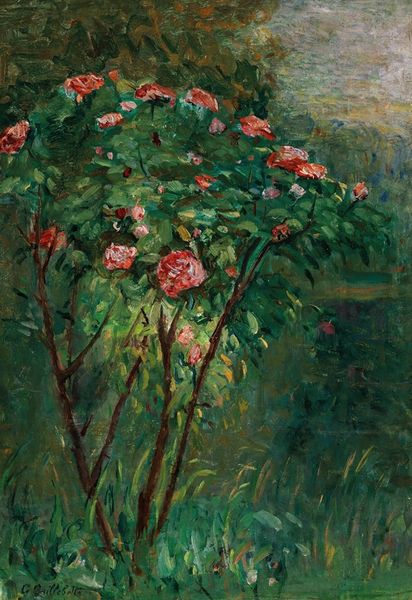
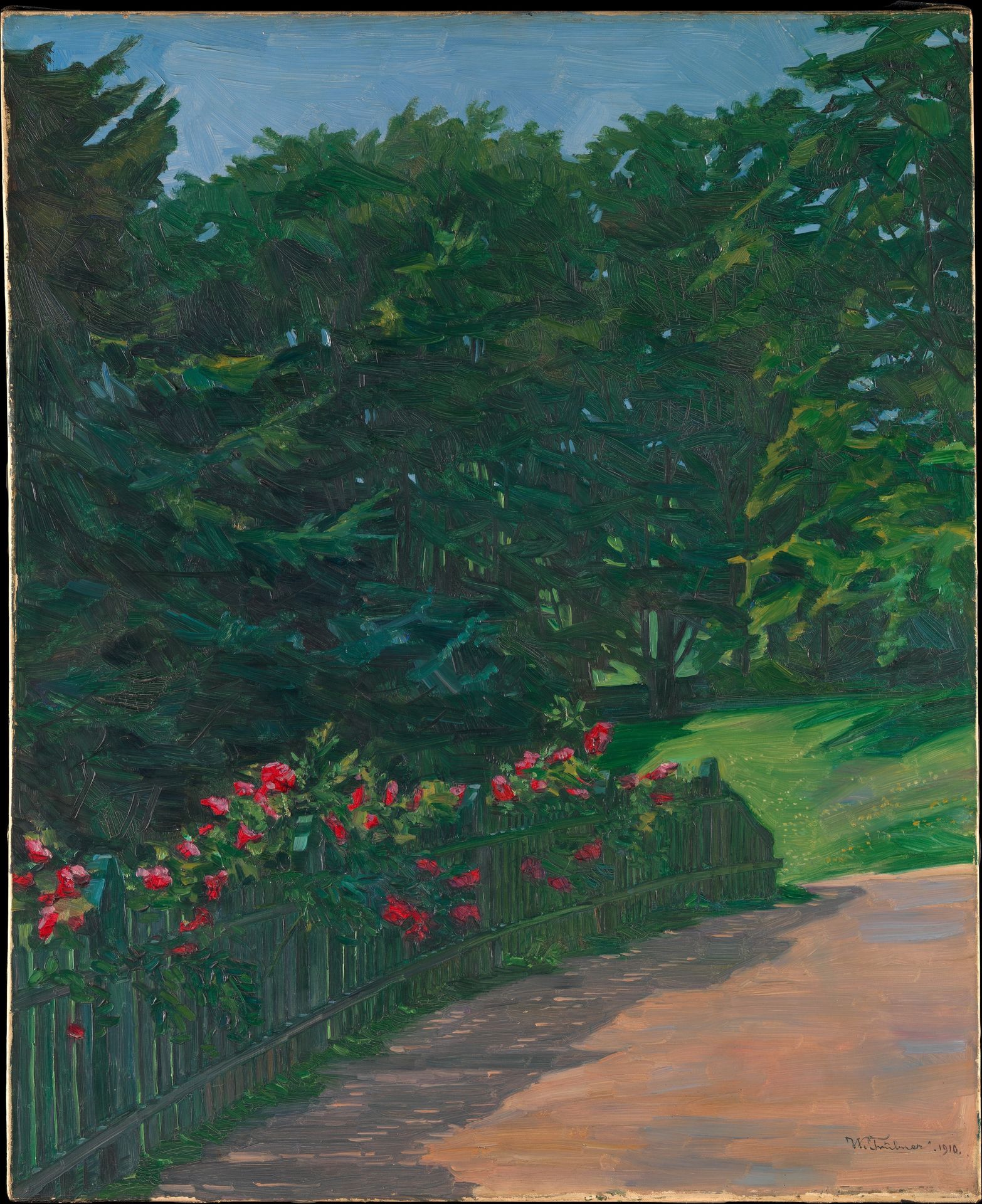
Wilhelm Trübner painted this Rose Hedge, using oil on canvas, some time in the late 19th, early 20th century. The artist creates a scene using lots of greens and reds, and it seems like a lot of looking. What’s interesting to me is the mark making: there’s a real layering and density in the build up of the image; especially in the top half of the painting, where the foliage melds into a single, dark, mass. The eye struggles to differentiate the various surfaces. In the bottom half, however, the artist teases out a bit more detail. The long shadows cast on the path, and the scumbled marks of red that describe the roses climbing over the fence create a sense of depth, and invite you to enter the picture. The painting reminds me a bit of Courbet, another artist who uses darkness to create light. Both artists embrace the ongoing conversation about seeing.
Rose Hedge 1910


Artwork details
- Dimensions
- 29 7/8 x 24 1/4 in. (75.9 x 61.5 cm)
- Location
- Metropolitan Museum of Art, New York, NY
- Copyright
- Public Domain
Comments
No comments
About this artwork
Wilhelm Trübner painted this Rose Hedge, using oil on canvas, some time in the late 19th, early 20th century. The artist creates a scene using lots of greens and reds, and it seems like a lot of looking. What’s interesting to me is the mark making: there’s a real layering and density in the build up of the image; especially in the top half of the painting, where the foliage melds into a single, dark, mass. The eye struggles to differentiate the various surfaces. In the bottom half, however, the artist teases out a bit more detail. The long shadows cast on the path, and the scumbled marks of red that describe the roses climbing over the fence create a sense of depth, and invite you to enter the picture. The painting reminds me a bit of Courbet, another artist who uses darkness to create light. Both artists embrace the ongoing conversation about seeing.
Comments
No comments