About this artwork
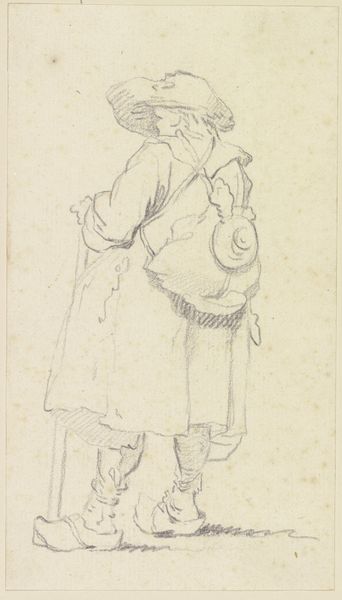
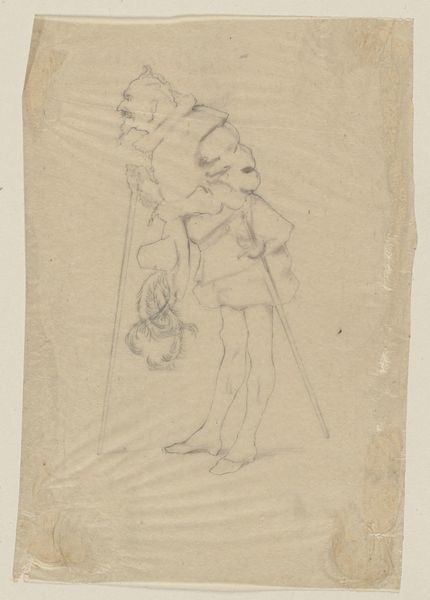
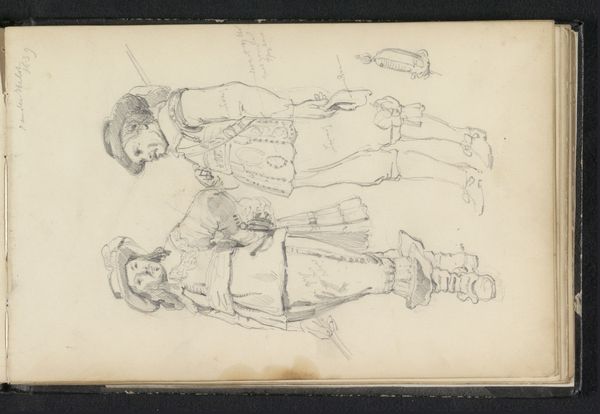
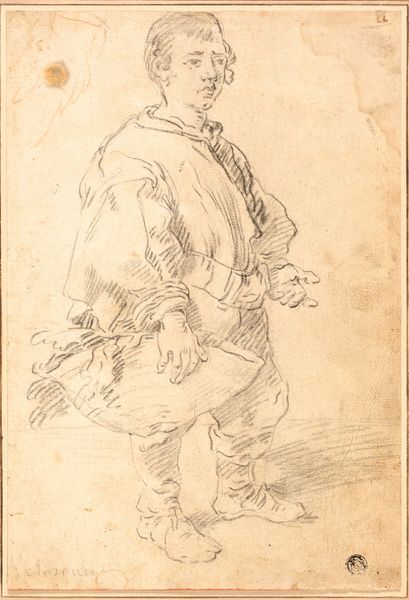
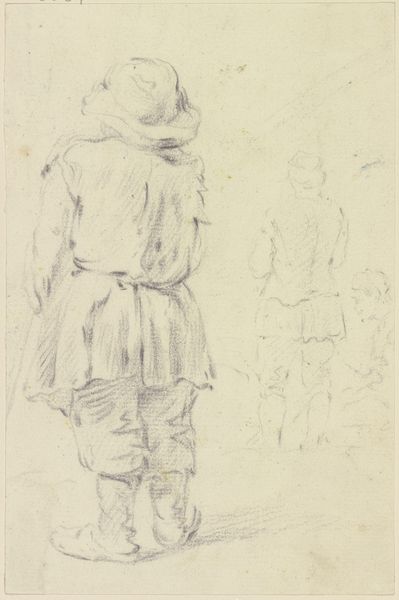
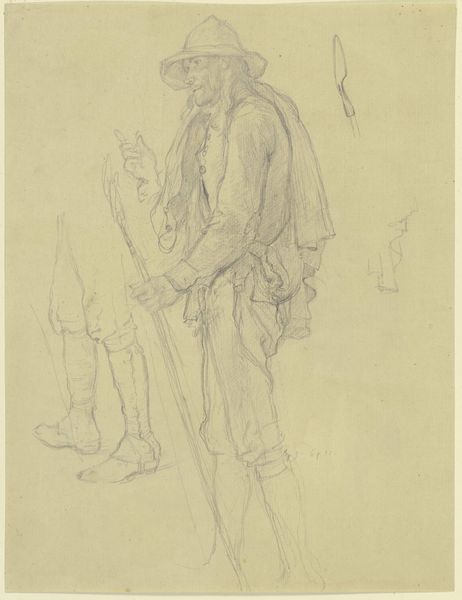
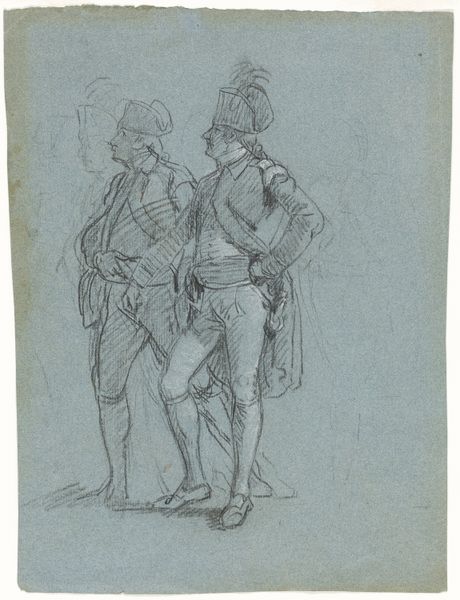
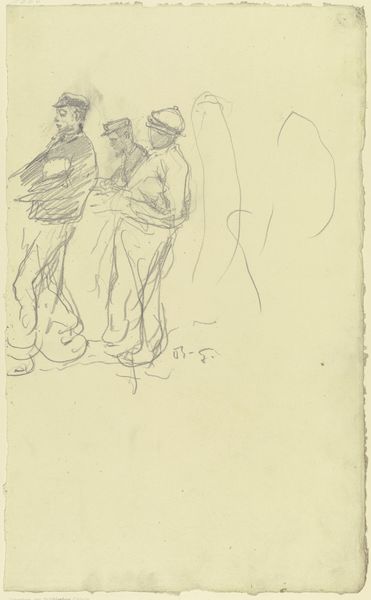
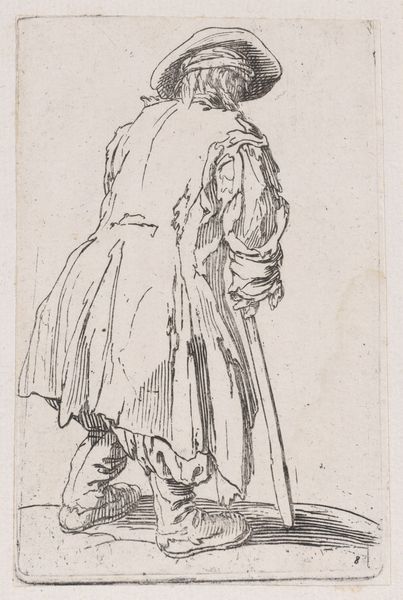
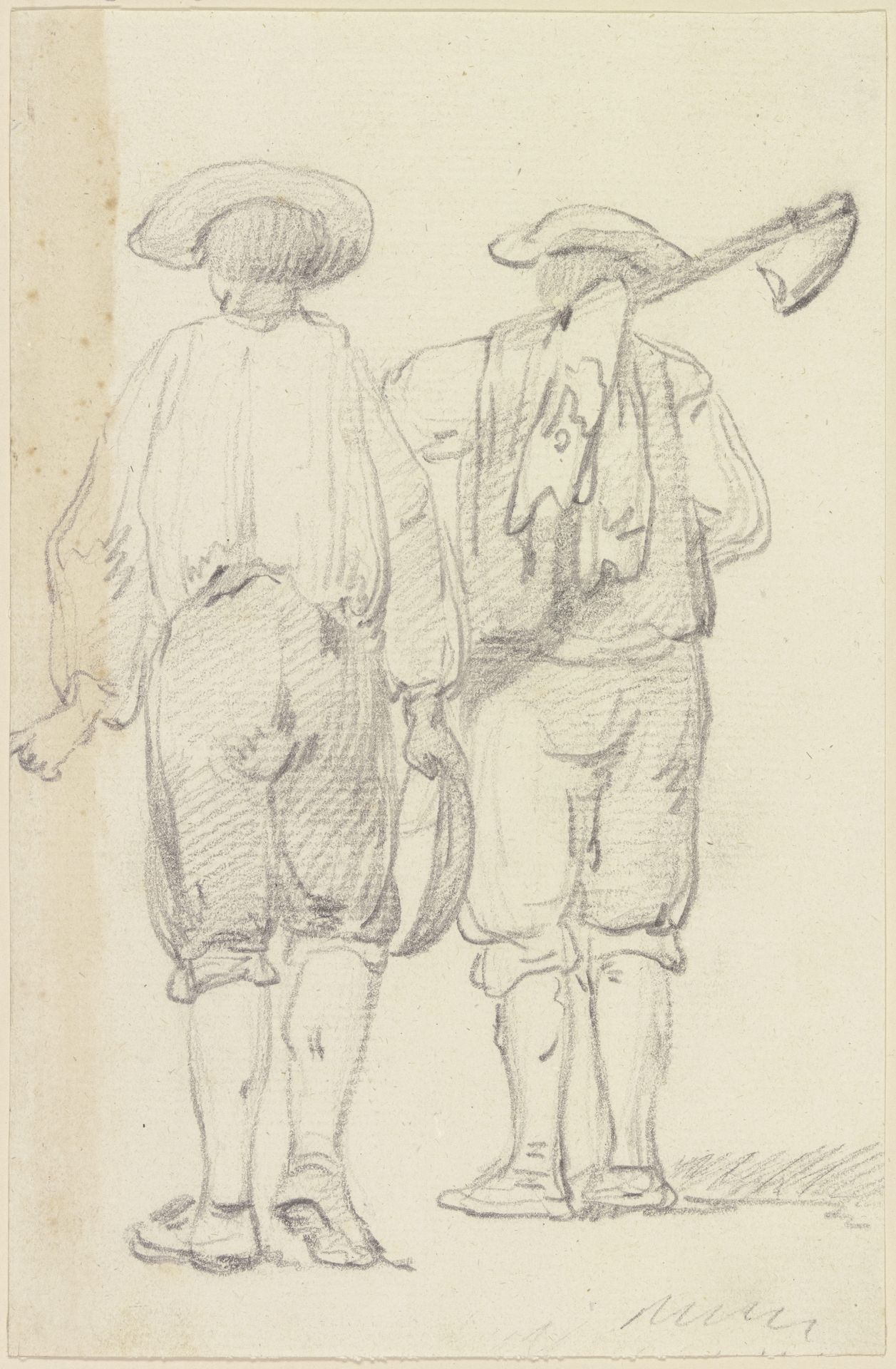
Georg Melchior Kraus created this pencil drawing titled Zwei Bauern in Rückenansicht – or Two Peasants from the Back - in the late 18th century. The Age of Enlightenment was dawning in Europe. Kraus's work invites us to consider the lives of those often overlooked in art history: the working class. Look closely. What do you notice about their posture? Their clothing? The tools they carry? Kraus captures a sense of their dignity, even as they are presented from behind, anonymous and turned away from the viewer. The deliberate choice to depict these figures suggests a growing awareness and perhaps an idealization of the common person. It is worth asking, is this portrayal an act of empathy, or does it participate in the construction of the ‘rustic peasant’ as a counterpoint to the refined aristocracy? It’s these kinds of questions that help us engage with the social narratives embedded in art. This drawing offers a glimpse into a changing world, where the value and visibility of everyday people were slowly beginning to emerge in artistic representation.
Zwei Bauern in Rückenansicht
c. 1771 - 1772


Artwork details
- Medium
- drawing, pencil, chalk
- Location
- Städel Museum
- Copyright
- Public Domain
Tags
portrait
drawing
pencil sketch
pencil
chalk
15_18th-century
genre-painting
academic-art
realism
Comments
Be the first to share your thoughts about this work.
About this artwork
Georg Melchior Kraus created this pencil drawing titled Zwei Bauern in Rückenansicht – or Two Peasants from the Back - in the late 18th century. The Age of Enlightenment was dawning in Europe. Kraus's work invites us to consider the lives of those often overlooked in art history: the working class. Look closely. What do you notice about their posture? Their clothing? The tools they carry? Kraus captures a sense of their dignity, even as they are presented from behind, anonymous and turned away from the viewer. The deliberate choice to depict these figures suggests a growing awareness and perhaps an idealization of the common person. It is worth asking, is this portrayal an act of empathy, or does it participate in the construction of the ‘rustic peasant’ as a counterpoint to the refined aristocracy? It’s these kinds of questions that help us engage with the social narratives embedded in art. This drawing offers a glimpse into a changing world, where the value and visibility of everyday people were slowly beginning to emerge in artistic representation.
Comments
Be the first to share your thoughts about this work.