About this artwork
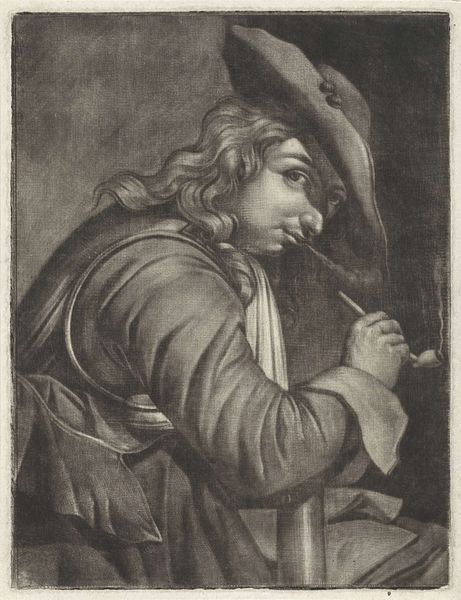
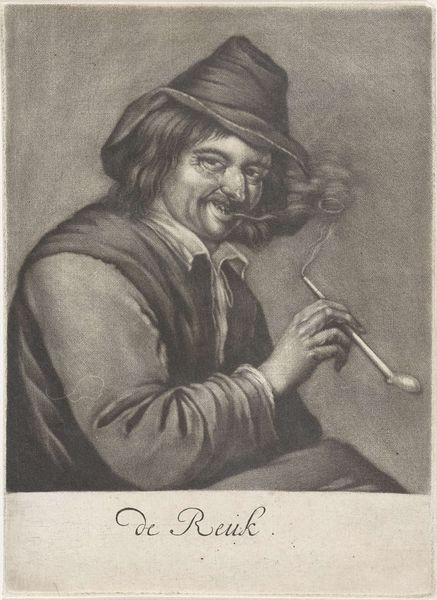
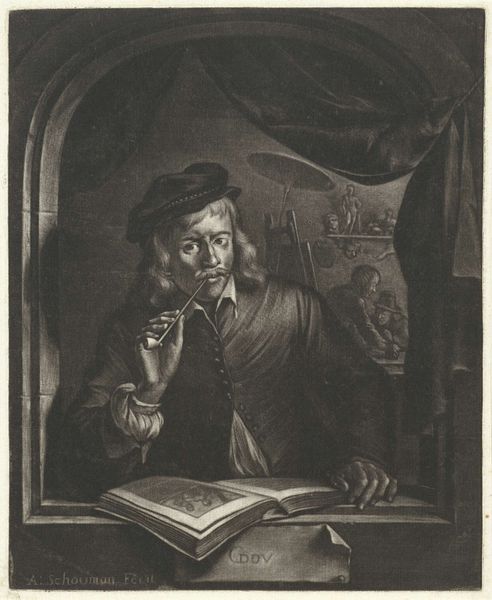
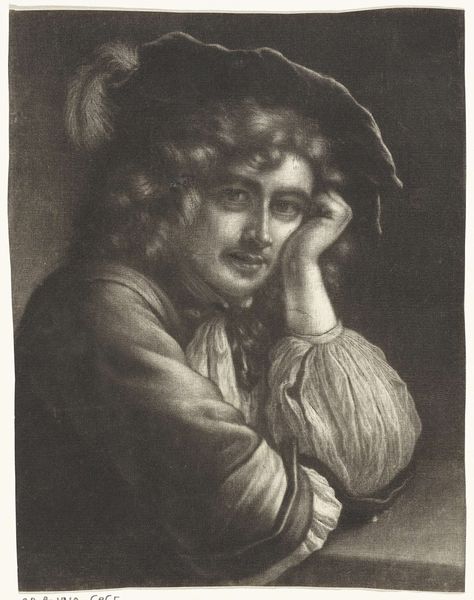
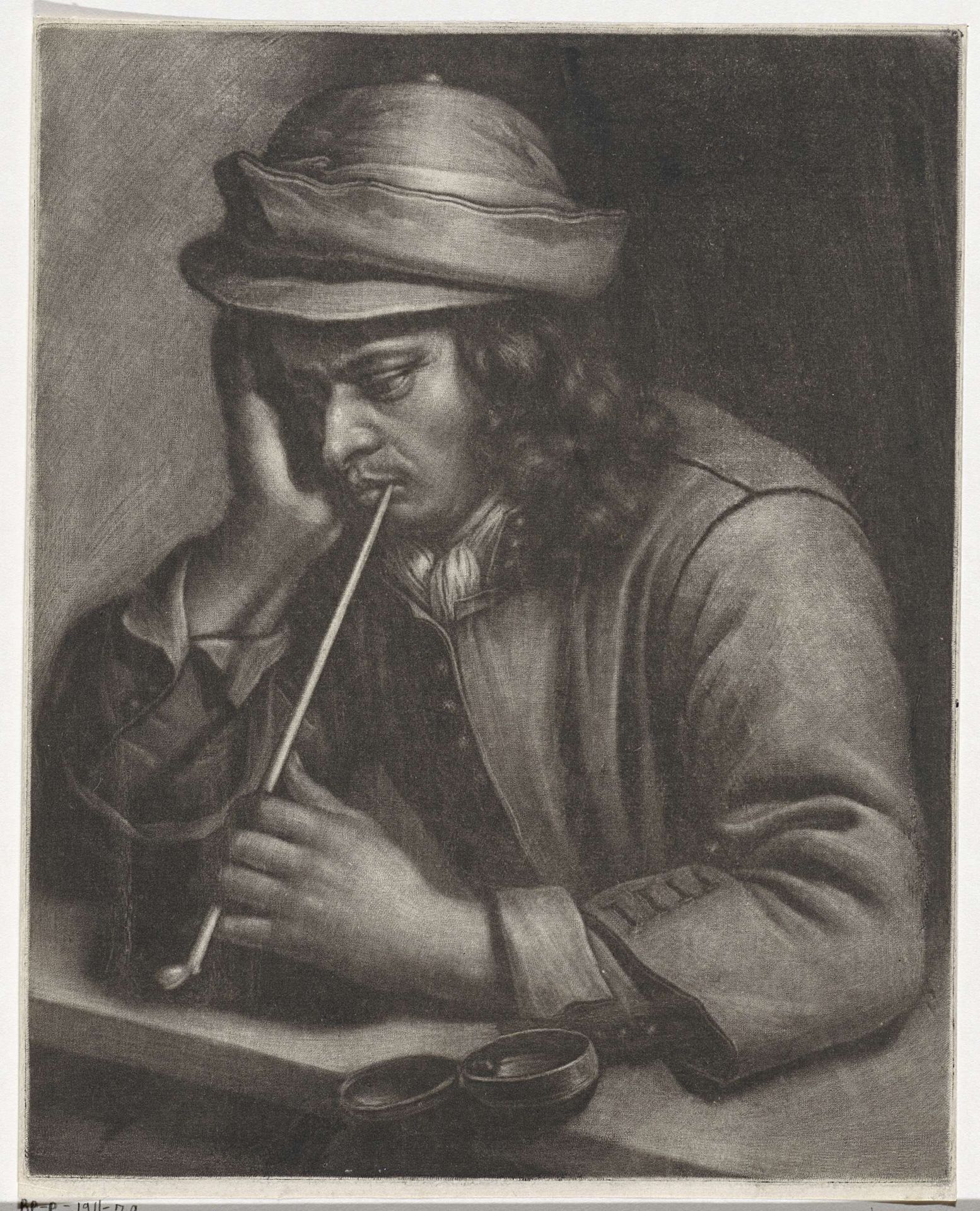
This mezzotint, "Rokende man," was created by Wallerant Vaillant in the 17th century. The dominant image is that of a man smoking a pipe, an act laden with symbolism in the Dutch Golden Age. Smoking, newly introduced from the Americas, represented both worldly pleasure and transience, a visual memento mori. Consider the motif of smoking across cultures. In some indigenous traditions, tobacco holds sacred significance, used in rituals to connect with the spiritual world. Yet, in Dutch art, it often appears with vanitas symbols—skulls, decaying fruit—reminding us of life's fleeting nature. This duality reveals a complex interplay between indulgence and awareness of mortality. The man's contemplative pose, head in hand, evokes a sense of melancholic introspection, a theme echoed in countless portraits throughout history. It is as if the smoke itself carries the weight of human consciousness, a shared, subconscious awareness of our own impermanence. These symbols are not static; they evolve, resurface, and are continuously reinterpreted in the theater of human experience.

Artwork details
- Medium
- drawing, graphite
- Dimensions
- height 228 mm, width 182 mm
- Location
- Rijksmuseum
- Copyright
- Rijks Museum: Open Domain
Tags
portrait
drawing
self-portrait
baroque
charcoal drawing
graphite
Comments
Be the first to share your thoughts about this work.
About this artwork
This mezzotint, "Rokende man," was created by Wallerant Vaillant in the 17th century. The dominant image is that of a man smoking a pipe, an act laden with symbolism in the Dutch Golden Age. Smoking, newly introduced from the Americas, represented both worldly pleasure and transience, a visual memento mori. Consider the motif of smoking across cultures. In some indigenous traditions, tobacco holds sacred significance, used in rituals to connect with the spiritual world. Yet, in Dutch art, it often appears with vanitas symbols—skulls, decaying fruit—reminding us of life's fleeting nature. This duality reveals a complex interplay between indulgence and awareness of mortality. The man's contemplative pose, head in hand, evokes a sense of melancholic introspection, a theme echoed in countless portraits throughout history. It is as if the smoke itself carries the weight of human consciousness, a shared, subconscious awareness of our own impermanence. These symbols are not static; they evolve, resurface, and are continuously reinterpreted in the theater of human experience.
Comments
Be the first to share your thoughts about this work.