About this artwork
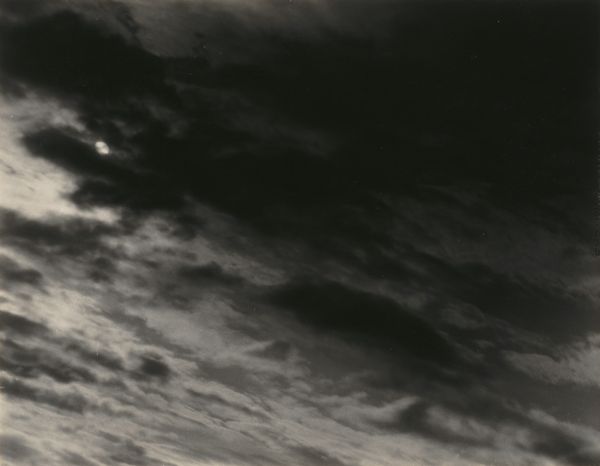
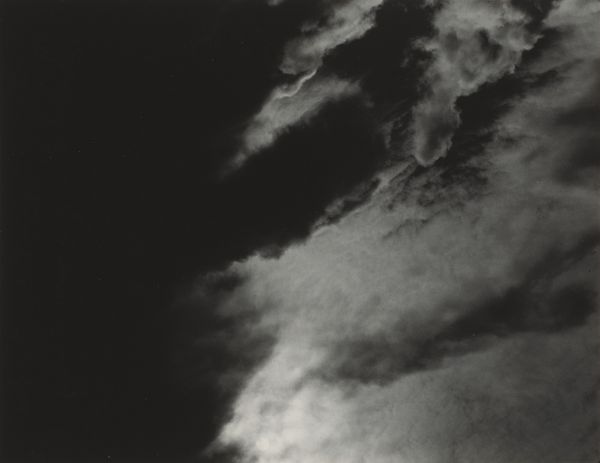
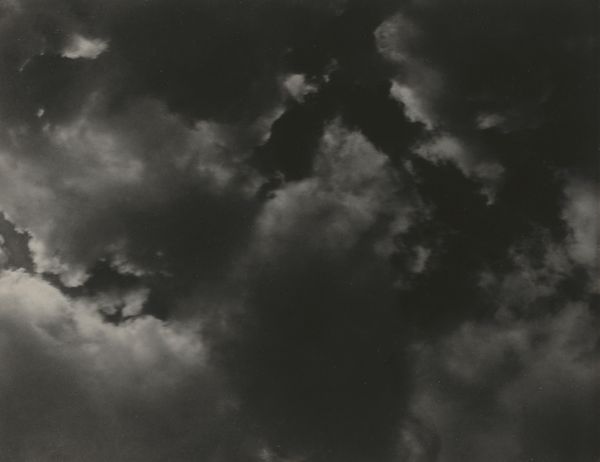
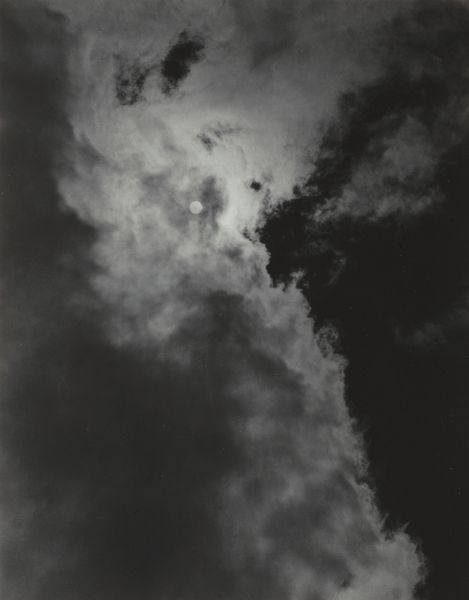
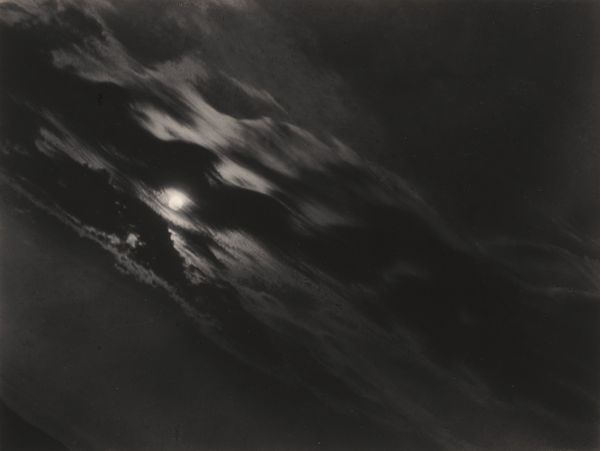
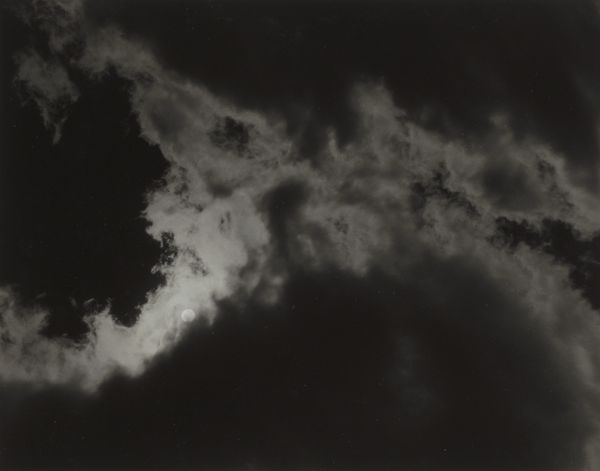
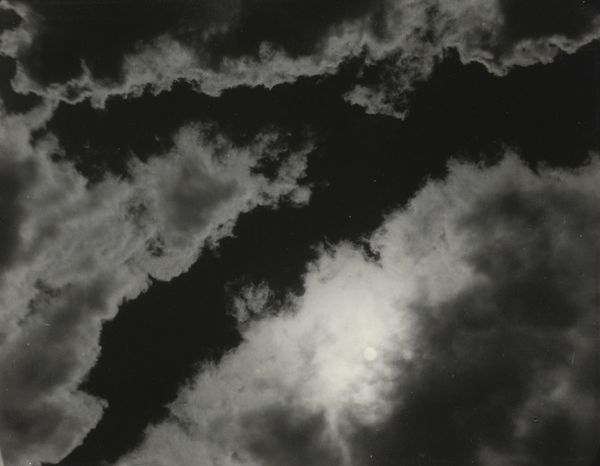
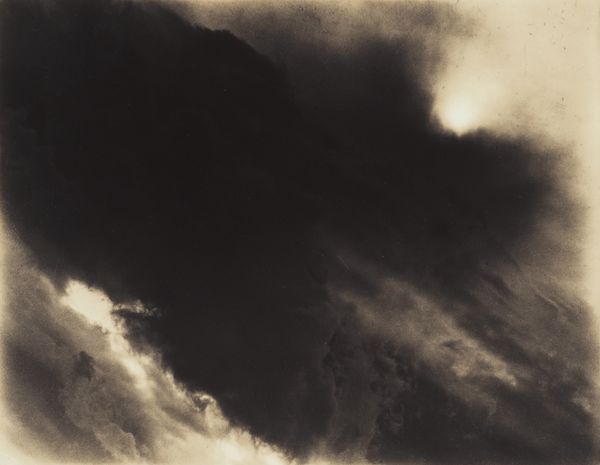
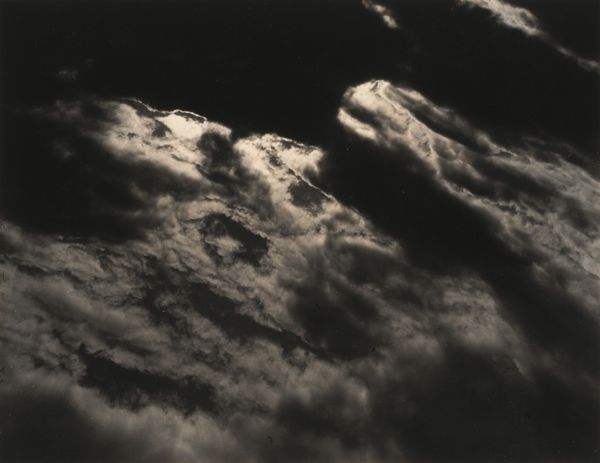
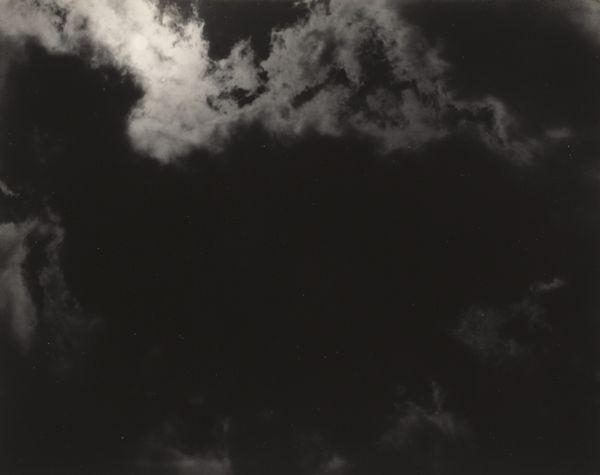
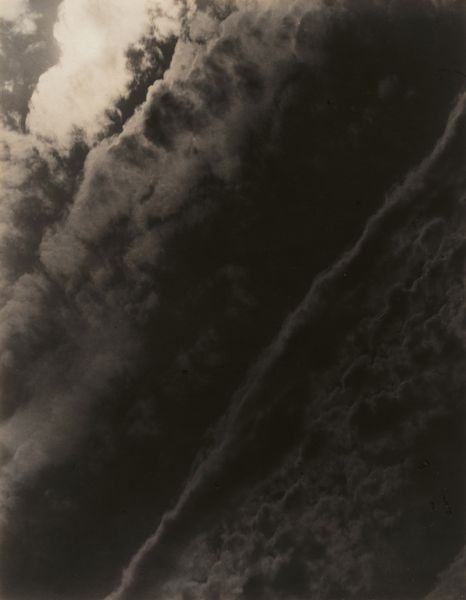
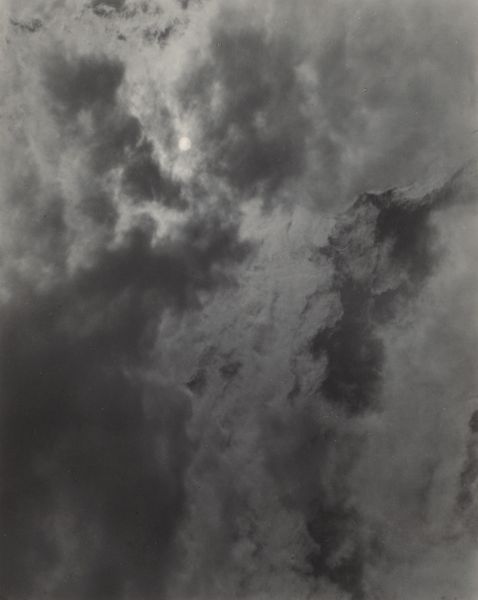
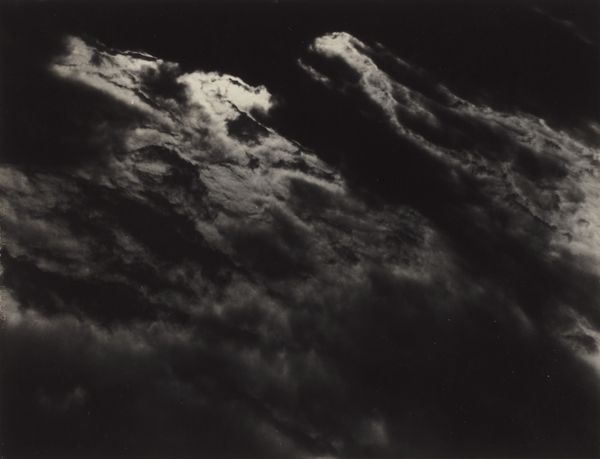
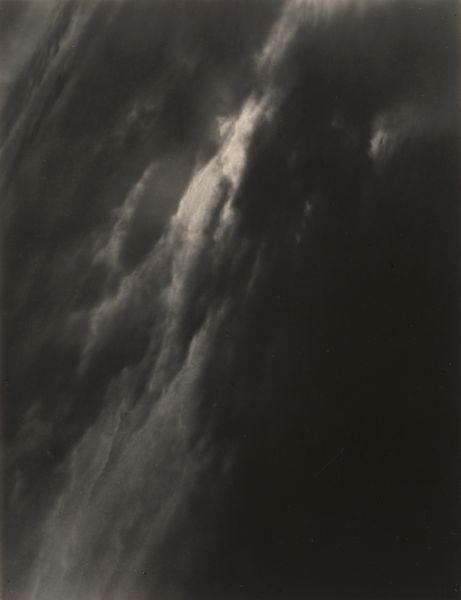
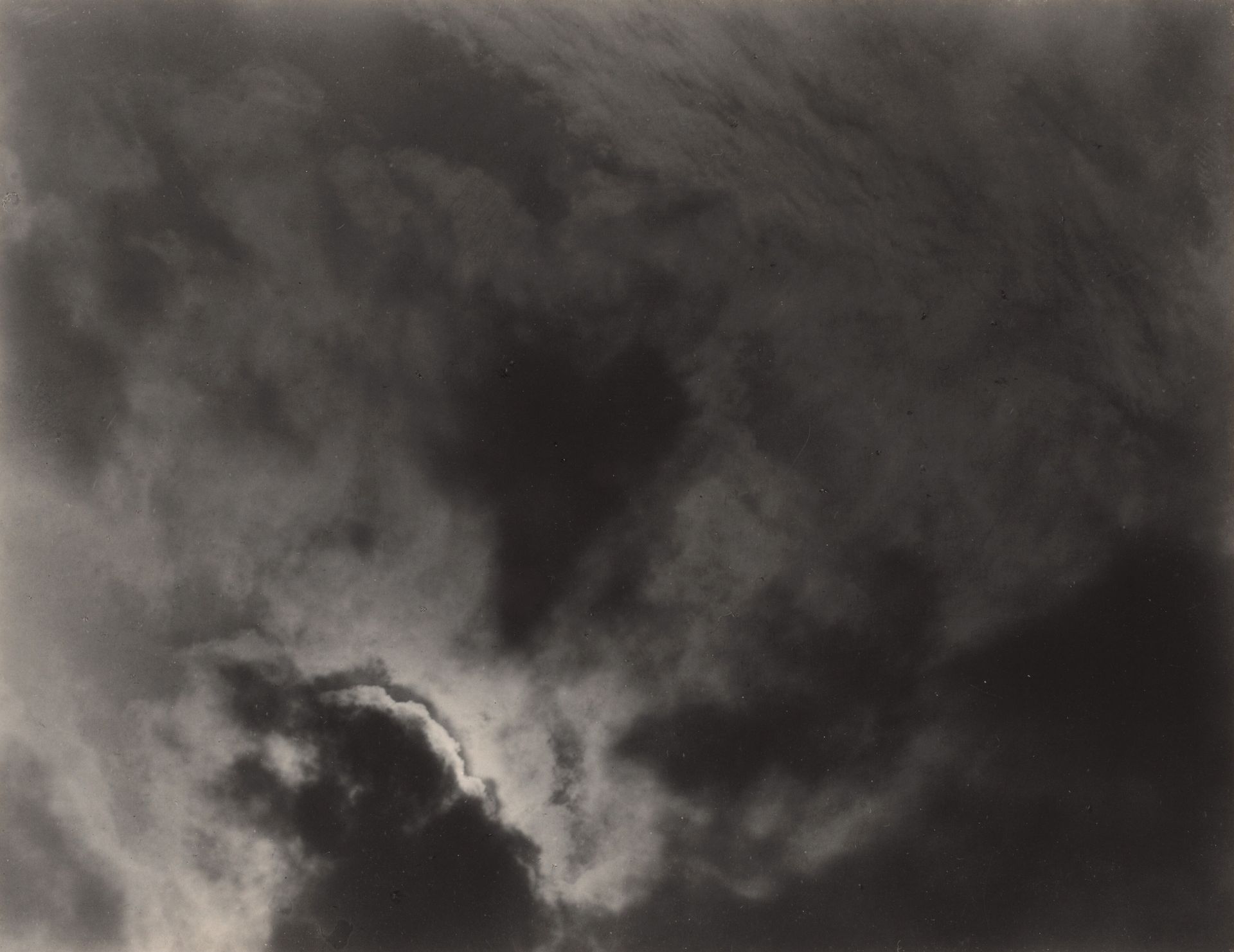
Alfred Stieglitz made this photograph, “Songs of the Sky,” sometime in the first half of the 20th century. It’s a small picture, but so evocative, like a poem. The tones range from velvety blacks to hazy grays. There is no distinct sense of surface texture to the image but it’s not completely smooth either. It’s as though the clouds have been captured in a moment of transformation, like paint swirling in water. Look at the cloud formation in the bottom left - it almost looks like a brushstroke! That there is no solid form or hard edge gives the picture its emotional depth. It feels like something is always in the process of becoming something else, which is life. This reminds me of the atmospheric paintings of JMW Turner, or even some of the abstract expressionist painters, like Mark Rothko. Ultimately, Stieglitz leaves things open, allowing you to bring your own feelings and experiences to the picture. It resists the idea of one fixed interpretation.
Songs of the Sky or Equivalent 1923 - 1929


Artwork details
- Medium
- photography
- Dimensions
- sheet (trimmed to image): 9.2 x 11.9 cm (3 5/8 x 4 11/16 in.) mount: 35 x 27.5 cm (13 3/4 x 10 13/16 in.)
- Copyright
- National Gallery of Art: CC0 1.0
Tags
non-objective-art
pictorialism
landscape
photography
monochrome photography
abstraction
monochrome
modernism
monochrome
Comments
No comments
About this artwork
Alfred Stieglitz made this photograph, “Songs of the Sky,” sometime in the first half of the 20th century. It’s a small picture, but so evocative, like a poem. The tones range from velvety blacks to hazy grays. There is no distinct sense of surface texture to the image but it’s not completely smooth either. It’s as though the clouds have been captured in a moment of transformation, like paint swirling in water. Look at the cloud formation in the bottom left - it almost looks like a brushstroke! That there is no solid form or hard edge gives the picture its emotional depth. It feels like something is always in the process of becoming something else, which is life. This reminds me of the atmospheric paintings of JMW Turner, or even some of the abstract expressionist painters, like Mark Rothko. Ultimately, Stieglitz leaves things open, allowing you to bring your own feelings and experiences to the picture. It resists the idea of one fixed interpretation.
Comments
No comments