About this artwork
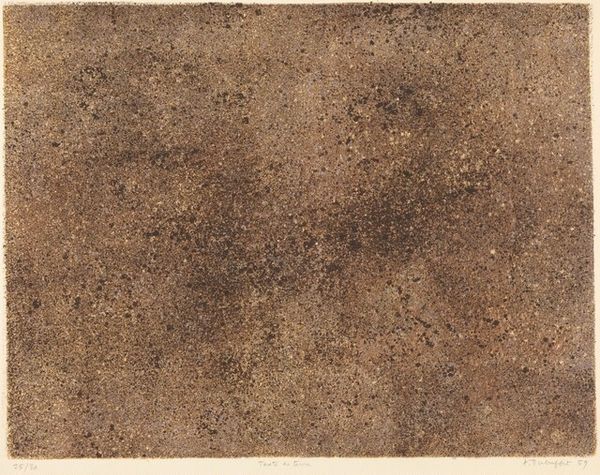
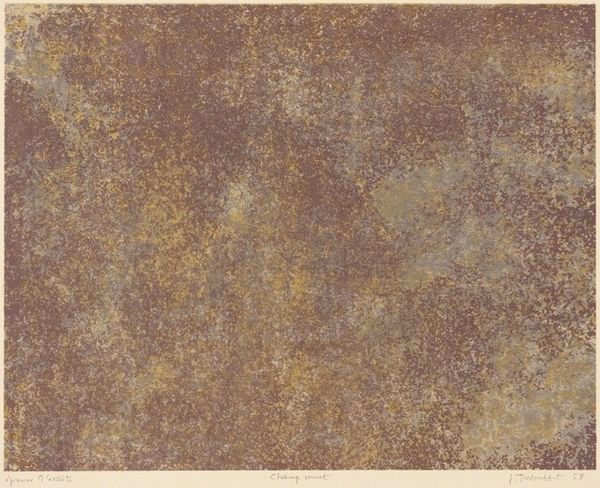
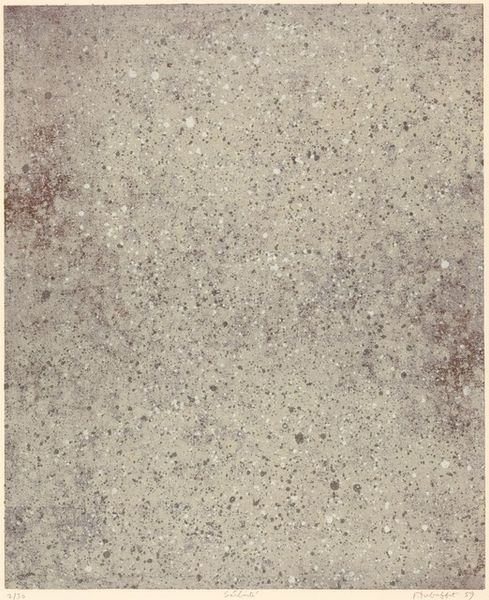
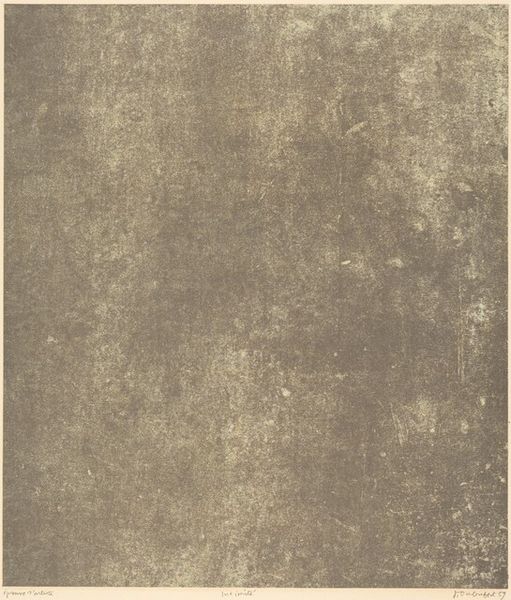
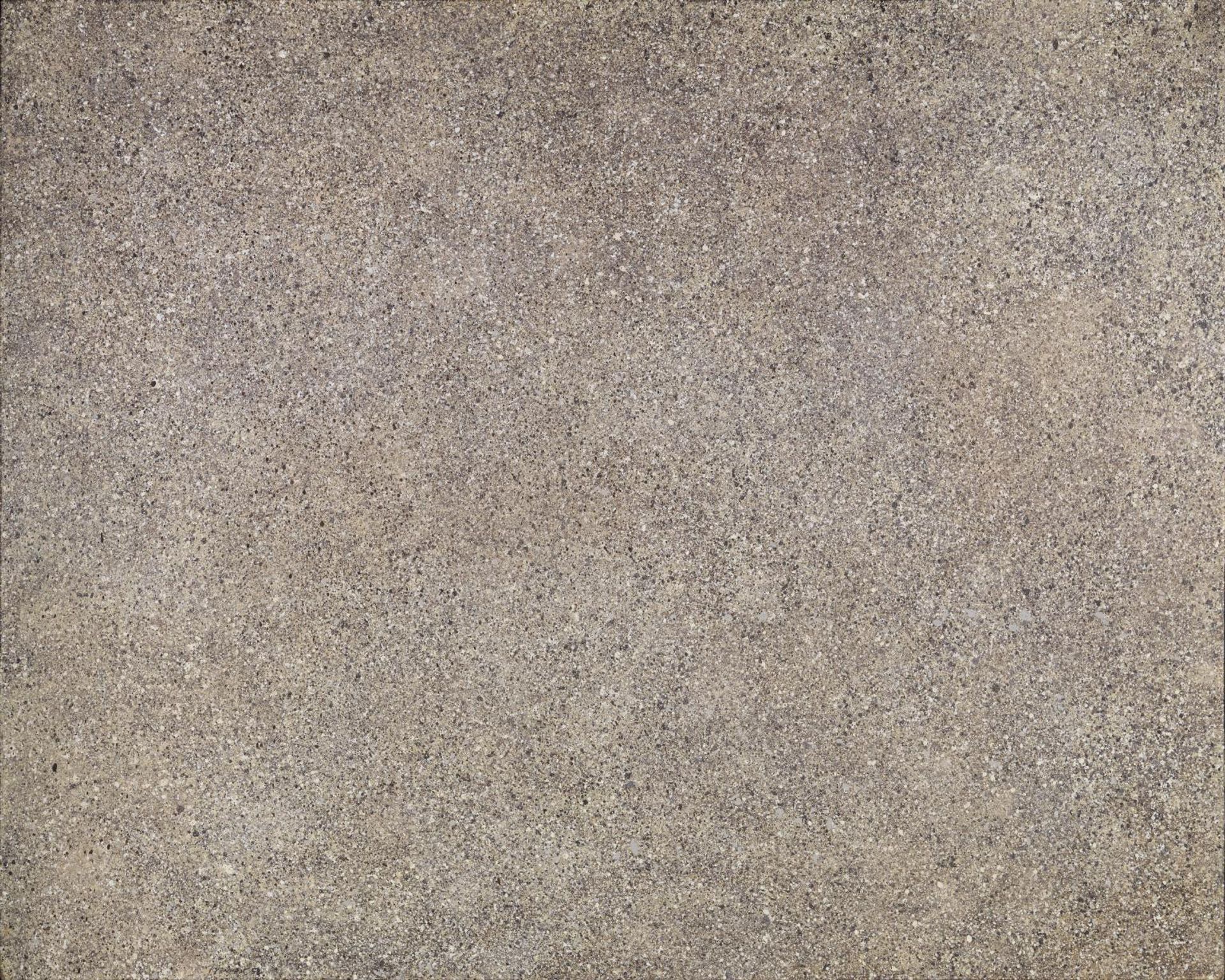
Editor: Here we have Jean Dubuffet's "The Exemplary Life of the Soil (Texturology LXIII)," currently residing at the Tate. It's almost entirely uniform, a field of mottled browns and grays. What am I meant to be seeing here? Curator: Well, think about Dubuffet's interest in art brut—outsider art. This piece challenges traditional notions of beauty and skill, doesn't it? How does a museum context change our perception of this "ordinary" subject? Editor: So, its value lies in questioning what we consider art, placing value in something often overlooked? Curator: Precisely! Dubuffet forces us to reconsider the aesthetics and social hierarchies embedded within the art world itself. Editor: That's a radical statement! I guess I learned that even the mundane can be profound. Curator: And that the art world can be a site of critical inquiry.
The Exemplary Life of the Soil (Texturology LXIII)
1958


Artwork details
- Dimensions
- support: 1295 x 1619 mm frame: 1360 x 1681 x 65 mm
- Location
- Tate Collections
- Copyright
- © ADAGP, Paris and DACS, London 2014 | CC-BY-NC-ND 4.0 DEED, Photo: Tate
Comments

http://www.tate.org.uk/art/artworks/dubuffet-the-exemplary-life-of-the-soil-texturology-lxiii-t00868
Dubuffet invented various techniques to portray soil in a series of paintings called ‘Texturologies’. For this work, he adapted the ‘Tyrolean’ technique, used by stone masons to texture newly plastered walls. Dubuffet shook a brush over the painting, which was laid on the floor, to scatter tiny droplets of paint across the surface. His intention was to give an ‘impression of teeming matter, alive and sparkling, which I could use to represent soil, but which could also evoke all kinds of indeterminate textures, and even galaxies and nebulae’. Gallery label, July 2008
About this artwork
Editor: Here we have Jean Dubuffet's "The Exemplary Life of the Soil (Texturology LXIII)," currently residing at the Tate. It's almost entirely uniform, a field of mottled browns and grays. What am I meant to be seeing here? Curator: Well, think about Dubuffet's interest in art brut—outsider art. This piece challenges traditional notions of beauty and skill, doesn't it? How does a museum context change our perception of this "ordinary" subject? Editor: So, its value lies in questioning what we consider art, placing value in something often overlooked? Curator: Precisely! Dubuffet forces us to reconsider the aesthetics and social hierarchies embedded within the art world itself. Editor: That's a radical statement! I guess I learned that even the mundane can be profound. Curator: And that the art world can be a site of critical inquiry.
Comments
http://www.tate.org.uk/art/artworks/dubuffet-the-exemplary-life-of-the-soil-texturology-lxiii-t00868
Dubuffet invented various techniques to portray soil in a series of paintings called ‘Texturologies’. For this work, he adapted the ‘Tyrolean’ technique, used by stone masons to texture newly plastered walls. Dubuffet shook a brush over the painting, which was laid on the floor, to scatter tiny droplets of paint across the surface. His intention was to give an ‘impression of teeming matter, alive and sparkling, which I could use to represent soil, but which could also evoke all kinds of indeterminate textures, and even galaxies and nebulae’. Gallery label, July 2008