About this artwork
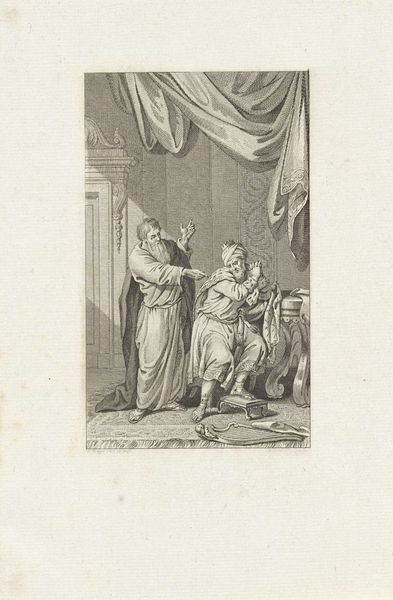
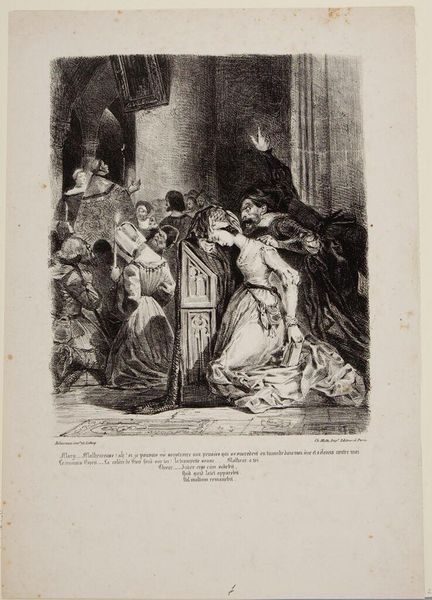
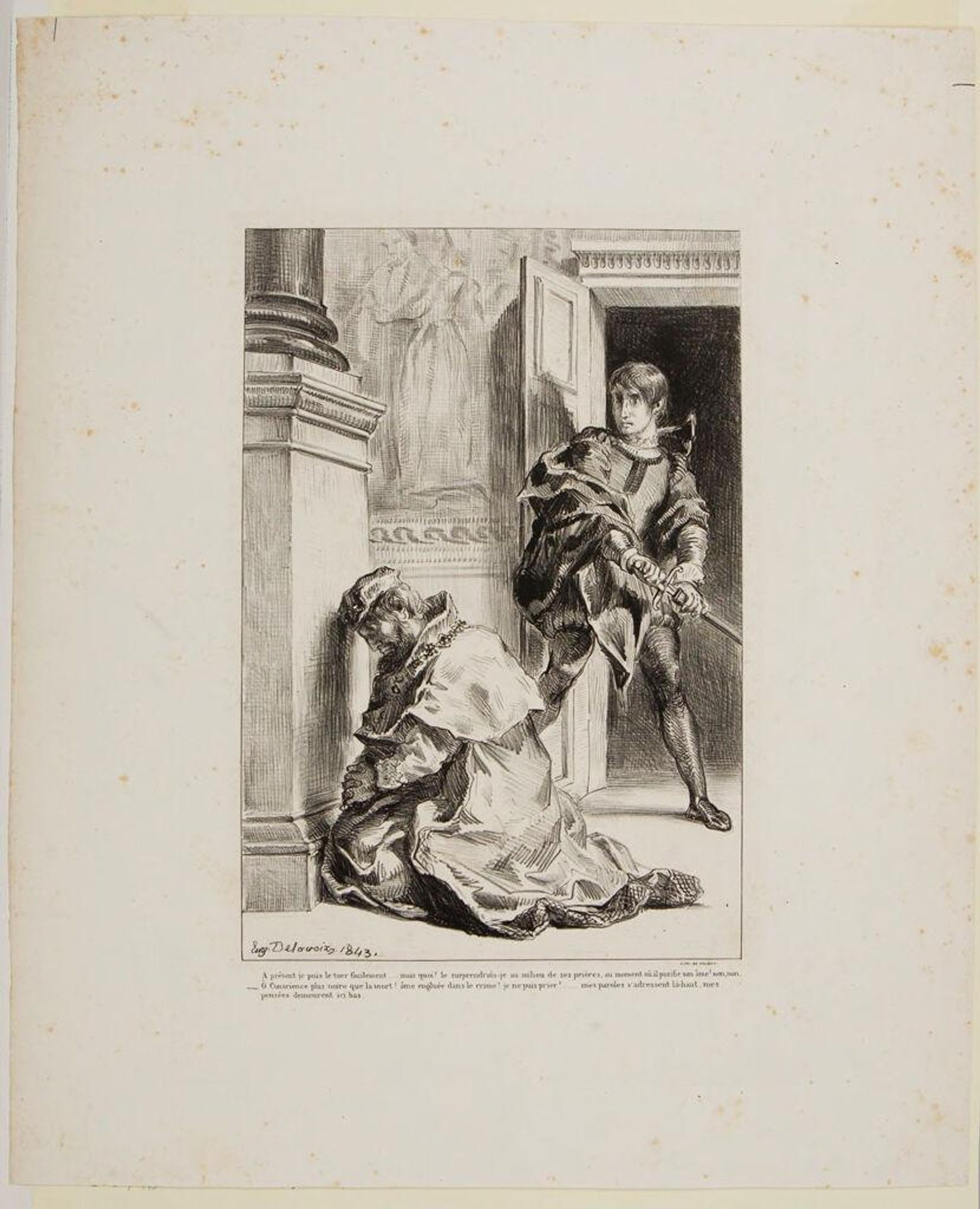
Editor: This is Eugène Delacroix's "Hamlet Attempts to Slay the King." I'm struck by Hamlet's hesitation, the tension palpable in his stance. What can you tell me about the symbolism here? Curator: Delacroix uses Hamlet's suspended action to explore the weight of revenge. The sword, a phallic symbol, represents Hamlet's power, yet his inability to act speaks to his internal conflict. Consider the King's posture, hunched in prayer – is he truly repentant, or is this a performance? Editor: That's fascinating. The King's vulnerability certainly complicates the narrative. Curator: Exactly! Delacroix captures the psychological complexity, revealing the enduring power of symbolic imagery. Editor: I see how cultural memory shapes our understanding of the play, even in this single image. Thanks!
Hamlet Attempts to Slay the King
c. 19th century


Artwork details
- Location
- Harvard Art Museums
- Copyright
- CC0 1.0
Comments
Share your thoughts
About this artwork
Editor: This is Eugène Delacroix's "Hamlet Attempts to Slay the King." I'm struck by Hamlet's hesitation, the tension palpable in his stance. What can you tell me about the symbolism here? Curator: Delacroix uses Hamlet's suspended action to explore the weight of revenge. The sword, a phallic symbol, represents Hamlet's power, yet his inability to act speaks to his internal conflict. Consider the King's posture, hunched in prayer – is he truly repentant, or is this a performance? Editor: That's fascinating. The King's vulnerability certainly complicates the narrative. Curator: Exactly! Delacroix captures the psychological complexity, revealing the enduring power of symbolic imagery. Editor: I see how cultural memory shapes our understanding of the play, even in this single image. Thanks!
Comments
Share your thoughts