About this artwork
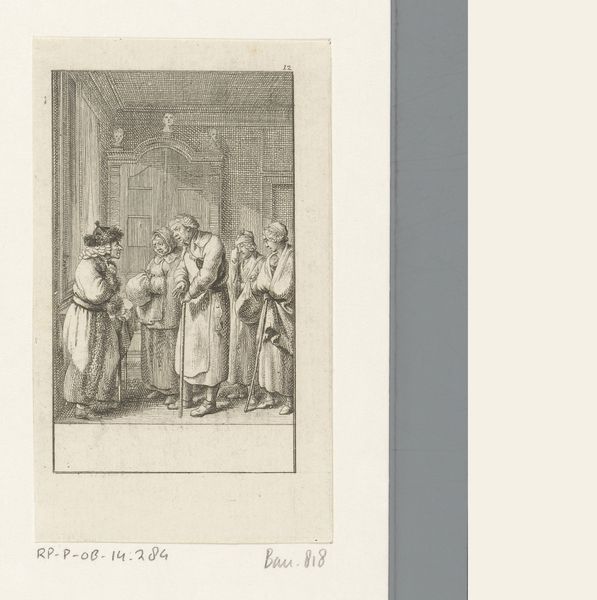
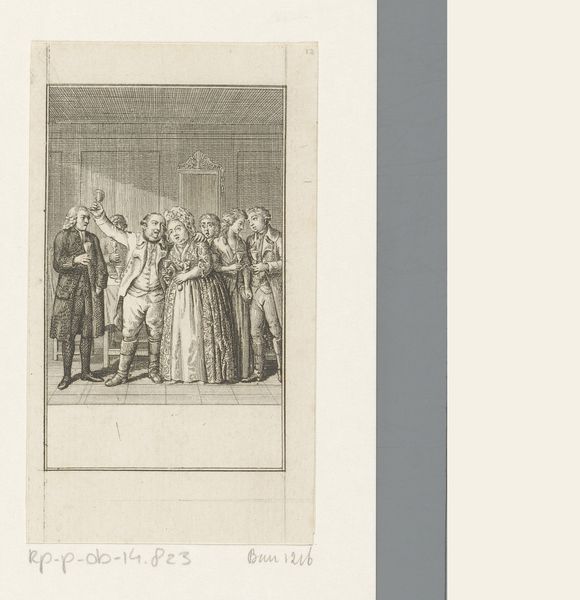
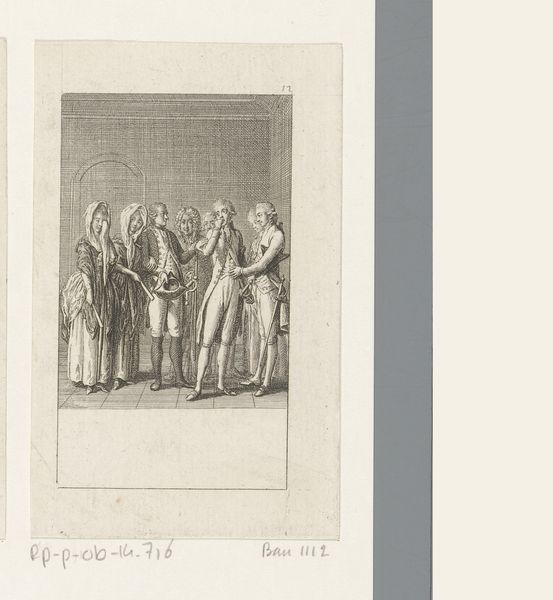
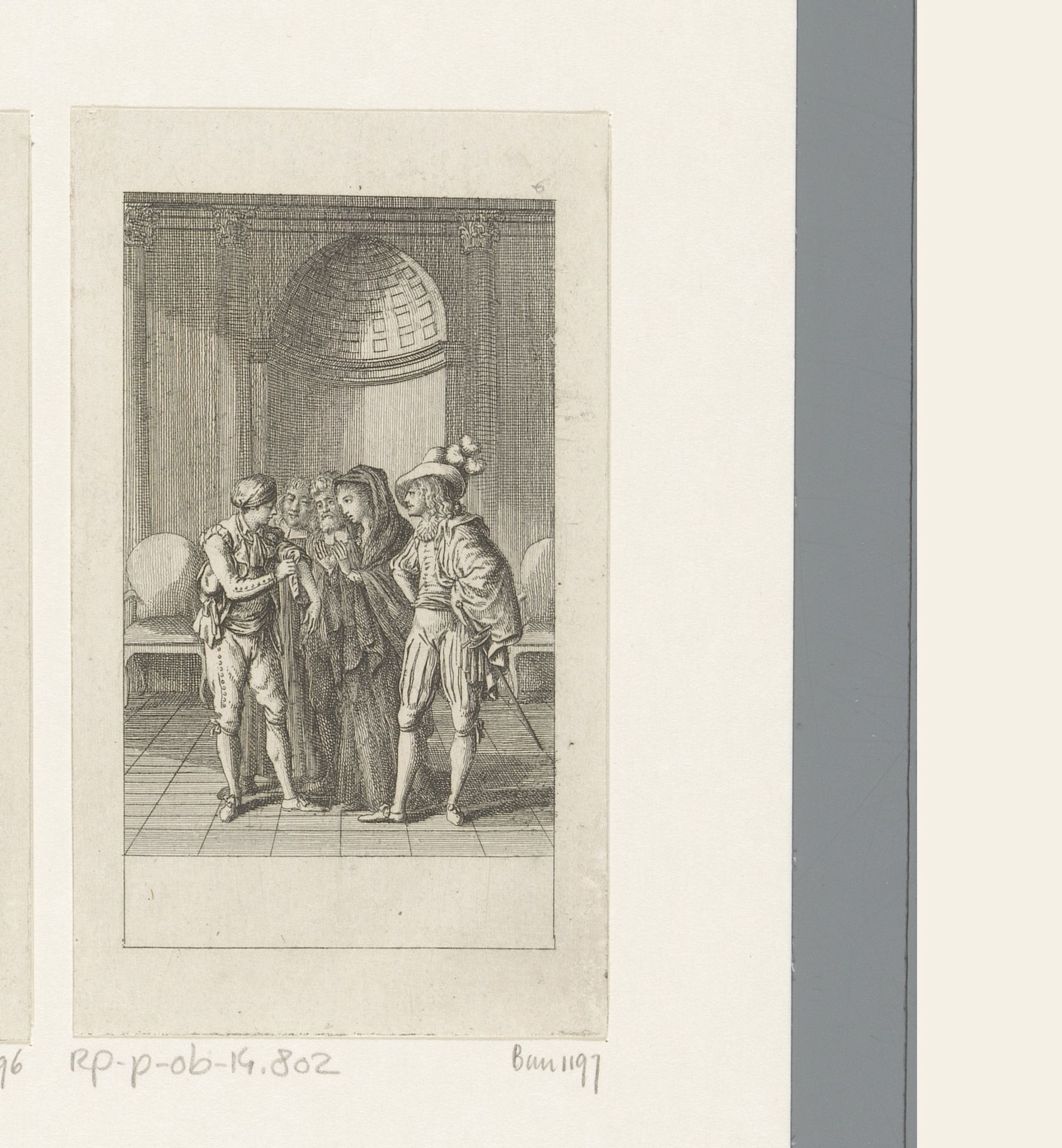
This etching, "Figaro wordt geïdentificeerd als de zoon van Marcelline," was created by Daniel Nikolaus Chodowiecki. The composition, though small in scale, is rich in detail, defined by precise lines that delineate the characters and setting. The figures are arranged in a central cluster, drawing our attention to the narrative unfolding amongst them. Chodowiecki uses line to create depth, particularly in the background architecture, where a softly rendered archway suggests a larger space beyond. This scene captures a moment of recognition, a revelation of identity. The linear precision employed by Chodowiecki serves not only to illustrate but also to dissect the social structures and human dramas of his time. It invites us to consider how such precise graphic techniques could become tools for exploring complex relationships and societal critiques.
Figaro wordt geïdentificeerd als de zoon van Marcelline 1785

Daniel Nikolaus Chodowiecki
1726 - 1801Location
RijksmuseumArtwork details
- Medium
- drawing, etching, pen, engraving
- Dimensions
- height 107 mm, width 62 mm
- Location
- Rijksmuseum
- Copyright
- Rijks Museum: Open Domain
Tags
drawing
neoclacissism
narrative-art
etching
pen
genre-painting
history-painting
engraving
Comments
No comments
About this artwork
This etching, "Figaro wordt geïdentificeerd als de zoon van Marcelline," was created by Daniel Nikolaus Chodowiecki. The composition, though small in scale, is rich in detail, defined by precise lines that delineate the characters and setting. The figures are arranged in a central cluster, drawing our attention to the narrative unfolding amongst them. Chodowiecki uses line to create depth, particularly in the background architecture, where a softly rendered archway suggests a larger space beyond. This scene captures a moment of recognition, a revelation of identity. The linear precision employed by Chodowiecki serves not only to illustrate but also to dissect the social structures and human dramas of his time. It invites us to consider how such precise graphic techniques could become tools for exploring complex relationships and societal critiques.
Comments
No comments