About this artwork
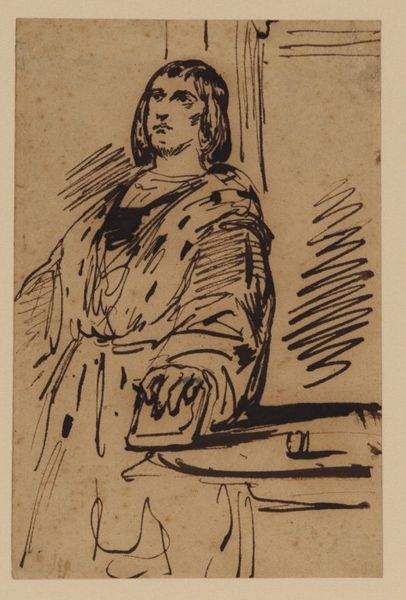
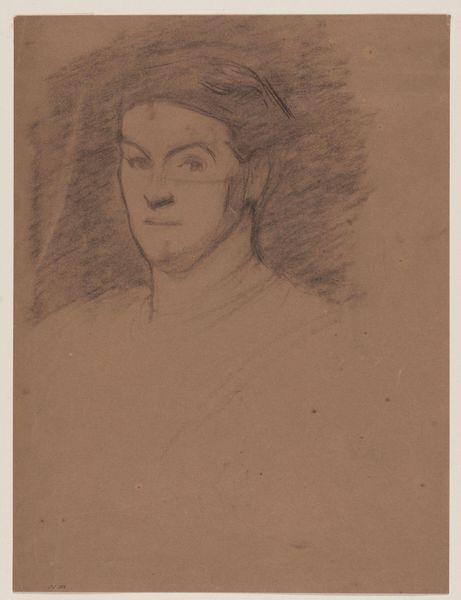
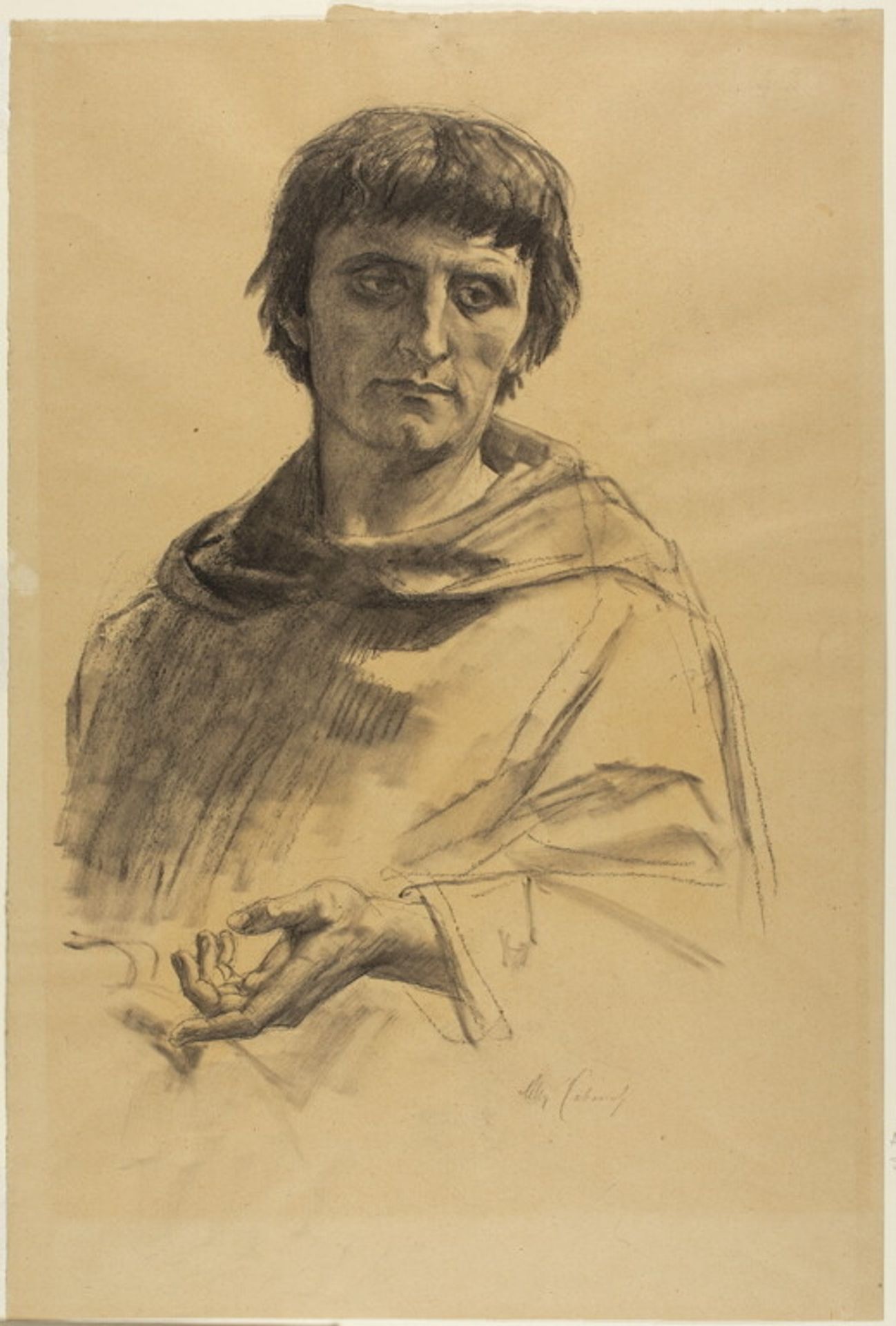
Alexandre Cabanel sketched this study for "The Life of Saint Louis, King of France" with graphite on paper. Observe the central figure's open hand, a gesture laden with meaning across time. In ancient Greece, the open hand symbolized truth and sincerity, a sign of peace when displaying no weapons. We see this motif echoed in Roman oratory, where an open palm reinforced the speaker's honesty. Consider, too, the early Christian art, where the open hand signified blessing or divine grace. Over centuries, the gesture has appeared in countless contexts, each subtly shifting its significance. The subconscious power of this hand, extended in offering or supplication, engages us on a primal level, stirring deep-seated emotions. It is a constant, reappearing in different guises, a testament to our shared cultural memory.
Central Figure, study for The Life of Saint Louis, King of France
c. 1878


Artwork details
- Medium
- drawing, paper, charcoal
- Dimensions
- 488 × 327 mm
- Location
- The Art Institute of Chicago
- Copyright
- Public Domain
Tags
Comments
Share your thoughts
About this artwork
Alexandre Cabanel sketched this study for "The Life of Saint Louis, King of France" with graphite on paper. Observe the central figure's open hand, a gesture laden with meaning across time. In ancient Greece, the open hand symbolized truth and sincerity, a sign of peace when displaying no weapons. We see this motif echoed in Roman oratory, where an open palm reinforced the speaker's honesty. Consider, too, the early Christian art, where the open hand signified blessing or divine grace. Over centuries, the gesture has appeared in countless contexts, each subtly shifting its significance. The subconscious power of this hand, extended in offering or supplication, engages us on a primal level, stirring deep-seated emotions. It is a constant, reappearing in different guises, a testament to our shared cultural memory.
Comments
Share your thoughts