About this artwork
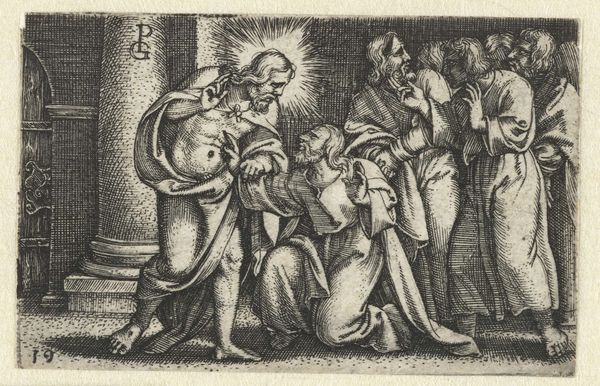
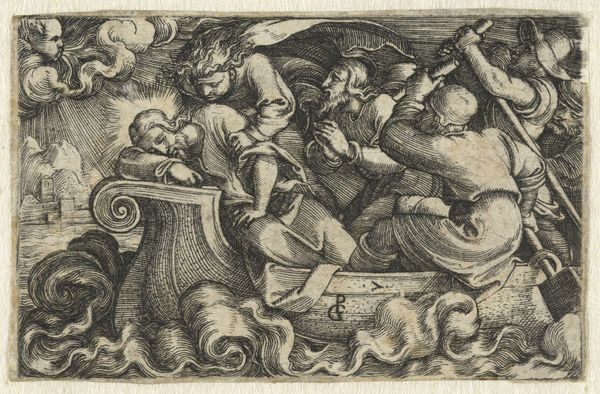
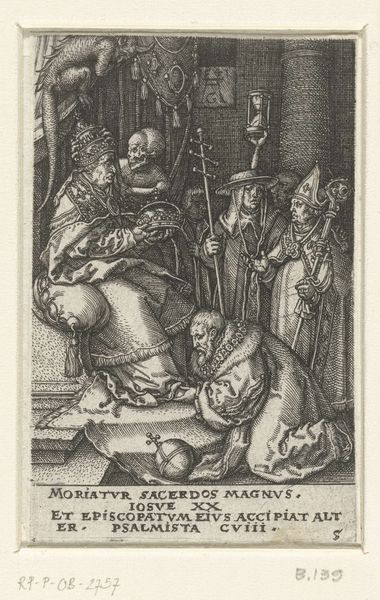
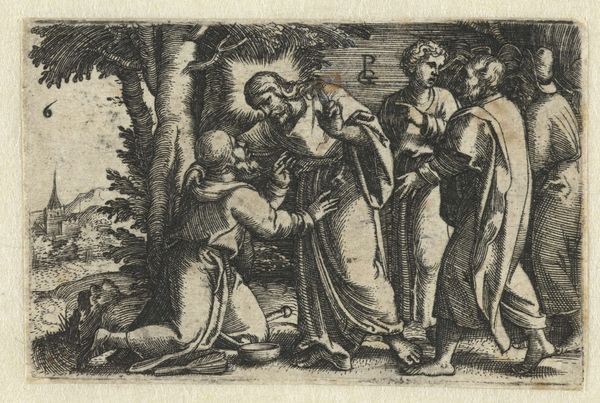
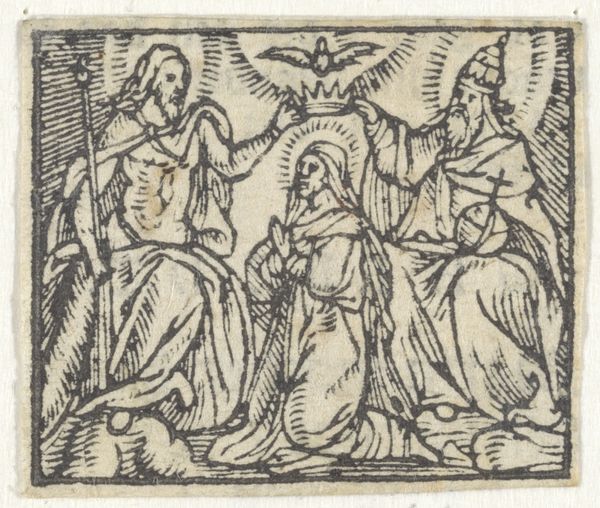
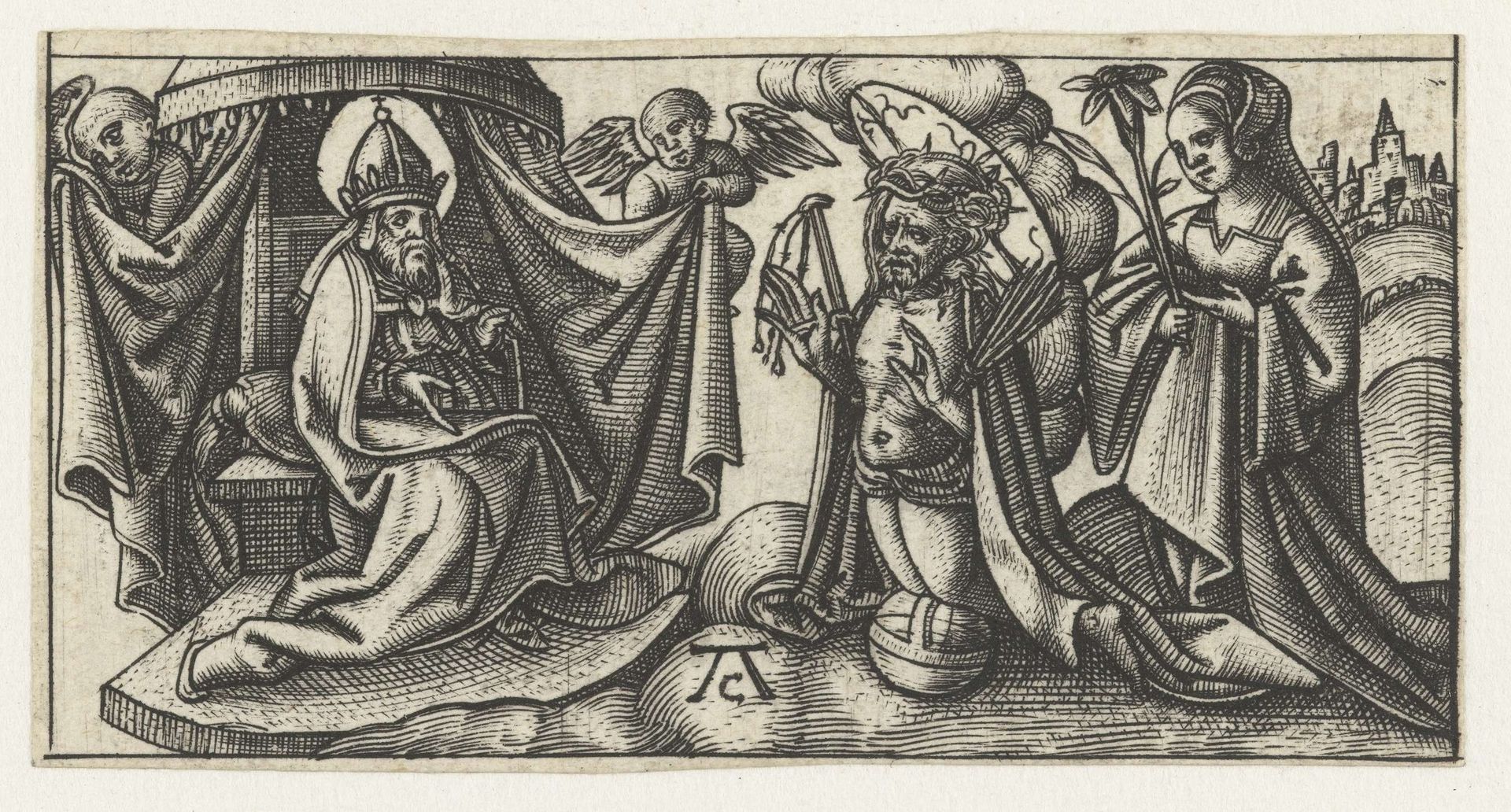
This 16th-century engraving, "Christus voor Gods troon," by the Monogrammist AC, presents a stark visual of divine judgment and intercession. The composition, though small, is rich in detail, creating a densely patterned surface. The contrasting textures—the flowing drapery, the sharp thorns of Christ's crown, and the rigid throne—draw the eye across the scene. The artist employs a structural arrangement that divides the space into distinct zones. On the left, God sits enthroned, framed by heavy curtains, symbolizing divine authority. Christ kneels in the center, flanked by an angel. To the right a woman presents an offering. This organization invites a semiotic interpretation of power, sacrifice, and supplication. The linear precision of the engraving technique enhances the symbolic weight of the image. The fine lines create depth and shadow, emphasizing the emotional intensity of the figures. The contrasts in light and dark, achieved through careful hatching, underscore the themes of judgment and redemption, inviting ongoing interpretation.
Christus voor Gods troon
1520 - 1562

Monogrammist AC (16e eeuw)
@monogrammistac16eeeuwLocation
RijksmuseumArtwork details
- Medium
- drawing, print, ink, pen, engraving
- Dimensions
- height 32 mm, width 62 mm
- Location
- Rijksmuseum
- Copyright
- Rijks Museum: Open Domain
Tags
drawing
pen drawing
pen illustration
pen sketch
figuration
ink
line
pen
history-painting
northern-renaissance
engraving
Comments
Be the first to share your thoughts about this work.
About this artwork
This 16th-century engraving, "Christus voor Gods troon," by the Monogrammist AC, presents a stark visual of divine judgment and intercession. The composition, though small, is rich in detail, creating a densely patterned surface. The contrasting textures—the flowing drapery, the sharp thorns of Christ's crown, and the rigid throne—draw the eye across the scene. The artist employs a structural arrangement that divides the space into distinct zones. On the left, God sits enthroned, framed by heavy curtains, symbolizing divine authority. Christ kneels in the center, flanked by an angel. To the right a woman presents an offering. This organization invites a semiotic interpretation of power, sacrifice, and supplication. The linear precision of the engraving technique enhances the symbolic weight of the image. The fine lines create depth and shadow, emphasizing the emotional intensity of the figures. The contrasts in light and dark, achieved through careful hatching, underscore the themes of judgment and redemption, inviting ongoing interpretation.
Comments
Be the first to share your thoughts about this work.