About this artwork
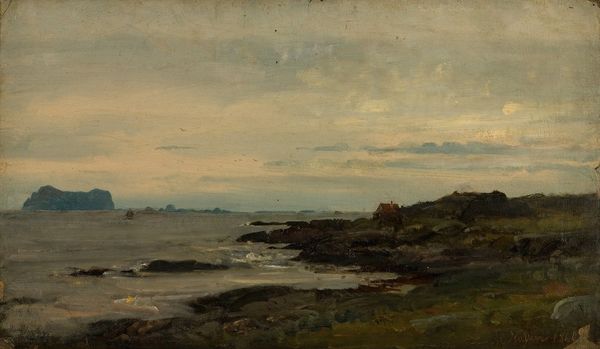
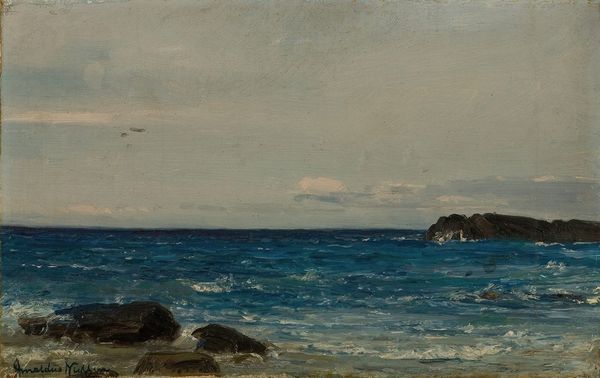
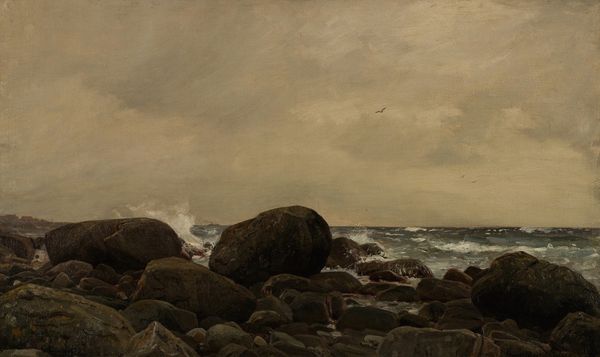
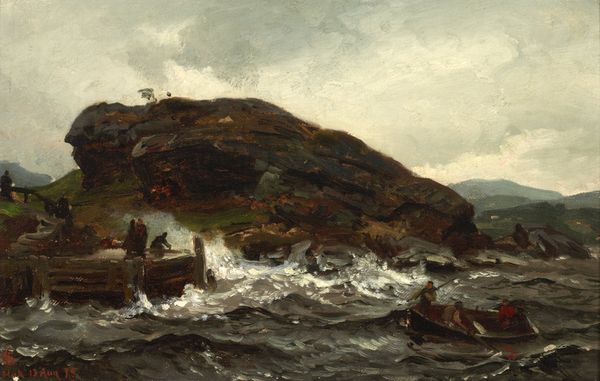
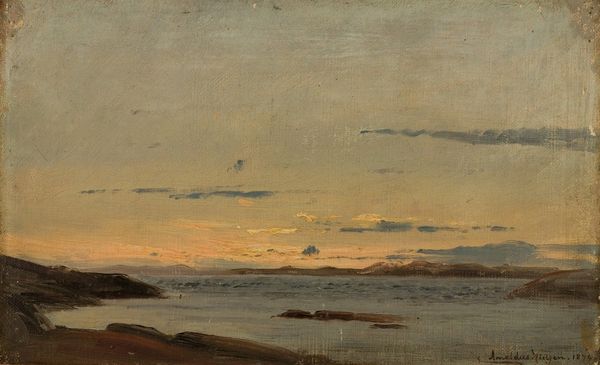
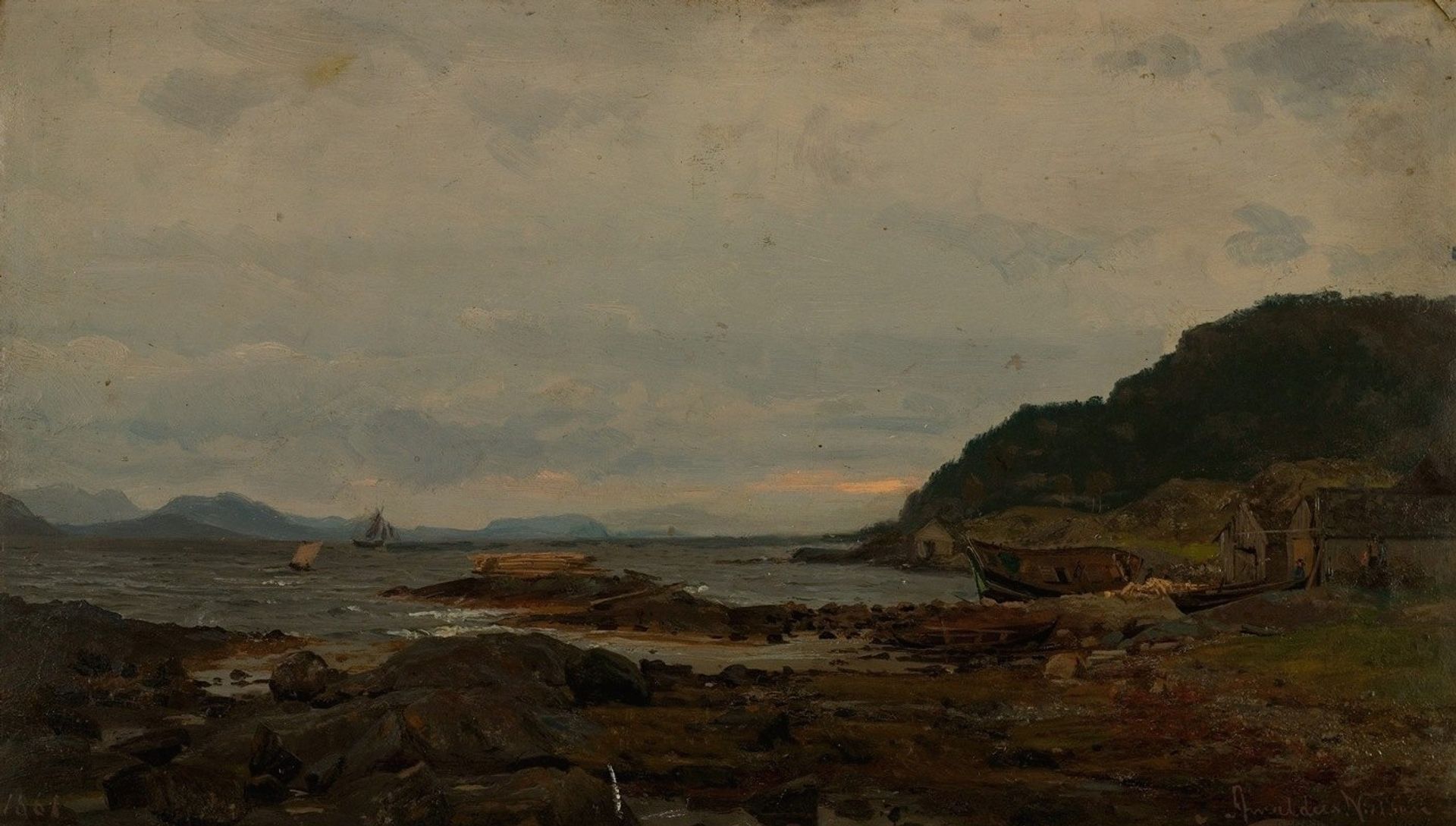
Amaldus Nielsen painted "Regnstemning, Bømmelen" using oil on canvas, capturing a moment of atmospheric intensity. The painting is dominated by a somber palette of greys and browns, evoking a sense of quietude under a rain-laden sky. The composition divides the canvas into distinct horizontal layers: the rocky foreground, the expanse of water, and the clouded sky above. This structured arrangement, coupled with the muted tones, creates a melancholic mood. The painting uses precise brushstrokes to render the textures of the rocks and water, whilst looser strokes suggest the movement of the clouds. Structurally, the painting adheres to a classical landscape format, yet it subtly destabilizes this tradition through its emphasis on the transient effects of weather. Nielsen's focus on capturing a specific atmospheric condition elevates the sensory experience of the landscape above a mere representational exercise. It invites us to contemplate how such elements shape our perception of space and place.

Artwork details
- Copyright
- Public Domain: Artvee
Comments
Share your thoughts
About this artwork
Amaldus Nielsen painted "Regnstemning, Bømmelen" using oil on canvas, capturing a moment of atmospheric intensity. The painting is dominated by a somber palette of greys and browns, evoking a sense of quietude under a rain-laden sky. The composition divides the canvas into distinct horizontal layers: the rocky foreground, the expanse of water, and the clouded sky above. This structured arrangement, coupled with the muted tones, creates a melancholic mood. The painting uses precise brushstrokes to render the textures of the rocks and water, whilst looser strokes suggest the movement of the clouds. Structurally, the painting adheres to a classical landscape format, yet it subtly destabilizes this tradition through its emphasis on the transient effects of weather. Nielsen's focus on capturing a specific atmospheric condition elevates the sensory experience of the landscape above a mere representational exercise. It invites us to contemplate how such elements shape our perception of space and place.
Comments
Share your thoughts