About this artwork
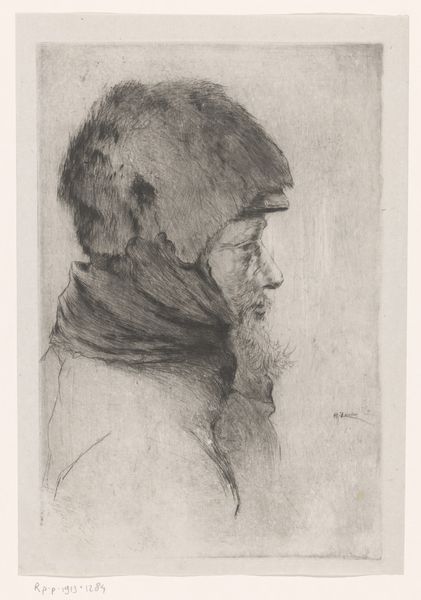
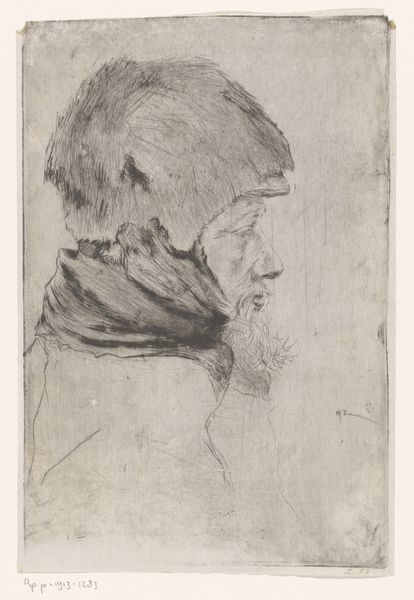
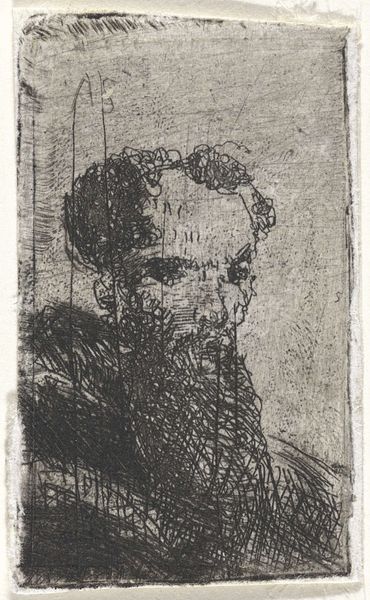
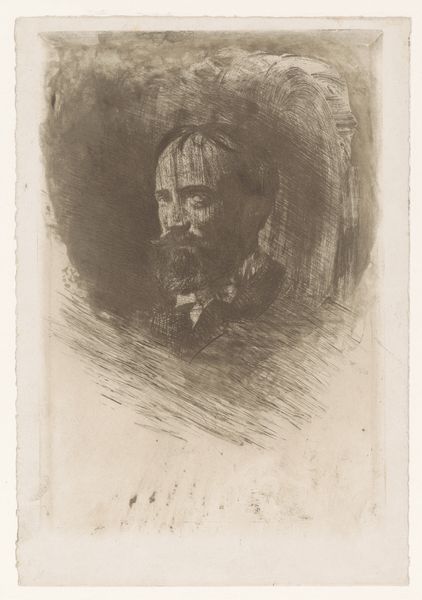
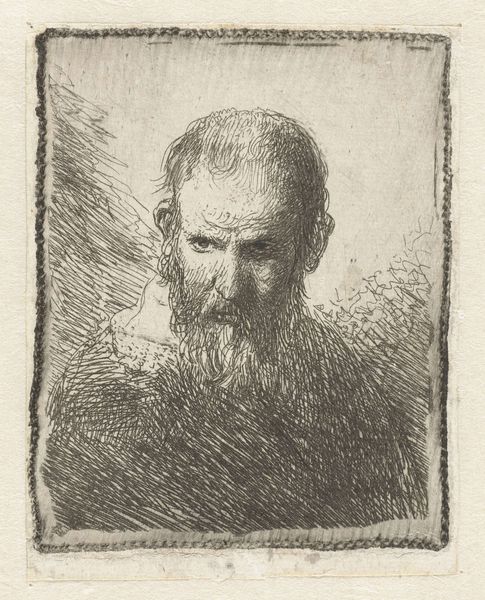
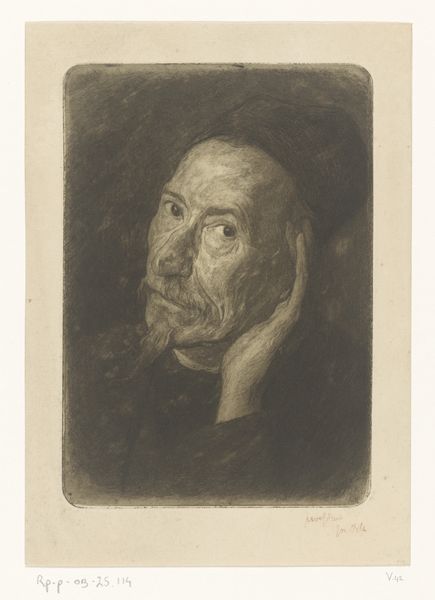
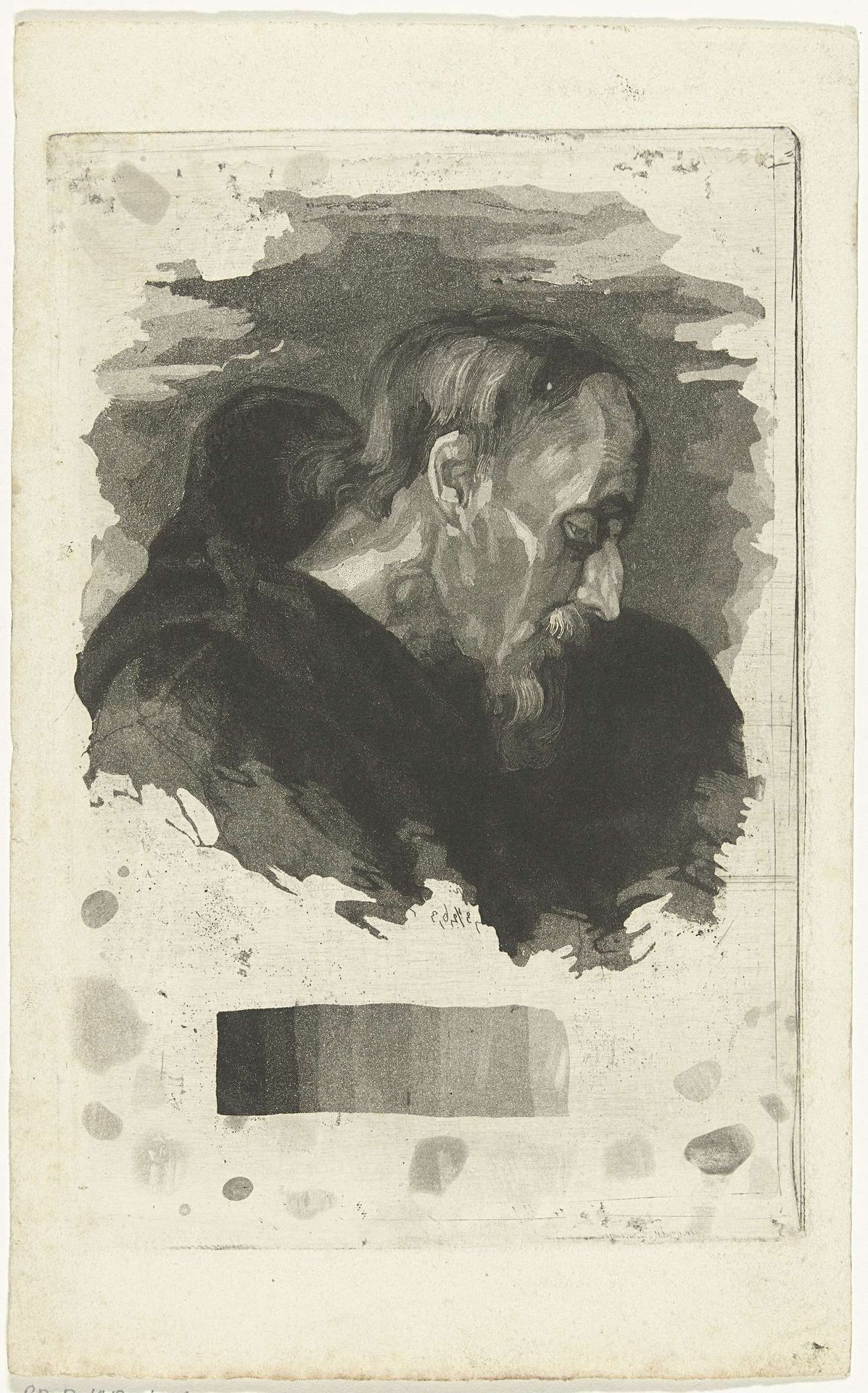
Editor: So this is 'Portrait Bust of a Monk,' an etching by Henricus Wilhelmus Couwenberg from around 1830 to 1845. It feels very…austere. Almost melancholic, with the figure looking down like that. What do you see in this piece? Curator: The downturned gaze immediately strikes me. Monks, historically, carry heavy symbolic weight. This posture evokes humility, penance even, aligning with the monastic ideals of self-denial. But what emotions do the tonal gradations suggest? The dark cloak surrounding his bust almost swallows him. Editor: I hadn't considered the symbolism of the cloak's darkness. Is it meant to represent something more than just…fabric? Curator: Possibly, consider the period. Religious sentimentality flourished then. The somber tone resonates with romantic ideas about faith and suffering. This portrait becomes less about an individual and more about a visual symbol of devotion. Do you see echoes of earlier religious art here? Editor: Hmm, the presentation feels somewhat like depictions of saints in earlier devotional images. Curator: Exactly. This connects him to that cultural memory. Couwenberg is utilizing existing visual language to evoke feeling. And even his placement off center gives it emotional charge – vulnerability and not powerful religious order. The palette tests add an additional conceptual depth. They speak volumes as an artist searching for the inner soul! Editor: That makes a lot of sense. I was so focused on the monk himself that I missed the broader symbolic context. Curator: Art’s a conversation across centuries, conducted through symbols and emotional cues, isn't it? Hopefully this dialogue helps further clarify the weight this etching holds!
Portretbuste van een monnik
1830 - 1845

Henricus Wilhelmus Couwenberg
1814 - 1845Location
RijksmuseumArtwork details
- Medium
- print, etching
- Dimensions
- height 200 mm, width 130 mm
- Location
- Rijksmuseum
- Copyright
- Rijks Museum: Open Domain
Tags
Comments
Share your thoughts
About this artwork
Editor: So this is 'Portrait Bust of a Monk,' an etching by Henricus Wilhelmus Couwenberg from around 1830 to 1845. It feels very…austere. Almost melancholic, with the figure looking down like that. What do you see in this piece? Curator: The downturned gaze immediately strikes me. Monks, historically, carry heavy symbolic weight. This posture evokes humility, penance even, aligning with the monastic ideals of self-denial. But what emotions do the tonal gradations suggest? The dark cloak surrounding his bust almost swallows him. Editor: I hadn't considered the symbolism of the cloak's darkness. Is it meant to represent something more than just…fabric? Curator: Possibly, consider the period. Religious sentimentality flourished then. The somber tone resonates with romantic ideas about faith and suffering. This portrait becomes less about an individual and more about a visual symbol of devotion. Do you see echoes of earlier religious art here? Editor: Hmm, the presentation feels somewhat like depictions of saints in earlier devotional images. Curator: Exactly. This connects him to that cultural memory. Couwenberg is utilizing existing visual language to evoke feeling. And even his placement off center gives it emotional charge – vulnerability and not powerful religious order. The palette tests add an additional conceptual depth. They speak volumes as an artist searching for the inner soul! Editor: That makes a lot of sense. I was so focused on the monk himself that I missed the broader symbolic context. Curator: Art’s a conversation across centuries, conducted through symbols and emotional cues, isn't it? Hopefully this dialogue helps further clarify the weight this etching holds!
Comments
Share your thoughts