About this artwork
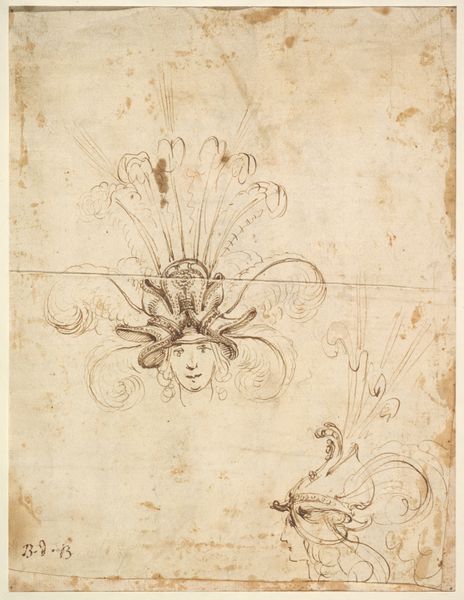
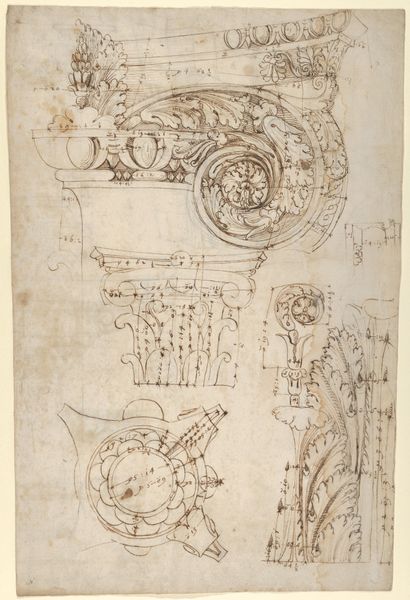
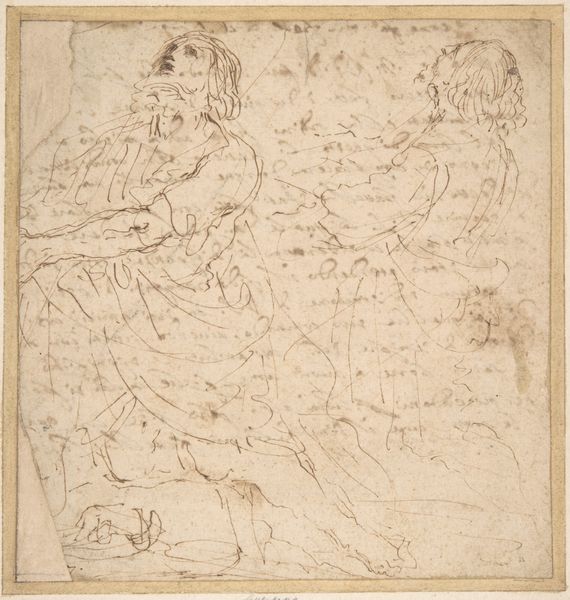
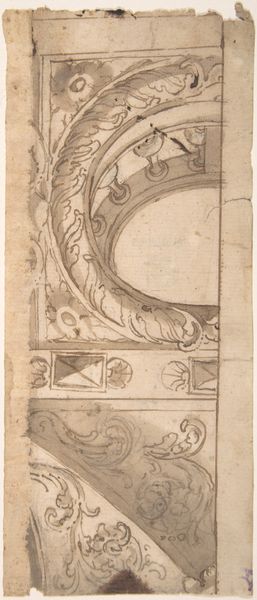
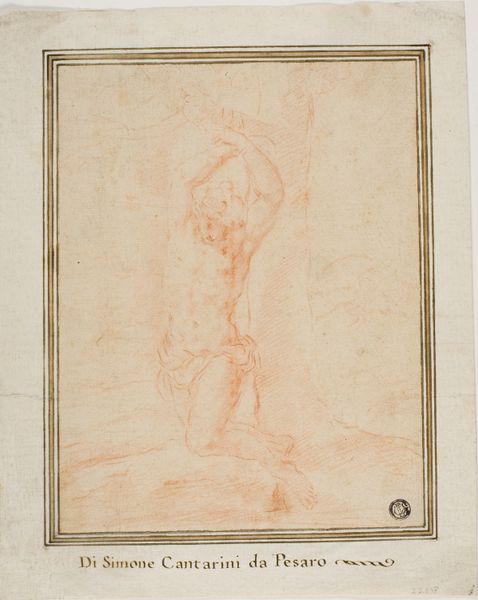
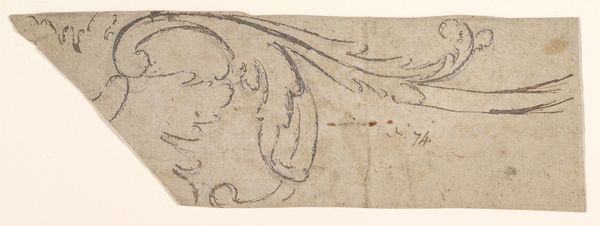
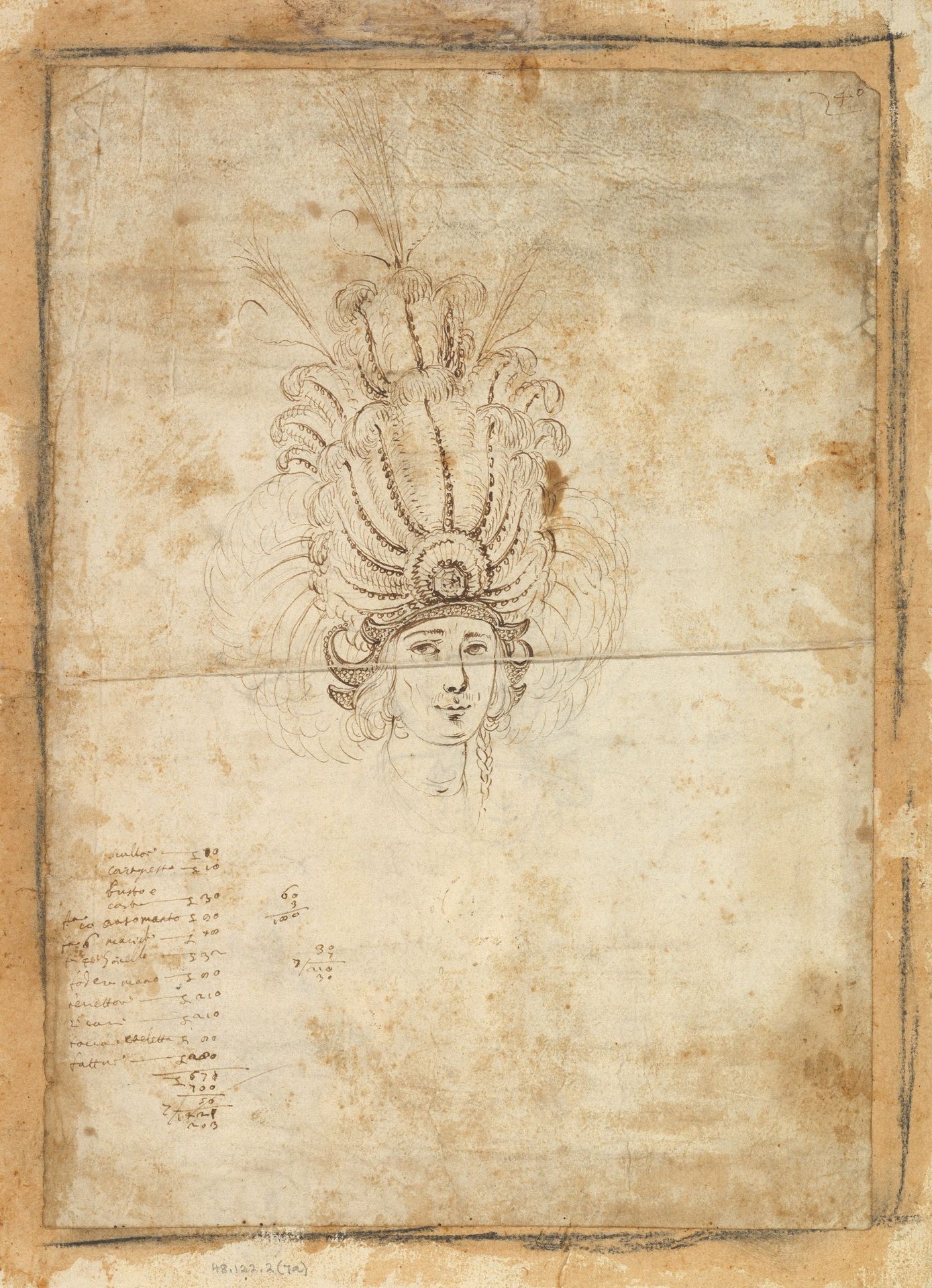
This is Baccio del Bianco’s "Design for a Man's Headdress," made with pen and brown ink on paper in the 17th century. The sketch reflects courtly fashion and theatrical design of the Baroque era, a period defined by extravagance, performance, and the construction of identity through spectacle. Del Bianco, who served the Medici court, was deeply involved in stagecraft and the production of elaborate public displays. Headdresses like this were crucial elements in constructing identities and characters that resonated with the political and social narratives of the time. How did these headdresses transform an individual? Were they a mode of self-expression? Or a statement of allegiance and social standing? Consider the historical context of the 17th century, a time when fashion was a powerful tool for communicating status, gender, and cultural affiliation. This design provides a glimpse into the performative aspects of identity, especially within the elite circles of the Italian court.
Design for a Man's Headdress
1604 - 1656


Artwork details
- Medium
- drawing, print, paper, pen
- Dimensions
- Sheet: 17 x 11 5/16 in. (43.2 x 28.7 cm)
- Location
- Metropolitan Museum of Art, New York, NY
- Copyright
- Public Domain
Tags
Comments
Share your thoughts
About this artwork
This is Baccio del Bianco’s "Design for a Man's Headdress," made with pen and brown ink on paper in the 17th century. The sketch reflects courtly fashion and theatrical design of the Baroque era, a period defined by extravagance, performance, and the construction of identity through spectacle. Del Bianco, who served the Medici court, was deeply involved in stagecraft and the production of elaborate public displays. Headdresses like this were crucial elements in constructing identities and characters that resonated with the political and social narratives of the time. How did these headdresses transform an individual? Were they a mode of self-expression? Or a statement of allegiance and social standing? Consider the historical context of the 17th century, a time when fashion was a powerful tool for communicating status, gender, and cultural affiliation. This design provides a glimpse into the performative aspects of identity, especially within the elite circles of the Italian court.
Comments
Share your thoughts