About this artwork
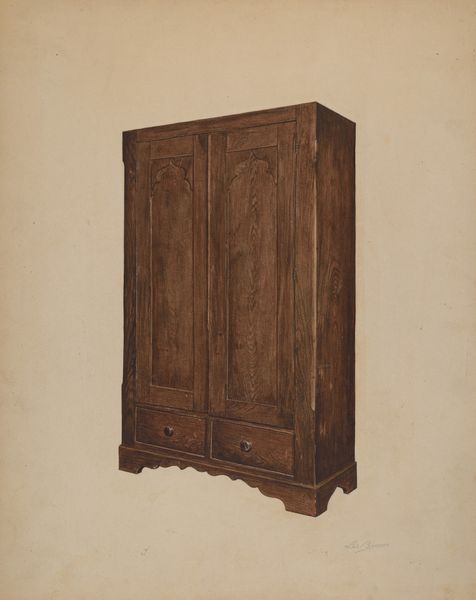
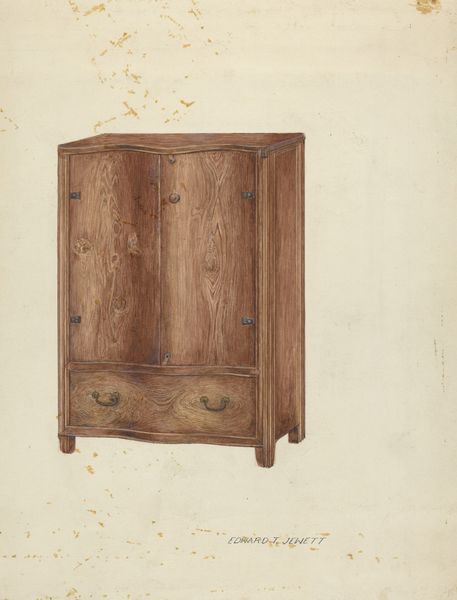
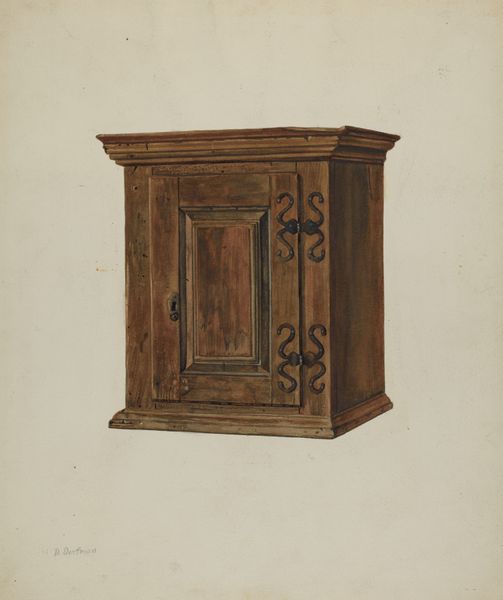
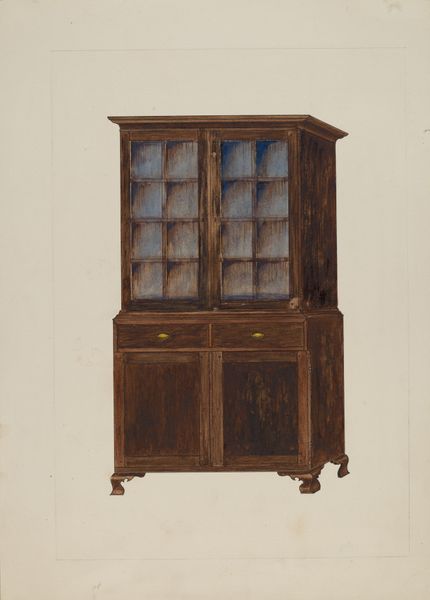
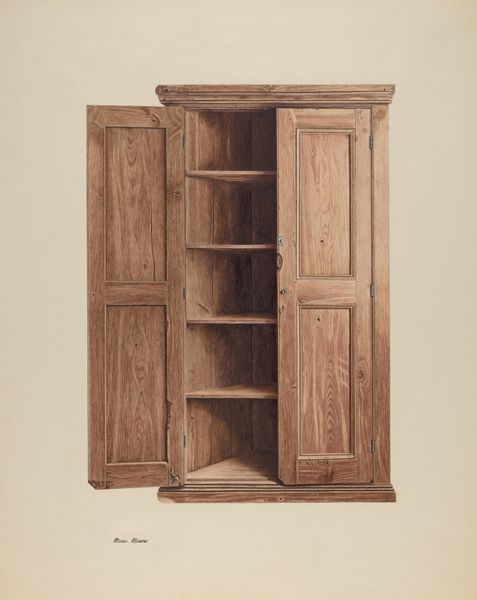
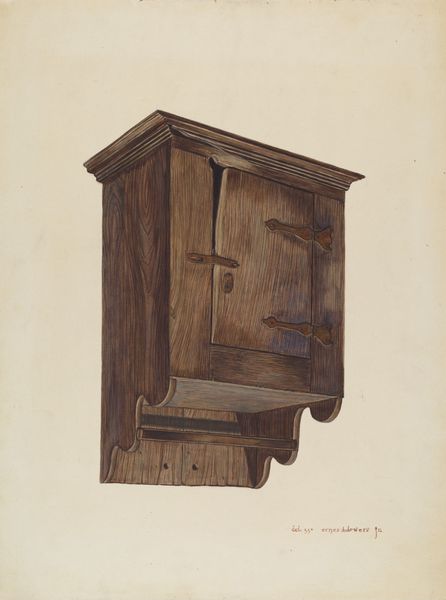
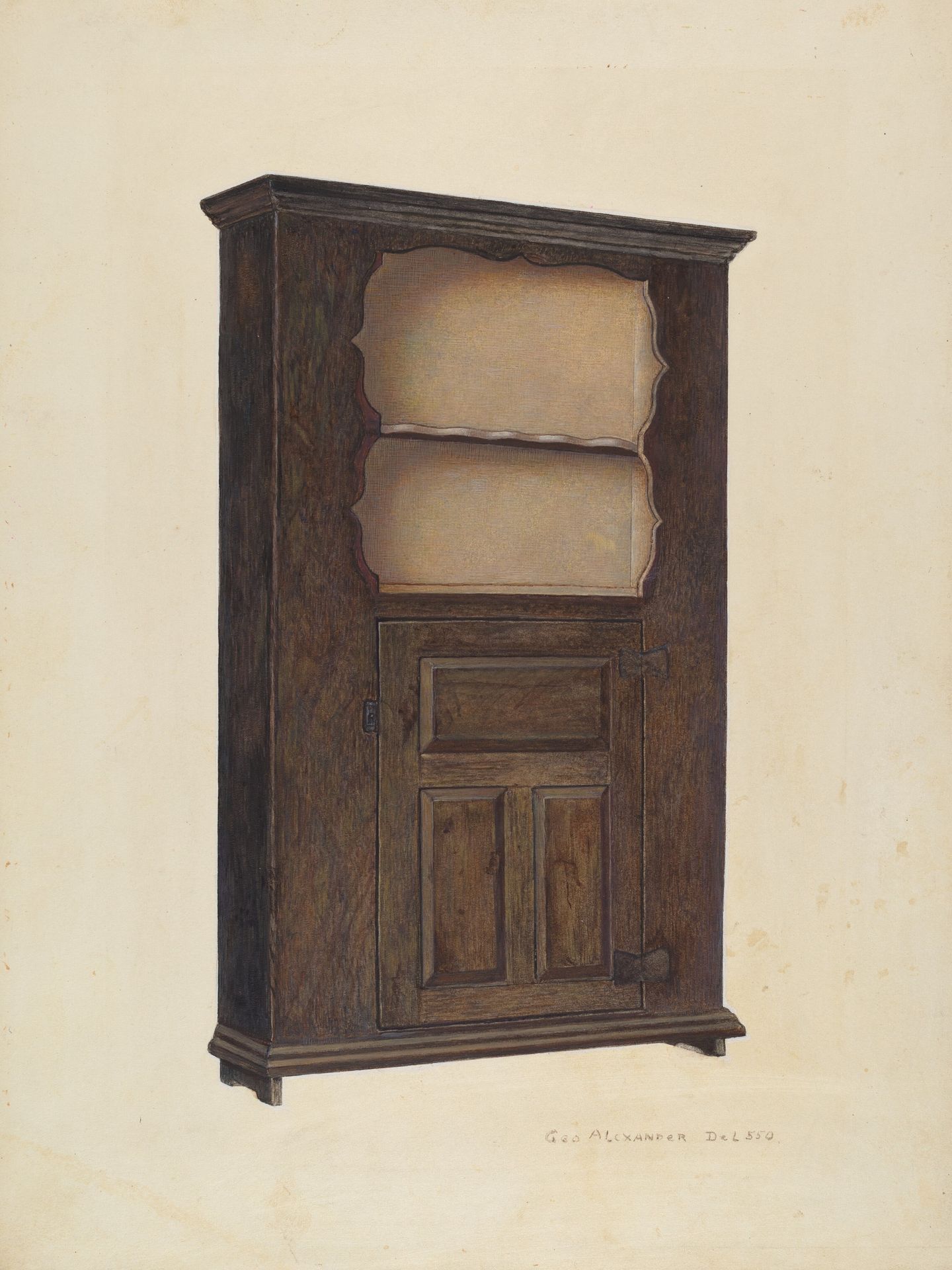
George H. Alexander made this drawing of a corner cupboard with what looks like graphite on paper. The way the wood grain is described gives the whole thing a kind of gentle buzz. It's like he's feeling his way around the form. I’m drawn to how the light catches on the door. You can see the subtle shifts in tone where he's built up the layers, almost like a watercolor. It’s really quiet, this piece. Alexander has managed to capture the sense of something handmade, something that’s been around for a while. This reminds me a little of Charles Sheeler’s work, particularly his interest in American vernacular architecture. Both artists share a similar fascination with the geometry of everyday objects, but here Alexander gives us a sense of warmth and familiarity, which can be hard to put your finger on. Ultimately, this artwork suggests that there are endless ways of seeing, and each one offers its unique perspective.


Artwork details
- Medium
- drawing, watercolor
- Dimensions
- overall: 35.5 x 26.7 cm (14 x 10 1/2 in.) Original IAD Object: 74"high; 48 3/4"wide; 18 1/2"deep. See data sheet for dets.
- Copyright
- National Gallery of Art: CC0 1.0
Tags
Comments
Share your thoughts
About this artwork
George H. Alexander made this drawing of a corner cupboard with what looks like graphite on paper. The way the wood grain is described gives the whole thing a kind of gentle buzz. It's like he's feeling his way around the form. I’m drawn to how the light catches on the door. You can see the subtle shifts in tone where he's built up the layers, almost like a watercolor. It’s really quiet, this piece. Alexander has managed to capture the sense of something handmade, something that’s been around for a while. This reminds me a little of Charles Sheeler’s work, particularly his interest in American vernacular architecture. Both artists share a similar fascination with the geometry of everyday objects, but here Alexander gives us a sense of warmth and familiarity, which can be hard to put your finger on. Ultimately, this artwork suggests that there are endless ways of seeing, and each one offers its unique perspective.
Comments
Share your thoughts