About this artwork
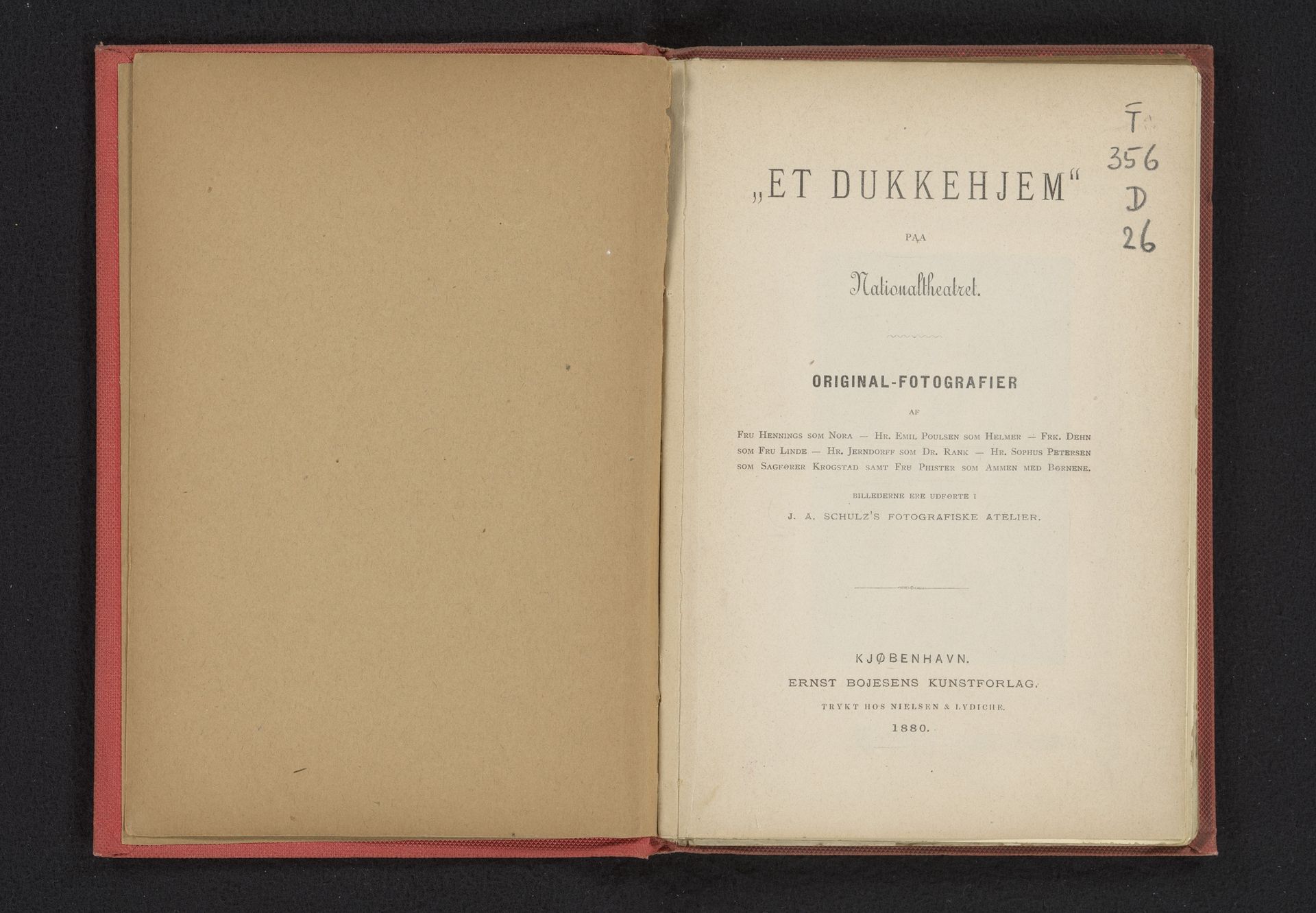
This open book, published in Copenhagen by Ernst Bojesens Kunstforlag in 1880, is a visual record of Henrik Ibsen's play, "Et dukkehjem", or "A Doll's House", at the National Theatre. Ibsen’s play, published a year earlier, challenged conventional notions of marriage and societal expectations of women. Set in Norway, the play critiques the restrictive roles assigned to women within the domestic sphere. The protagonist, Nora, embodies the societal constraints placed on women, leading to her eventual rebellion and departure from her seemingly perfect home. The book itself, as a printed object, signifies the growing accessibility of literature and art to a wider audience. It reflects the burgeoning public sphere where social issues could be debated through artistic expression. Examining theater reviews, personal letters of Ibsen and production notes of the National Theatre can provide further insight into the cultural impact of "A Doll's House" and its significance as a catalyst for discussions on gender roles and social change.

Artwork details
- Medium
- graphic-art, print, paper, photography
- Dimensions
- height 190 mm, width 129 mm, thickness 6 mm
- Copyright
- Rijks Museum: Open Domain
Tags
Comments
Share your thoughts
About this artwork
This open book, published in Copenhagen by Ernst Bojesens Kunstforlag in 1880, is a visual record of Henrik Ibsen's play, "Et dukkehjem", or "A Doll's House", at the National Theatre. Ibsen’s play, published a year earlier, challenged conventional notions of marriage and societal expectations of women. Set in Norway, the play critiques the restrictive roles assigned to women within the domestic sphere. The protagonist, Nora, embodies the societal constraints placed on women, leading to her eventual rebellion and departure from her seemingly perfect home. The book itself, as a printed object, signifies the growing accessibility of literature and art to a wider audience. It reflects the burgeoning public sphere where social issues could be debated through artistic expression. Examining theater reviews, personal letters of Ibsen and production notes of the National Theatre can provide further insight into the cultural impact of "A Doll's House" and its significance as a catalyst for discussions on gender roles and social change.
Comments
Share your thoughts