About this artwork
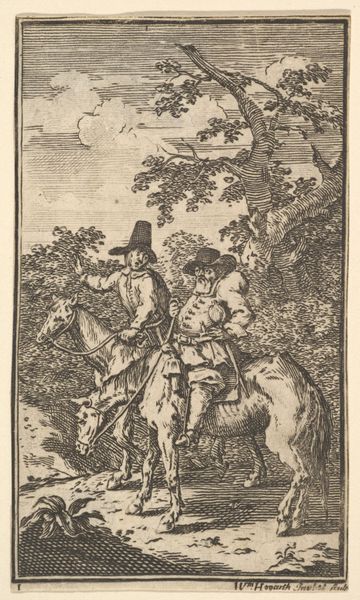
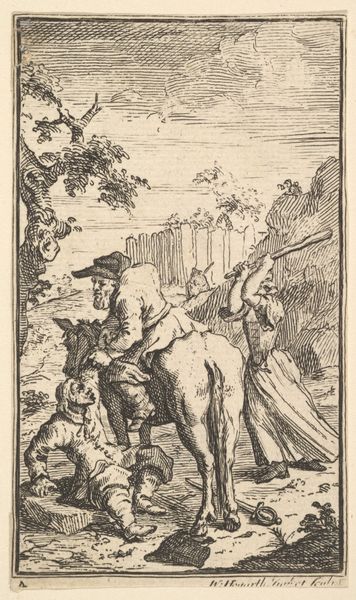
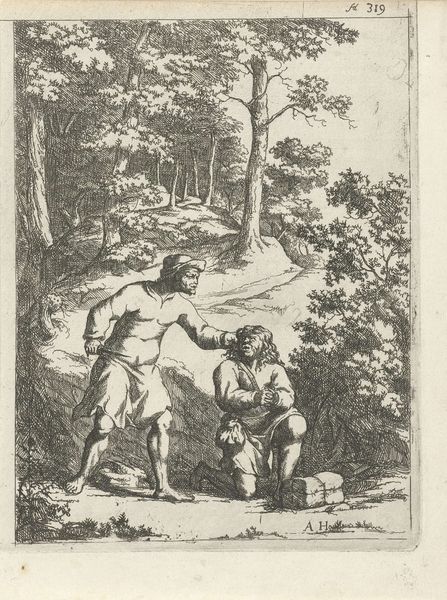
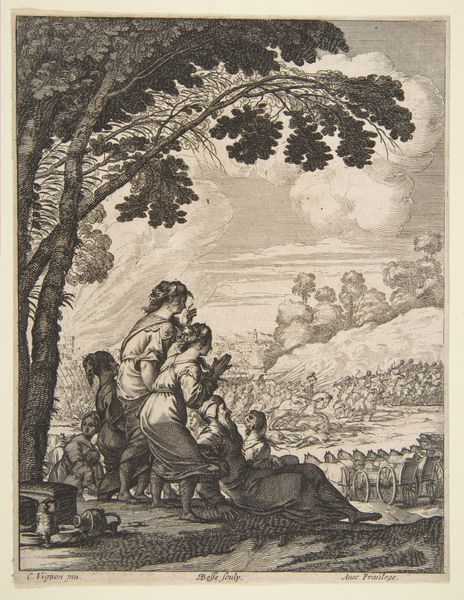
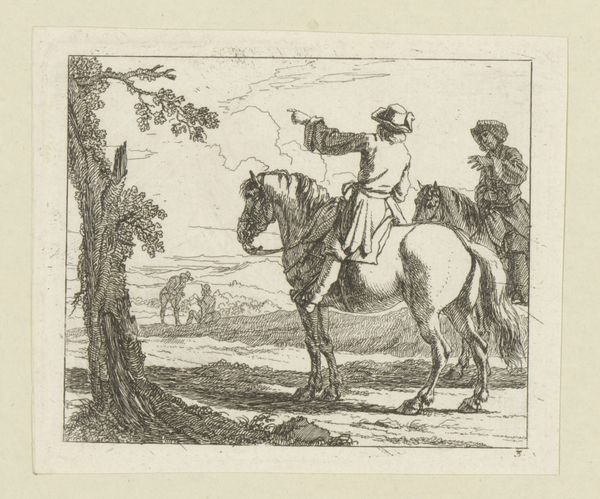
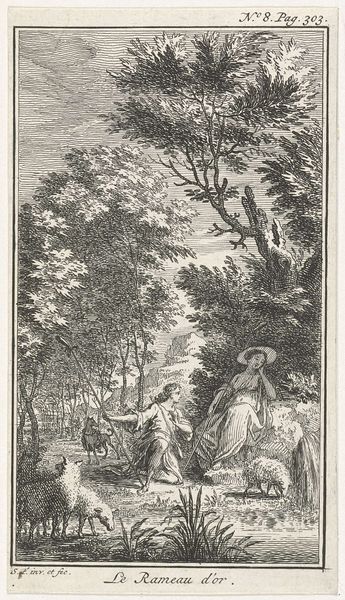
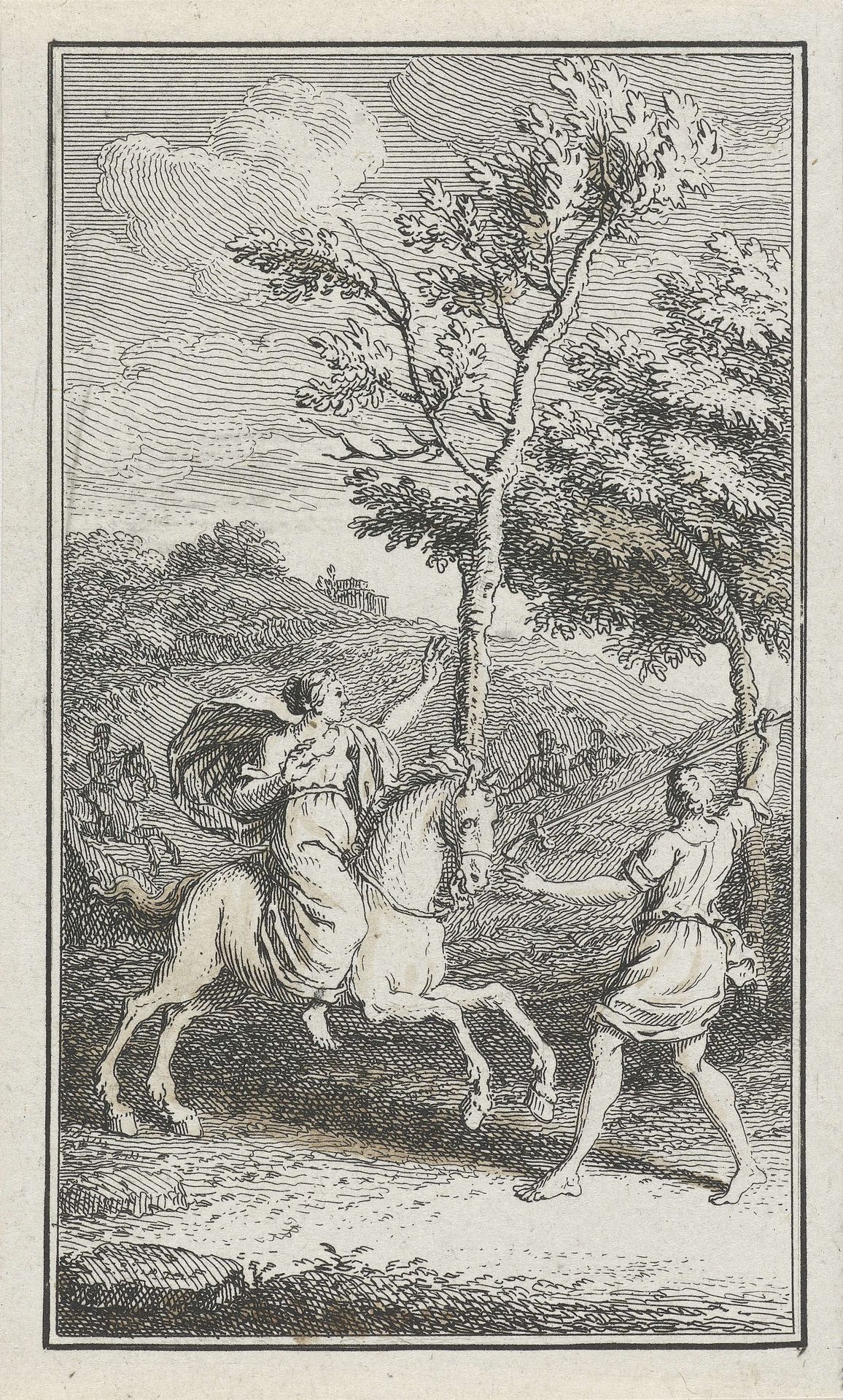
Editor: Here we have "Vrouw te paard", which translates to "Woman on Horseback," a print made by Jacob Folkema sometime between 1703 and 1767. The details in this engraving are incredible, but something about it feels…unresolved? What's going on in this image? How do you interpret it? Curator: It’s a scene ripe with symbolism. Notice how the woman on horseback gestures – an appeal to the heavens, perhaps? In the 18th century, horseback riding was a symbol of power and status, but here, it's combined with a vulnerability. There is a figure to her right appearing to hunt or capture people to the left of her, which might represent justice versus aggression and subjugation. Consider the presence of trees, often symbols of life, growth, or even a sacred grove. Folkema isn't simply depicting a scene, he’s using these images as carriers of deeper meaning, wouldn't you agree? Editor: I do. That makes me consider how the contrast between her illuminated figure and the shadowy figures in the back might create a feeling of uncertainty or transition. So is this perhaps less a portrait and more a story? Curator: Exactly! Consider it a visual narrative deeply embedded within the cultural memory of the time. Folkema uses a readily available visual language—iconography—to subtly critique or comment on society. Think of it as a coded message that resonated with contemporary viewers on both conscious and subconscious levels. What feelings come to mind? Editor: Thinking of it that way, I see it now as a representation of change. Power is asserted on the left but may come under pressure from changes looming ahead. I’ve never looked at an engraving so analytically before! Curator: And that’s the magic of iconography. We learn to ‘read’ images, to unpack their layers of meaning and discover their continuing relevance through the ages.

Artwork details
- Medium
- print, engraving
- Dimensions
- height 115 mm, width 70 mm
- Location
- Rijksmuseum
- Copyright
- Rijks Museum: Open Domain
Tags
Comments
Share your thoughts
About this artwork
Editor: Here we have "Vrouw te paard", which translates to "Woman on Horseback," a print made by Jacob Folkema sometime between 1703 and 1767. The details in this engraving are incredible, but something about it feels…unresolved? What's going on in this image? How do you interpret it? Curator: It’s a scene ripe with symbolism. Notice how the woman on horseback gestures – an appeal to the heavens, perhaps? In the 18th century, horseback riding was a symbol of power and status, but here, it's combined with a vulnerability. There is a figure to her right appearing to hunt or capture people to the left of her, which might represent justice versus aggression and subjugation. Consider the presence of trees, often symbols of life, growth, or even a sacred grove. Folkema isn't simply depicting a scene, he’s using these images as carriers of deeper meaning, wouldn't you agree? Editor: I do. That makes me consider how the contrast between her illuminated figure and the shadowy figures in the back might create a feeling of uncertainty or transition. So is this perhaps less a portrait and more a story? Curator: Exactly! Consider it a visual narrative deeply embedded within the cultural memory of the time. Folkema uses a readily available visual language—iconography—to subtly critique or comment on society. Think of it as a coded message that resonated with contemporary viewers on both conscious and subconscious levels. What feelings come to mind? Editor: Thinking of it that way, I see it now as a representation of change. Power is asserted on the left but may come under pressure from changes looming ahead. I’ve never looked at an engraving so analytically before! Curator: And that’s the magic of iconography. We learn to ‘read’ images, to unpack their layers of meaning and discover their continuing relevance through the ages.
Comments
Share your thoughts