About this artwork
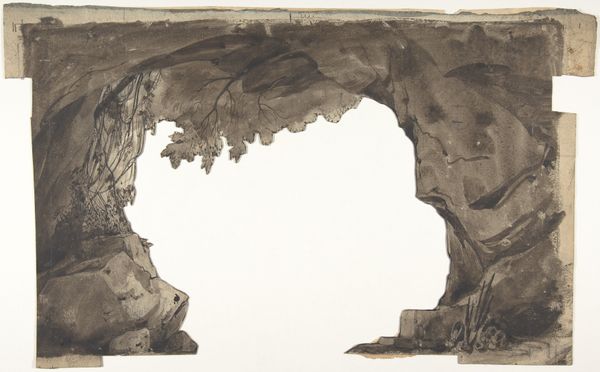
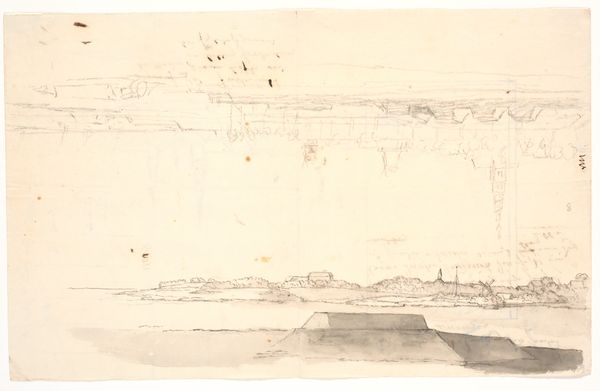
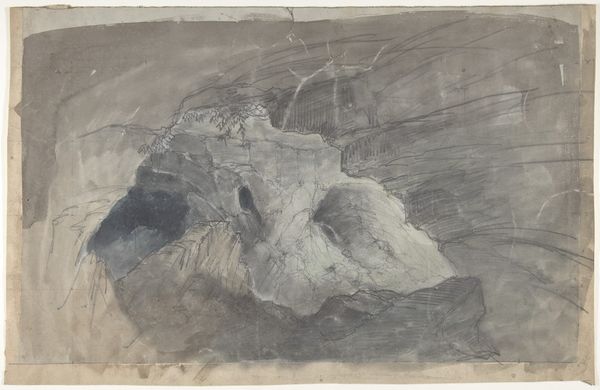
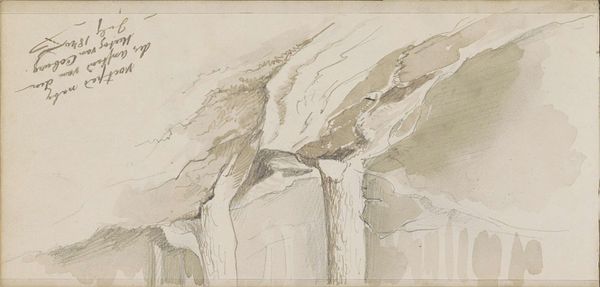
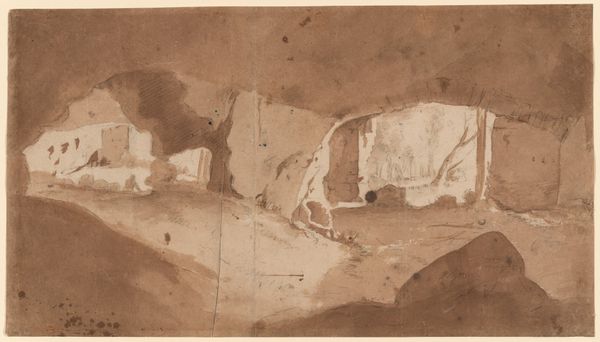
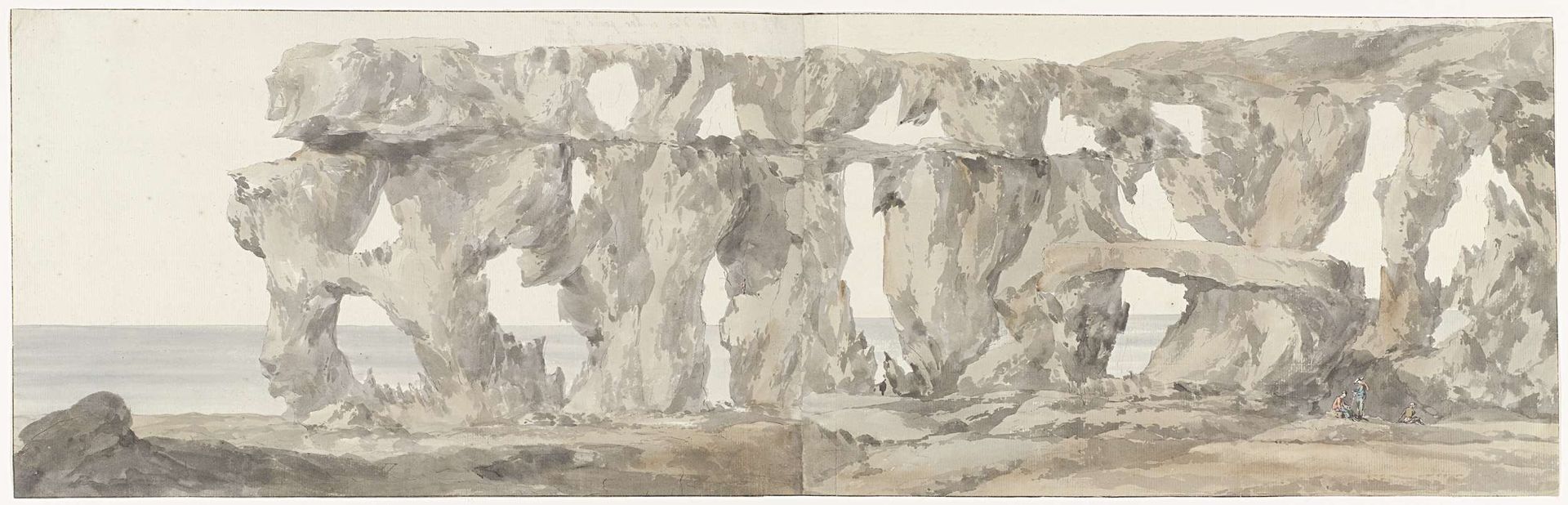
Louis Ducros captured this view of a rock formation on the island of Gozo in a wash drawing. The rock dominates the scene with its series of arches and crags stretching horizontally across the composition. The limited palette of greys and browns lends a certain geological gravitas, a sense of the earth’s patient architecture. Ducros's focus on the rock's structure invites us to consider the picturesque aesthetic of his time. The arches frame glimpses of the sea and sky, playing with depth and perspective, while the rough texture, rendered through layered washes, emphasizes the sublime power of nature, consistent with Romantic ideals. The artwork destabilizes traditional landscape painting, moving away from idealized vistas towards a raw, almost scientific portrayal of natural forms. It's an open question whether we’re looking at a celebration of nature's grandeur or an early exploration of form and structure, where the geological becomes a pretext for artistic exploration.
Gezicht op een rots onderweg bij bezichtiging van eiland Ghozo 1778

Louis Ducros
1748 - 1810Location
RijksmuseumArtwork details
- Dimensions
- height 235 mm, width 740 mm
- Location
- Rijksmuseum
- Copyright
- Rijks Museum: Open Domain
Comments
No comments
About this artwork
Louis Ducros captured this view of a rock formation on the island of Gozo in a wash drawing. The rock dominates the scene with its series of arches and crags stretching horizontally across the composition. The limited palette of greys and browns lends a certain geological gravitas, a sense of the earth’s patient architecture. Ducros's focus on the rock's structure invites us to consider the picturesque aesthetic of his time. The arches frame glimpses of the sea and sky, playing with depth and perspective, while the rough texture, rendered through layered washes, emphasizes the sublime power of nature, consistent with Romantic ideals. The artwork destabilizes traditional landscape painting, moving away from idealized vistas towards a raw, almost scientific portrayal of natural forms. It's an open question whether we’re looking at a celebration of nature's grandeur or an early exploration of form and structure, where the geological becomes a pretext for artistic exploration.
Comments
No comments