About this artwork
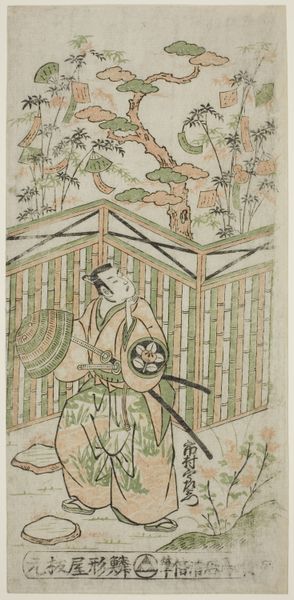
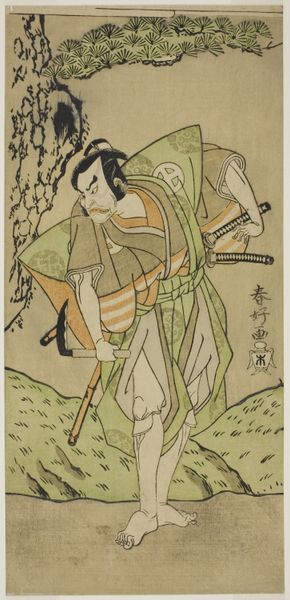
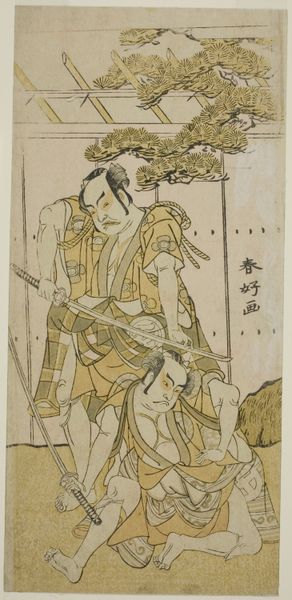
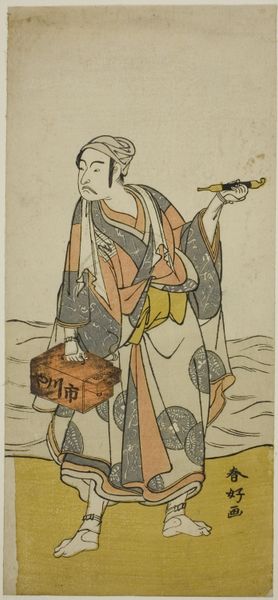
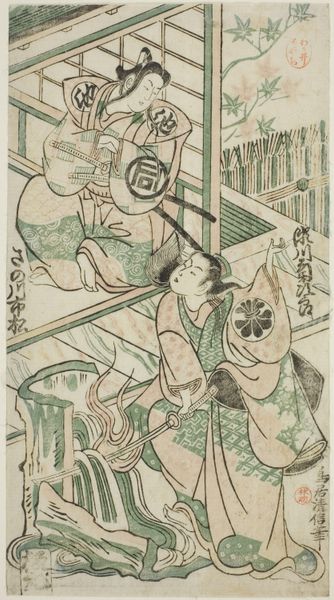
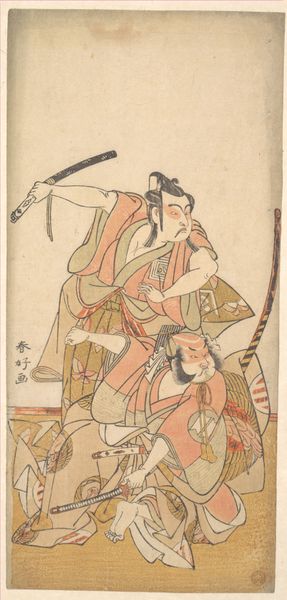
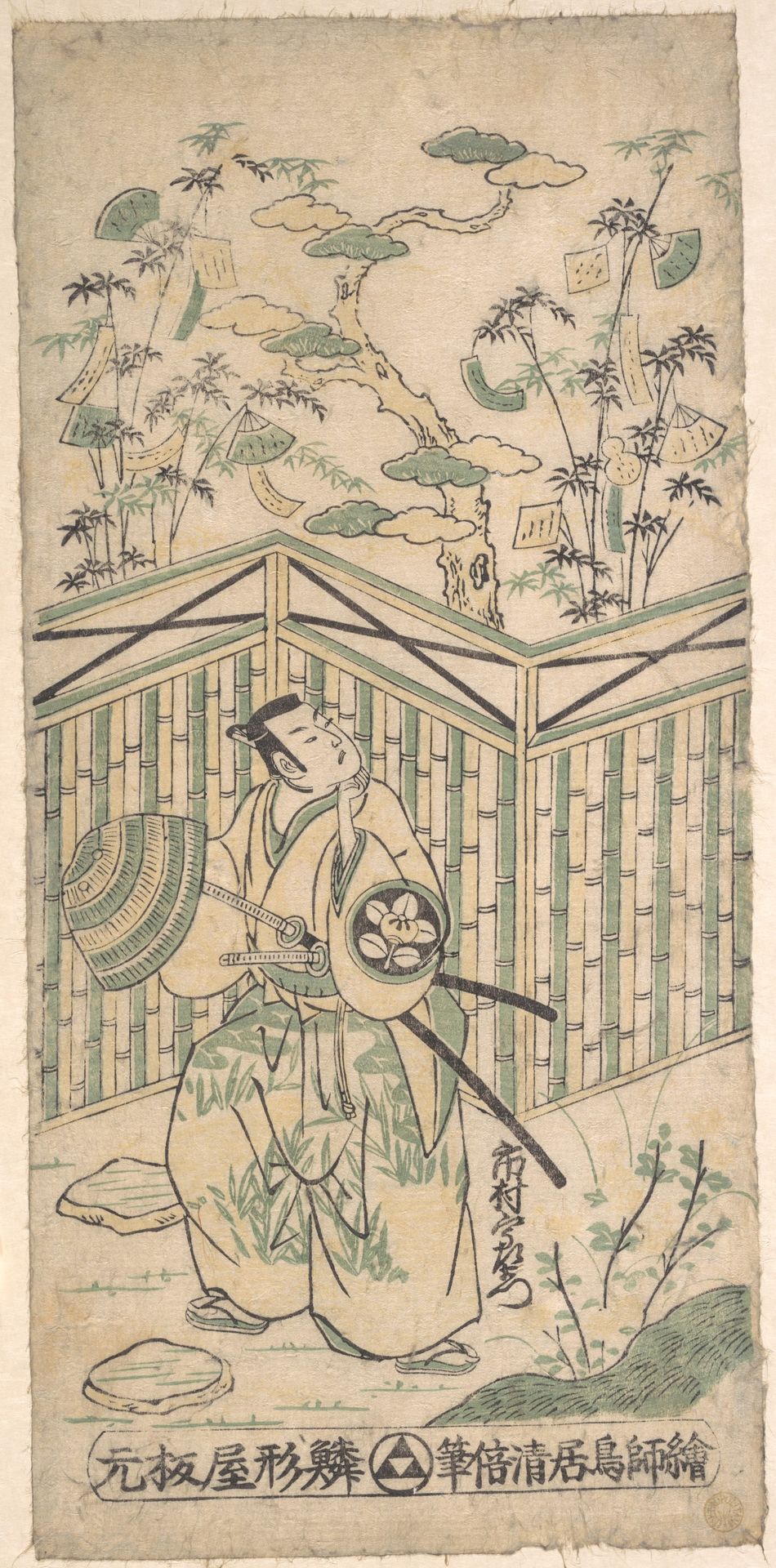
This woodblock print by Torii Kiyomasu I depicts the actor Ichimura Uzaemon VIII as a samurai. Note the samurai's basket hat or "amigasa," a symbol deeply rooted in Japanese culture, traditionally worn by travelers or those seeking anonymity. The amigasa appears throughout the history of Japanese art and performance, often associated with wandering, pilgrimage, or disguise. The "amigasa" is also linked to concepts of retreat and detachment, evoking a sense of mystery and hidden identity. Consider how the hat conceals the actor's face, inviting the viewer to project their own emotions onto him. The way this simple object can convey layers of meaning, reflecting our own feelings of concealment, speaks to its enduring significance. This cyclical return and transformation highlight the enduring emotional and psychological power of the "amigasa."
The Actor Ichimura Uzaemon Eighth as a Samurai Carring a Basket Hat 1742 - 1762


Artwork details
- Medium
- print, woodblock-print
- Dimensions
- H. 12 1/2 in. (31.8 cm); W. 5 7/8 in. (14.9 cm)
- Location
- Metropolitan Museum of Art, New York, NY
- Copyright
- Public Domain
Tags
portrait
asian-art
ukiyo-e
figuration
woodblock-print
Comments
No comments
About this artwork
This woodblock print by Torii Kiyomasu I depicts the actor Ichimura Uzaemon VIII as a samurai. Note the samurai's basket hat or "amigasa," a symbol deeply rooted in Japanese culture, traditionally worn by travelers or those seeking anonymity. The amigasa appears throughout the history of Japanese art and performance, often associated with wandering, pilgrimage, or disguise. The "amigasa" is also linked to concepts of retreat and detachment, evoking a sense of mystery and hidden identity. Consider how the hat conceals the actor's face, inviting the viewer to project their own emotions onto him. The way this simple object can convey layers of meaning, reflecting our own feelings of concealment, speaks to its enduring significance. This cyclical return and transformation highlight the enduring emotional and psychological power of the "amigasa."
Comments
No comments