1632 - 1660
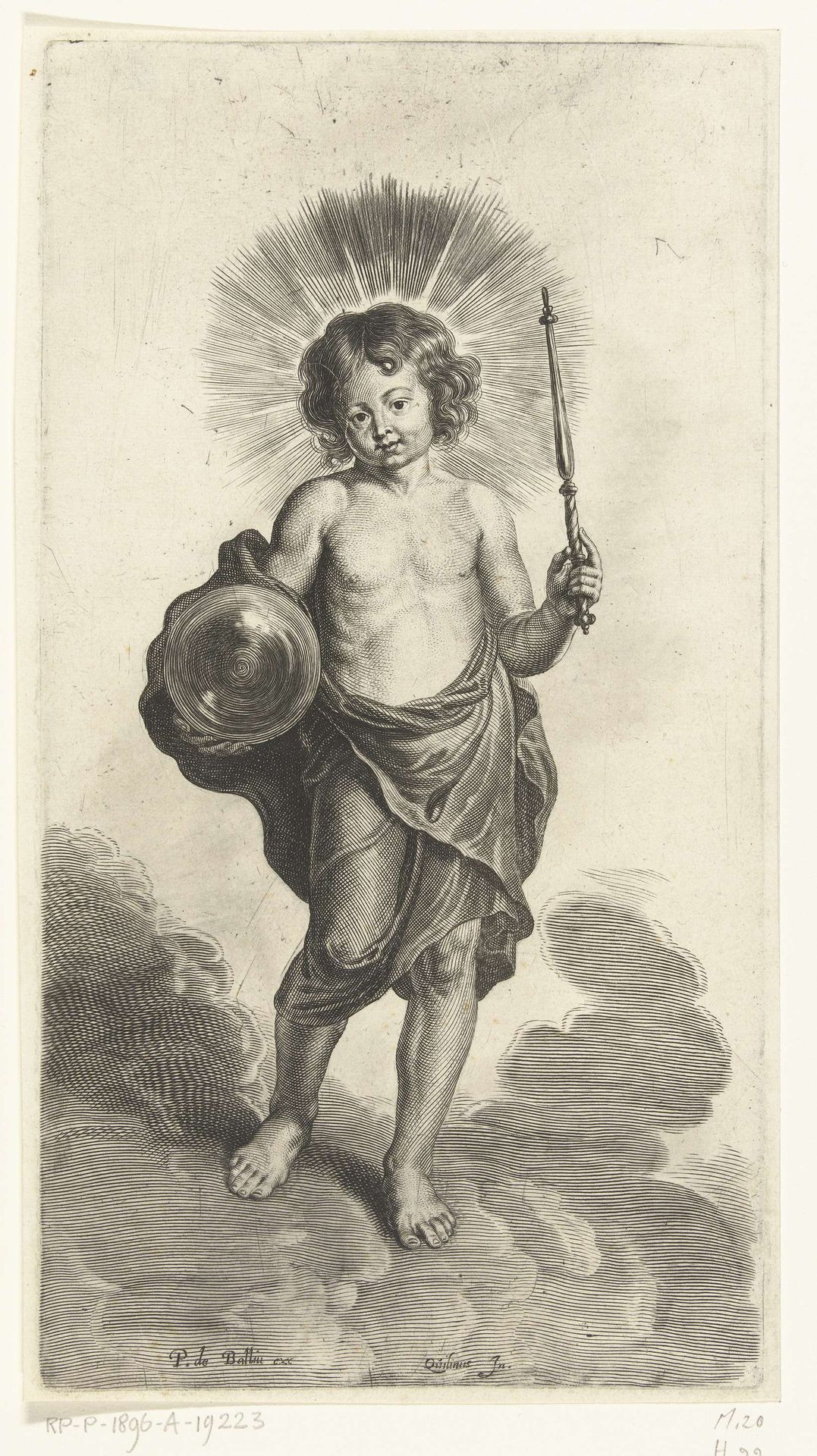
Christuskind met globe en scepter

Pieter de Bailliu
1613Location
RijksmuseumListen to curator's interpretation
Curatorial notes
Pieter de Bailliu’s engraving presents us with the Christ Child, holding a globe and scepter, symbols of earthly power and dominion. A halo radiates from his head, marking his divine nature. This motif of a child holding the world in their hands is ancient, appearing in Roman depictions of emperors as rulers of the world, as well as mythological figures such as Eros. The scepter, too, has roots reaching back to ancient kings, representing authority and justice. Yet, here, they are imbued with Christian meaning: the child embodies both divine and earthly rule, a king whose kingdom is not just of this world. Consider the gesture, a child bestowing power, but also a promise of salvation. These symbols evoke a deep, collective memory of power, divinity, and the human desire for both. This engraving is not a mere representation but a potent, concentrated expression of cultural memory. It reminds us that the life of a symbol is not linear, but a constant return, a spiral of meaning that continues to evolve.