About this artwork
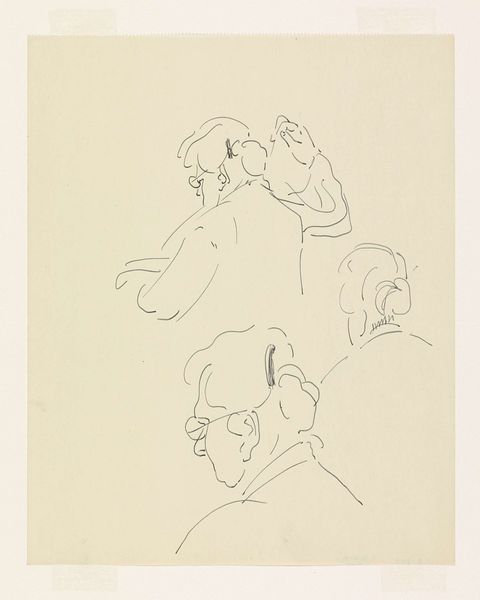
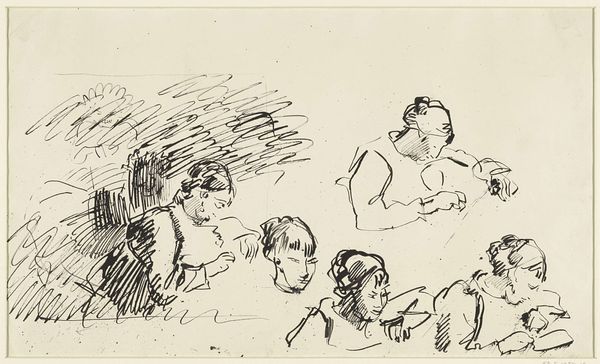
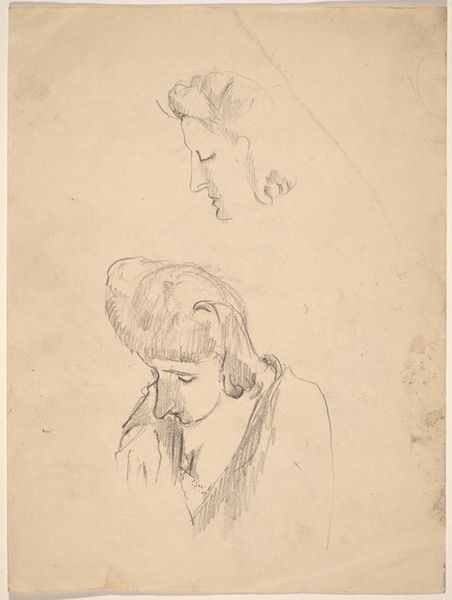
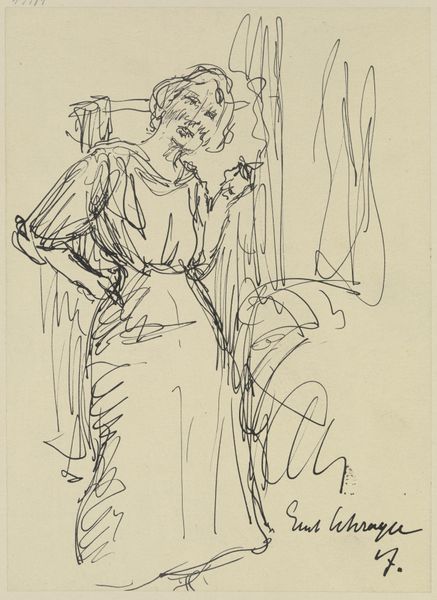
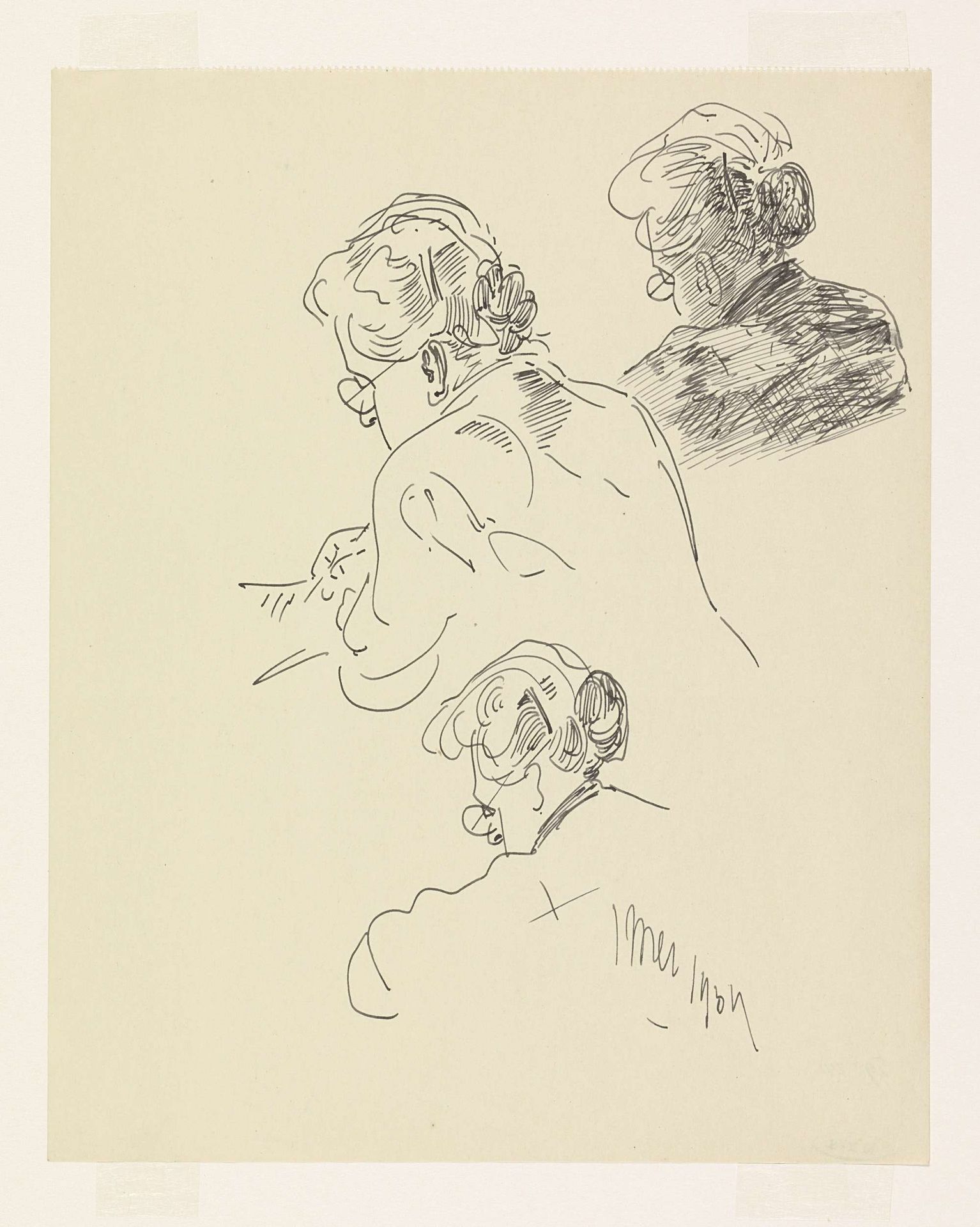
Carel Adolph Lion Cachet created this sketch, "Studies van de echtgenote van Carel Adolph Lion Cachet, handwerkend," using pen and ink. The composition immediately draws our eye to the interplay between line and form, where Cachet explores his wife in three different poses. Notice how the stark contrast between the black ink and the white paper accentuates the contours of her figure. The loose, expressive lines suggest movement and capture fleeting moments, while the varying intensity of shading adds depth and volume. Cachet's strategic use of line and shadow not only defines the physical form of his subject but also hints at a deeper psychological presence. The sketches seem to destabilize the traditional portrait, inviting us to consider the multifaceted nature of identity. Consider how the economy of line forces us to engage actively with the image, completing the forms in our minds and constructing our own interpretation of his wife's persona. In doing so, the work becomes a study not just of a person, but also of perception itself.
Studies van de echtgenote van Carel Adolph Lion Cachet, handwerkend
Possibly 1934 - 1935

Carel Adolph Lion Cachet
1864 - 1945Location
RijksmuseumArtwork details
- Medium
- drawing, ink, pen
- Dimensions
- height 265 mm, width 213 mm
- Location
- Rijksmuseum
- Copyright
- Rijks Museum: Open Domain
Tags
Comments
Share your thoughts
About this artwork
Carel Adolph Lion Cachet created this sketch, "Studies van de echtgenote van Carel Adolph Lion Cachet, handwerkend," using pen and ink. The composition immediately draws our eye to the interplay between line and form, where Cachet explores his wife in three different poses. Notice how the stark contrast between the black ink and the white paper accentuates the contours of her figure. The loose, expressive lines suggest movement and capture fleeting moments, while the varying intensity of shading adds depth and volume. Cachet's strategic use of line and shadow not only defines the physical form of his subject but also hints at a deeper psychological presence. The sketches seem to destabilize the traditional portrait, inviting us to consider the multifaceted nature of identity. Consider how the economy of line forces us to engage actively with the image, completing the forms in our minds and constructing our own interpretation of his wife's persona. In doing so, the work becomes a study not just of a person, but also of perception itself.
Comments
Share your thoughts