About this artwork
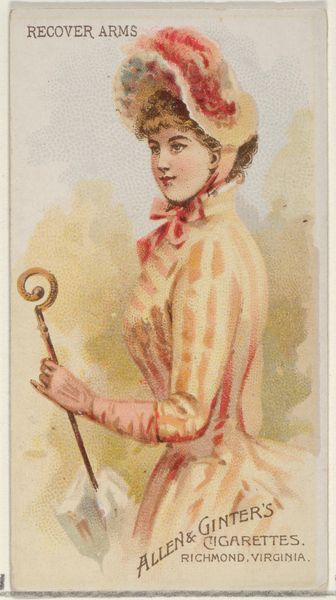
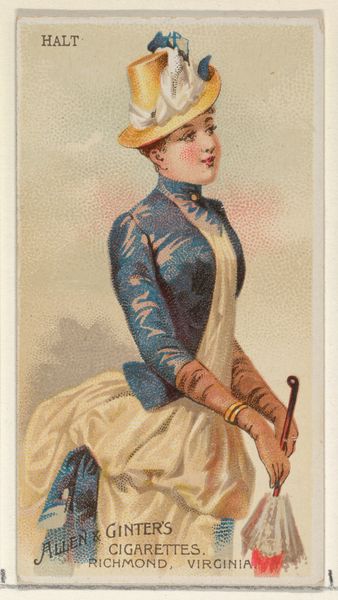
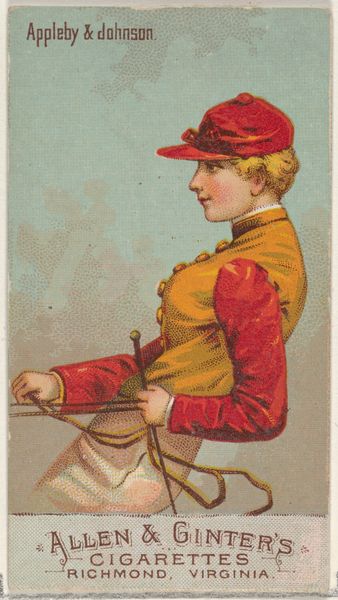
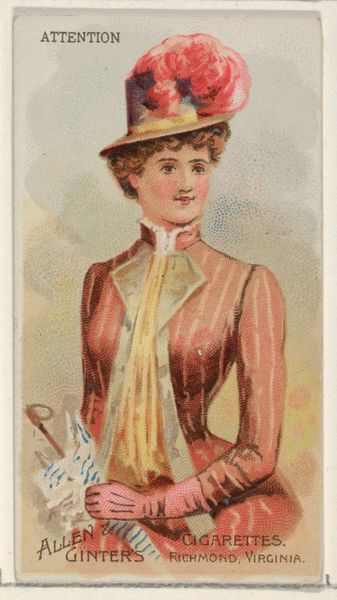
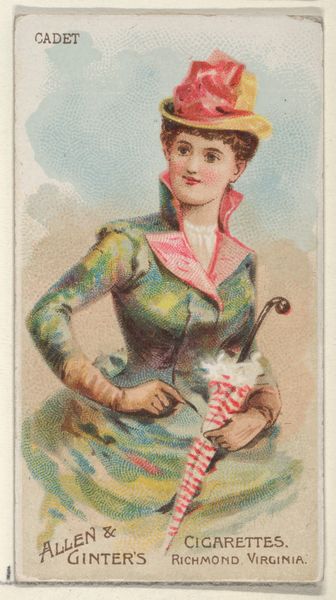
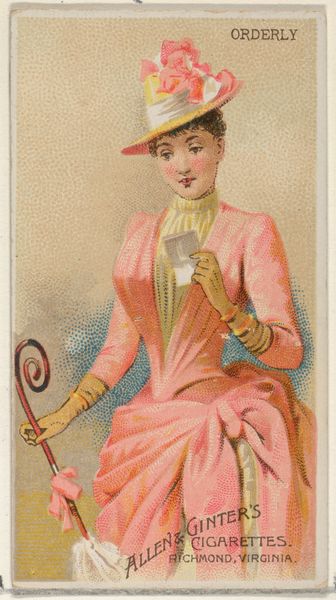
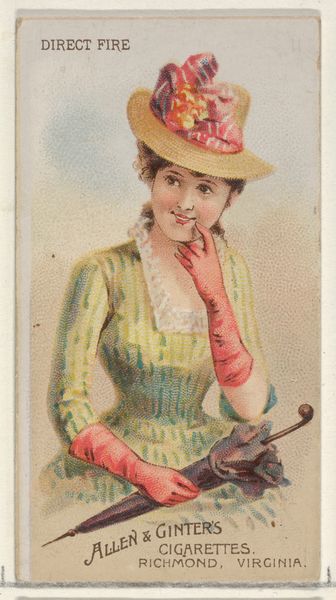
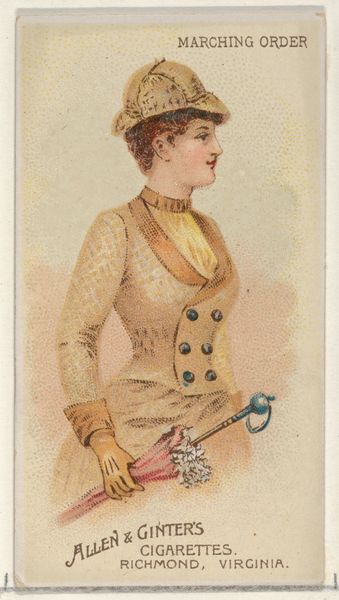
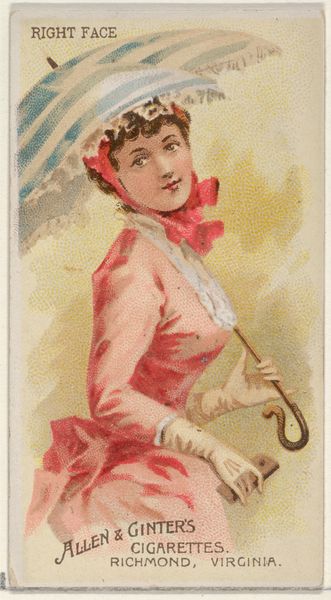
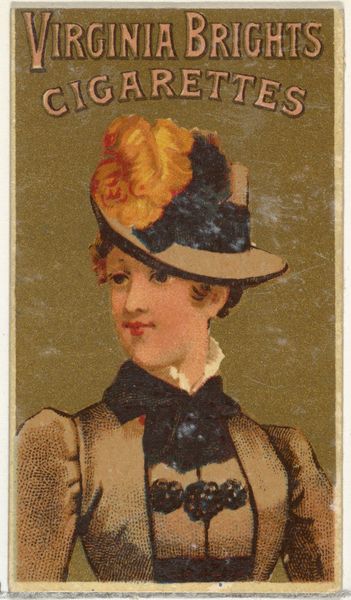
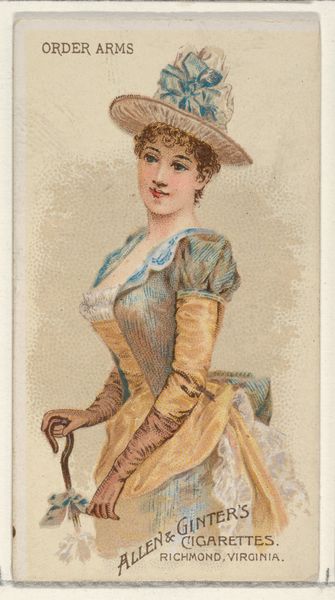
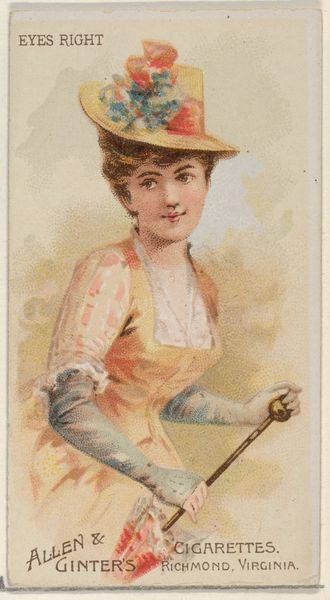
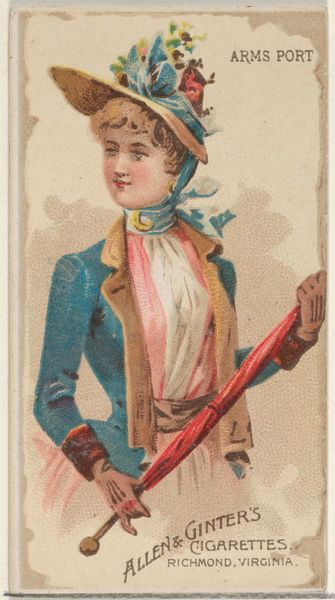
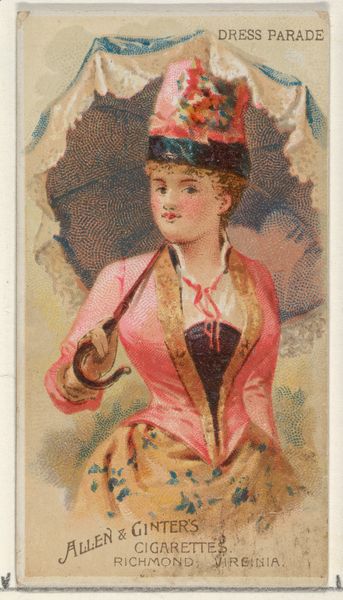
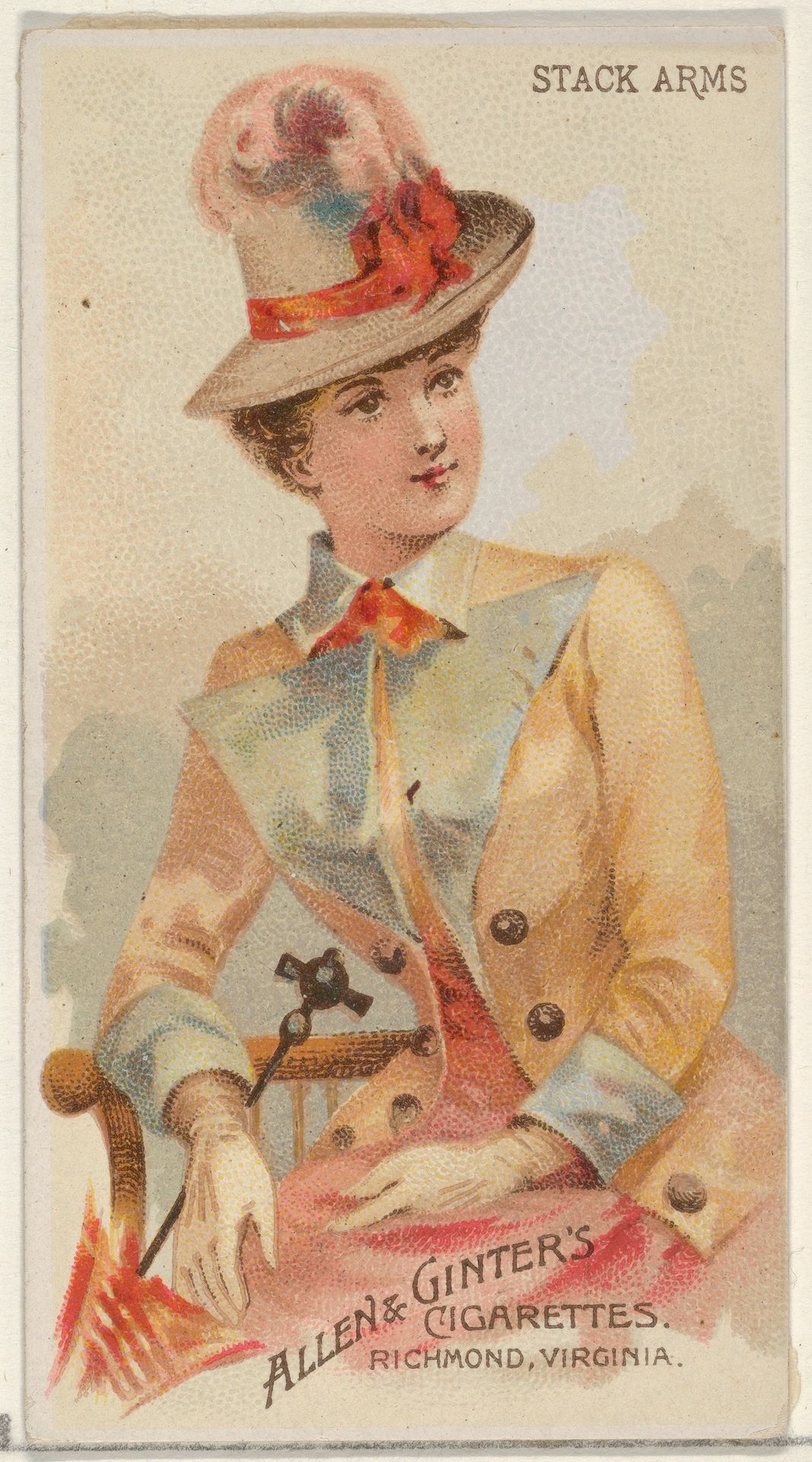
Editor: Here we have “Stack Arms,” from the Parasol Drills series for Allen & Ginter Cigarettes, created around 1888. It’s currently held at the Metropolitan Museum of Art. The portrait immediately strikes me as somewhat ambiguous. Is this a celebration of femininity, or perhaps a subtle nod towards the changing roles of women? What do you read into it? Curator: Well, considering Allen & Ginter's purpose – selling cigarettes – this piece gains additional layers of meaning. We have to think about the context of 19th-century advertising. Cigarette cards like these were designed to be collected, traded, and consumed, much like the cigarettes themselves. Editor: Right, almost like… visual commodities. Curator: Exactly! So, what is being sold here isn’t simply a pretty image. It's a lifestyle, an aspiration. This is less a portrait and more of a carefully constructed symbol, tying female empowerment to a specific consumer product, Allen & Ginter Cigarettes. Editor: So, it’s less about authentic representation, and more about manipulating social ideals to sell cigarettes? Curator: Precisely. And how do we, in the present day, navigate the ethics of viewing these images? Do we see them as harmless collectibles, or insidious tools of propaganda? Editor: Food for thought! I hadn't considered that this pretty image could be a complex vehicle for social commentary and commerce. Curator: And I learned from your opening response that personal reflections on artwork can unlock different viewpoints.
Stack Arms, from the Parasol Drills series (N18) for Allen & Ginter Cigarettes Brands
1888


Artwork details
- Medium
- drawing, print
- Dimensions
- Sheet: 2 3/4 x 1 1/2 in. (7 x 3.8 cm)
- Location
- Metropolitan Museum of Art, New York, NY
- Copyright
- Public Domain
Tags
Comments
Share your thoughts
About this artwork
Editor: Here we have “Stack Arms,” from the Parasol Drills series for Allen & Ginter Cigarettes, created around 1888. It’s currently held at the Metropolitan Museum of Art. The portrait immediately strikes me as somewhat ambiguous. Is this a celebration of femininity, or perhaps a subtle nod towards the changing roles of women? What do you read into it? Curator: Well, considering Allen & Ginter's purpose – selling cigarettes – this piece gains additional layers of meaning. We have to think about the context of 19th-century advertising. Cigarette cards like these were designed to be collected, traded, and consumed, much like the cigarettes themselves. Editor: Right, almost like… visual commodities. Curator: Exactly! So, what is being sold here isn’t simply a pretty image. It's a lifestyle, an aspiration. This is less a portrait and more of a carefully constructed symbol, tying female empowerment to a specific consumer product, Allen & Ginter Cigarettes. Editor: So, it’s less about authentic representation, and more about manipulating social ideals to sell cigarettes? Curator: Precisely. And how do we, in the present day, navigate the ethics of viewing these images? Do we see them as harmless collectibles, or insidious tools of propaganda? Editor: Food for thought! I hadn't considered that this pretty image could be a complex vehicle for social commentary and commerce. Curator: And I learned from your opening response that personal reflections on artwork can unlock different viewpoints.
Comments
Share your thoughts