About this artwork
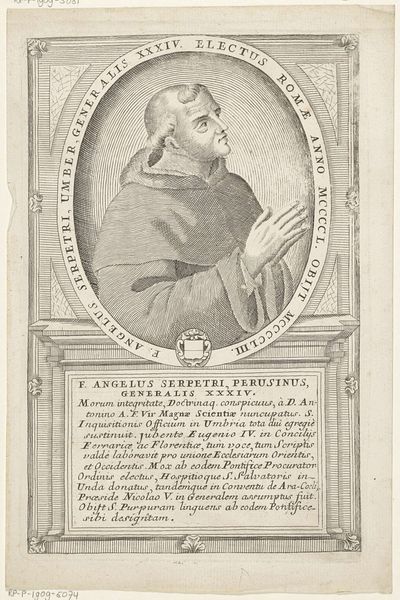
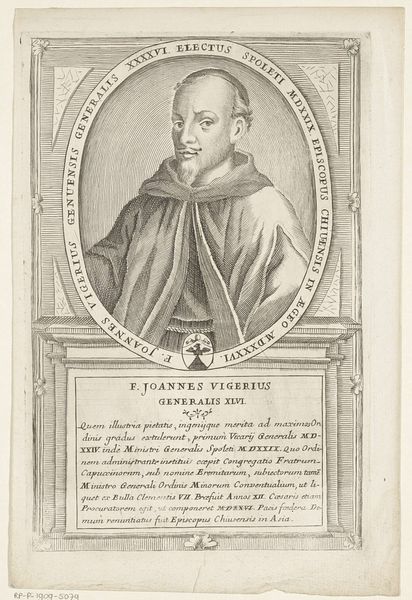
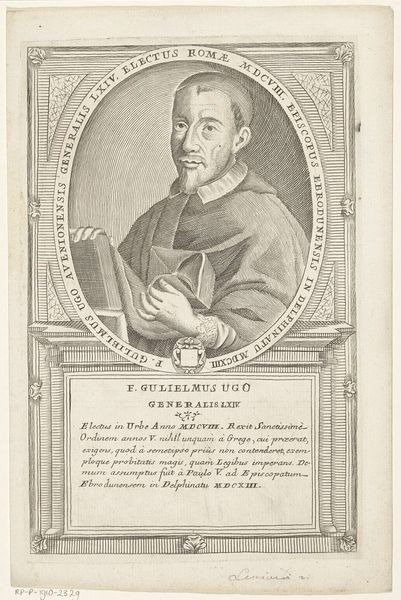
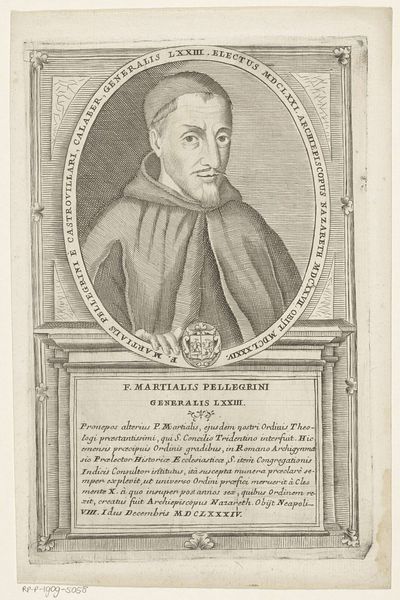
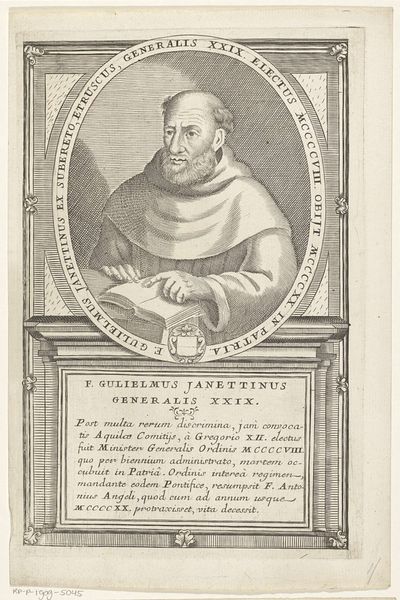
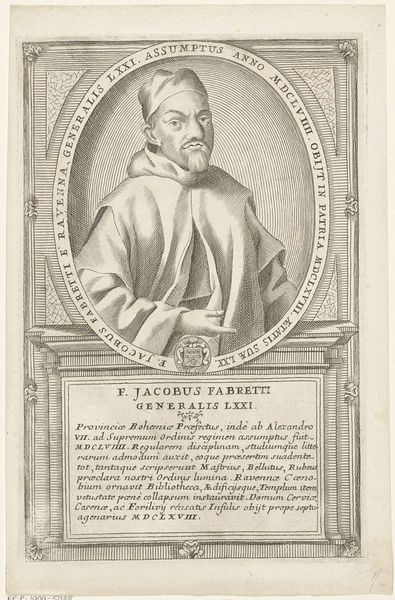
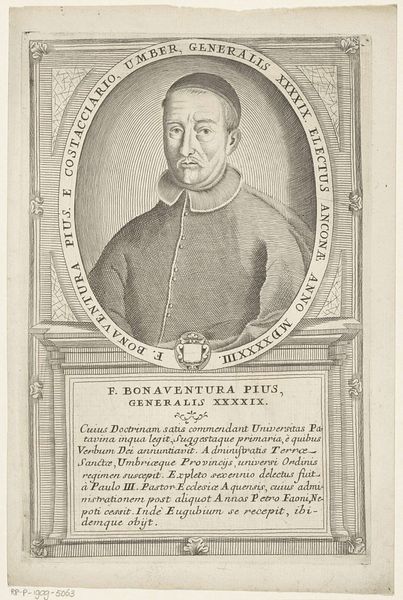
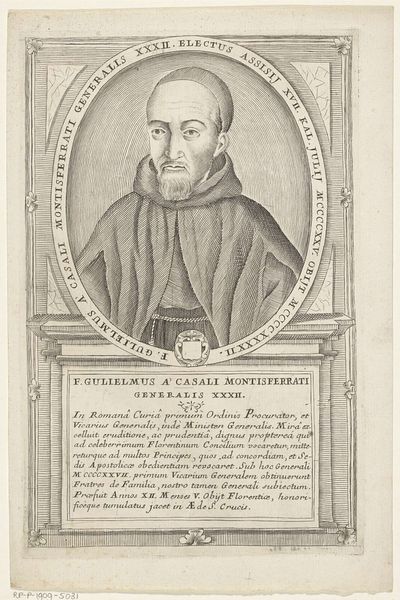
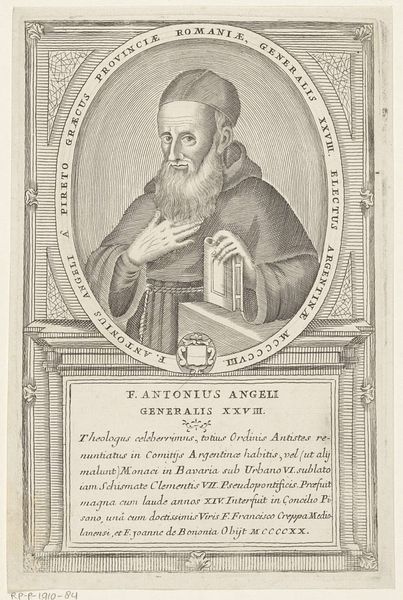
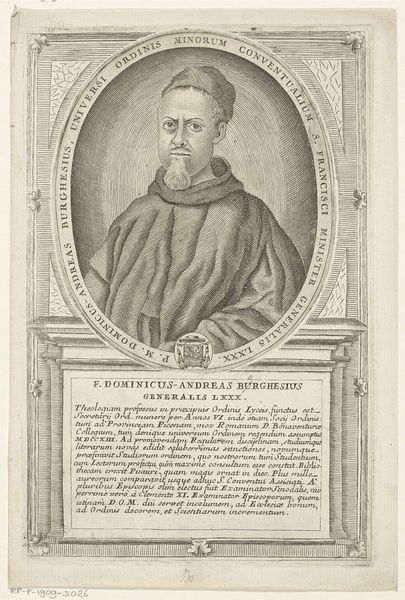
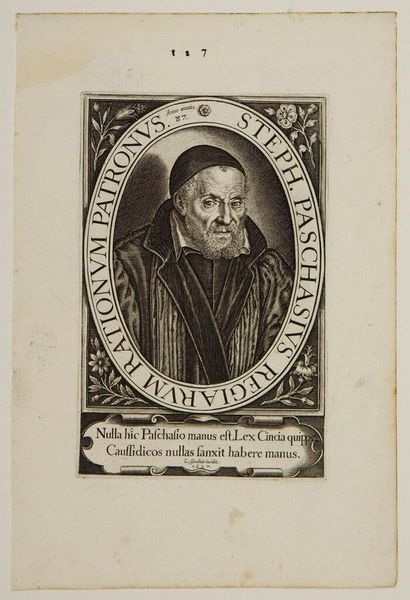
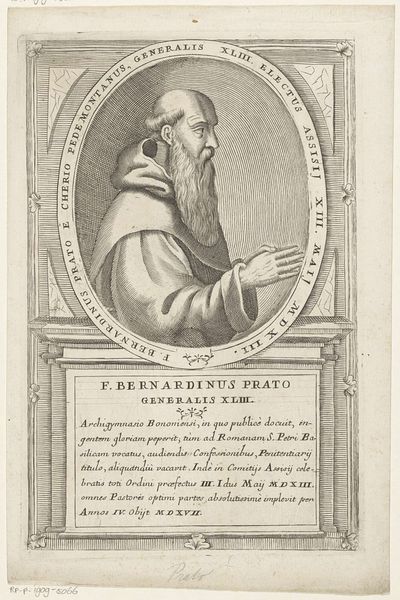
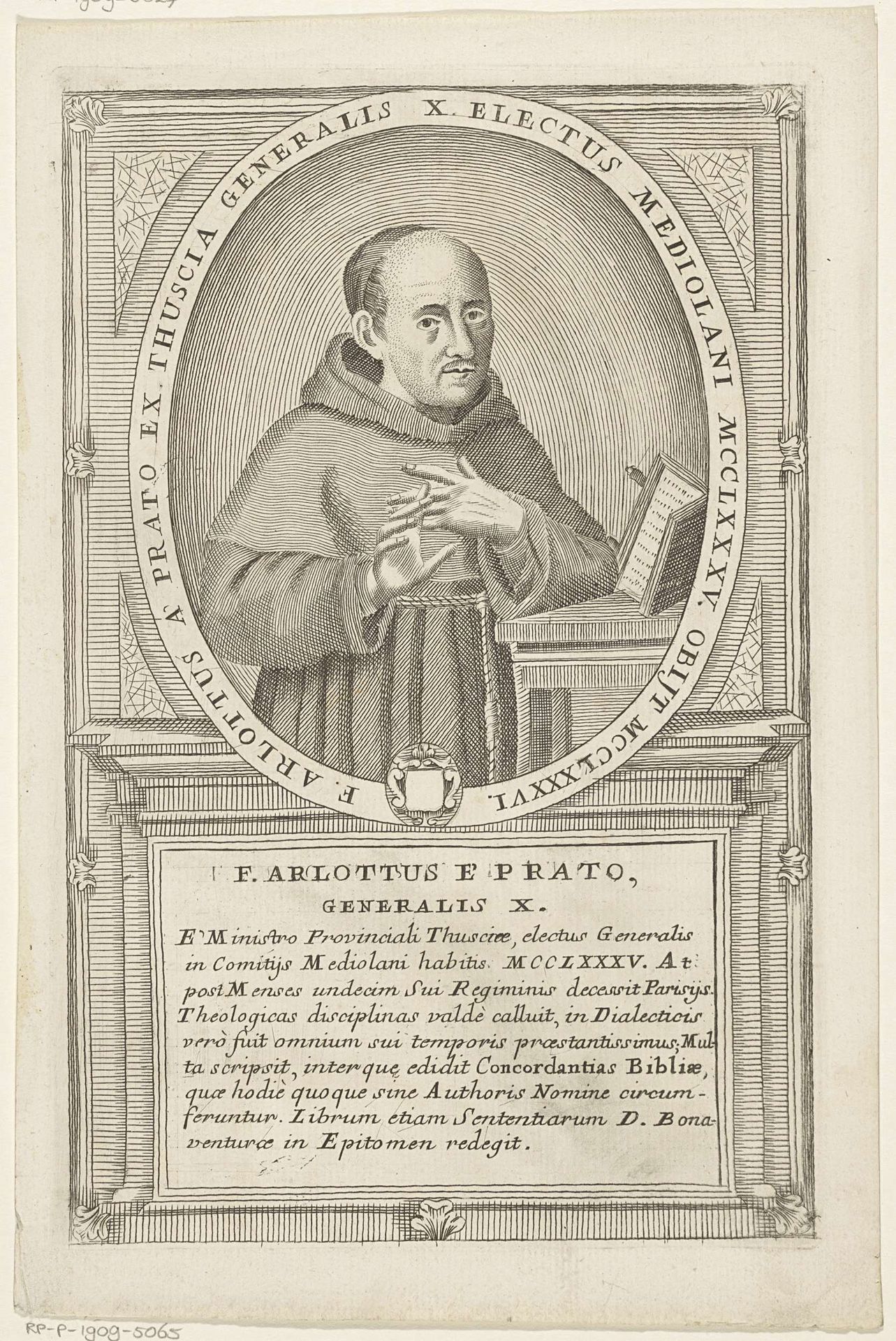
This engraving, created by Antonio Luciani in the early 18th century, depicts Arlotto da Prato, the tenth Minister General of the Franciscan Order. Considered within the historical context of the Catholic Church, Da Prato emerges as a figure navigating religious doctrine and intellectual life. The portrait captures him in his religious attire with his hands clasped, next to a book, symbolizing his dedication to theological scholarship. Luciani’s engraving serves not only as a representation of Da Prato’s likeness, but also as a statement about the values of religious devotion and intellect during the period. The inscription below the image details Da Prato’s accomplishments, emphasizing his mastery of theological disciplines and dialectics. Da Prato lived in a society steeped in religious customs, where a commitment to the Church held considerable sway, a position which he maintained until his death in 1285. The image is a record of the legacy of religious figures like Da Prato.
Portret van Arlotto da Prato, 10de Minister Generaal van de franciscaner orde
1710 - 1738

Artwork details
- Medium
- engraving
- Dimensions
- height 250 mm, width 164 mm
- Copyright
- Rijks Museum: Open Domain
Tags
Comments
Share your thoughts
About this artwork
This engraving, created by Antonio Luciani in the early 18th century, depicts Arlotto da Prato, the tenth Minister General of the Franciscan Order. Considered within the historical context of the Catholic Church, Da Prato emerges as a figure navigating religious doctrine and intellectual life. The portrait captures him in his religious attire with his hands clasped, next to a book, symbolizing his dedication to theological scholarship. Luciani’s engraving serves not only as a representation of Da Prato’s likeness, but also as a statement about the values of religious devotion and intellect during the period. The inscription below the image details Da Prato’s accomplishments, emphasizing his mastery of theological disciplines and dialectics. Da Prato lived in a society steeped in religious customs, where a commitment to the Church held considerable sway, a position which he maintained until his death in 1285. The image is a record of the legacy of religious figures like Da Prato.
Comments
Share your thoughts