About this artwork
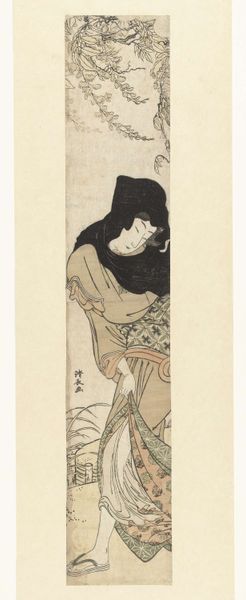
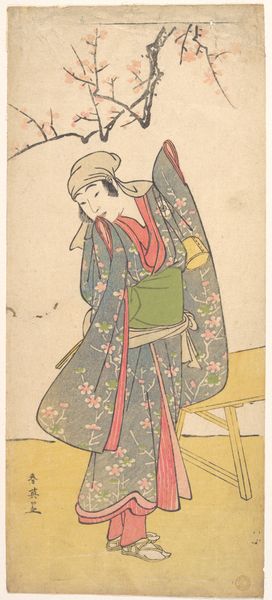
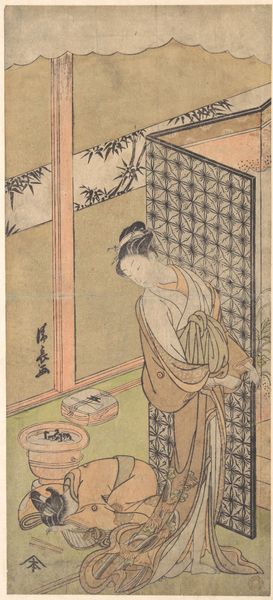
Suzuki Harunobu’s woodblock print, "Woman in Night Robe Reading a Letter," invites us into a private moment. Created in Japan around 1765, it reflects the intimate and often constrained lives of women in Edo society. Here, a woman pauses, still in her night robe, to read a letter. Her posture and expression are caught in a moment of quiet intensity. Harunobu, working during a time when class distinctions were sharply defined, often portrayed women from the merchant class, suggesting a focus on the everyday lives and emotions of those outside the samurai elite. The letter itself is a powerful, yet silent object. What does it say? How might its contents alter the course of her day, or her life? This print captures a tender moment of womanhood. While the setting is specific to its time, the experience of private reflection and emotional reckoning is timeless. This image offers a glimpse into the interior life of a woman navigating her world through the written word, inviting us to consider the complexities of communication, gender, and identity.
Woman in Night Robe Reading a Letter 1764 - 1772

Suzuki Harunobu 鈴木春信
1725 - 1770
The Metropolitan Museum of Art
Metropolitan Museum of Art, New York, NYArtwork details
- Medium
- print, textile, woodblock-print
- Dimensions
- H. 26 1/2 in. (67.3 cm); W. 4 7/16 in. (11.3 cm)
- Location
- Metropolitan Museum of Art, New York, NY
- Copyright
- Public Domain
Tags
portrait
linocut
asian-art
textile
ukiyo-e
japan
figuration
linocut print
woodblock-print
genre-painting
Comments
No comments
About this artwork
Suzuki Harunobu’s woodblock print, "Woman in Night Robe Reading a Letter," invites us into a private moment. Created in Japan around 1765, it reflects the intimate and often constrained lives of women in Edo society. Here, a woman pauses, still in her night robe, to read a letter. Her posture and expression are caught in a moment of quiet intensity. Harunobu, working during a time when class distinctions were sharply defined, often portrayed women from the merchant class, suggesting a focus on the everyday lives and emotions of those outside the samurai elite. The letter itself is a powerful, yet silent object. What does it say? How might its contents alter the course of her day, or her life? This print captures a tender moment of womanhood. While the setting is specific to its time, the experience of private reflection and emotional reckoning is timeless. This image offers a glimpse into the interior life of a woman navigating her world through the written word, inviting us to consider the complexities of communication, gender, and identity.
Comments
No comments