About this artwork
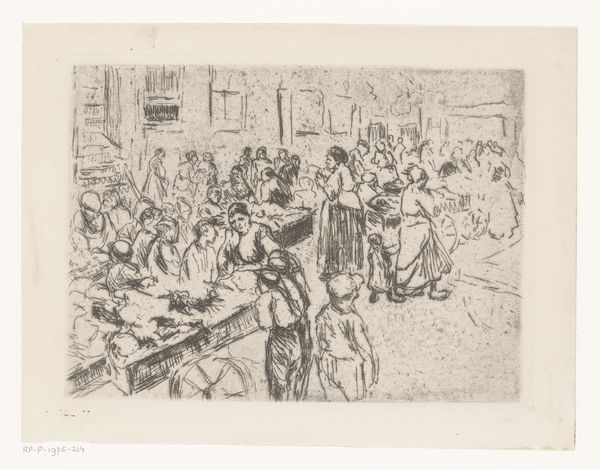
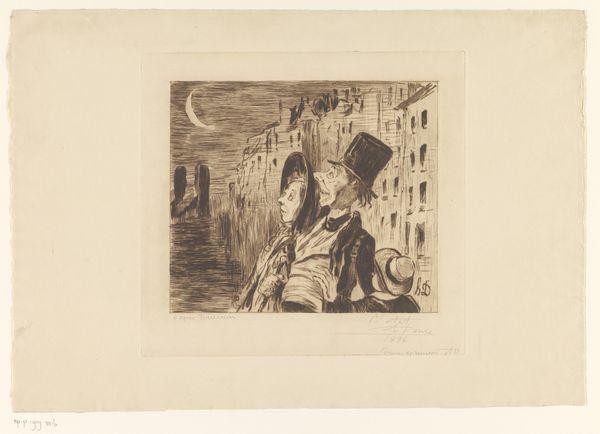
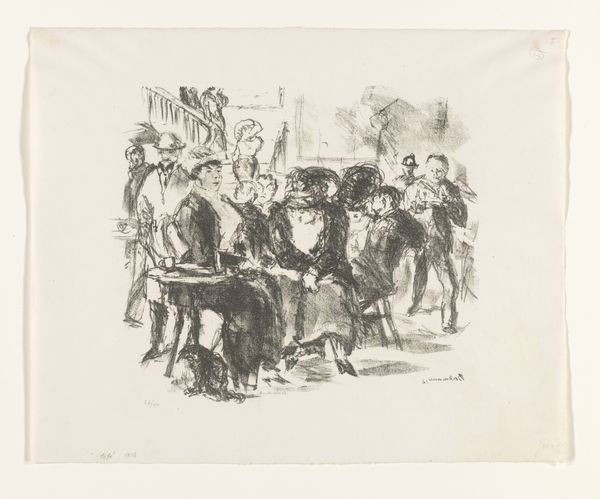
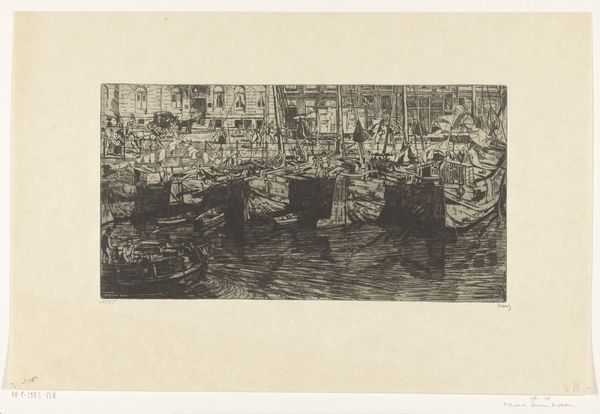
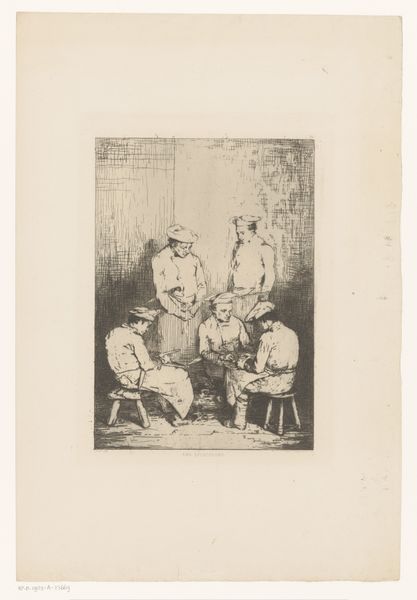
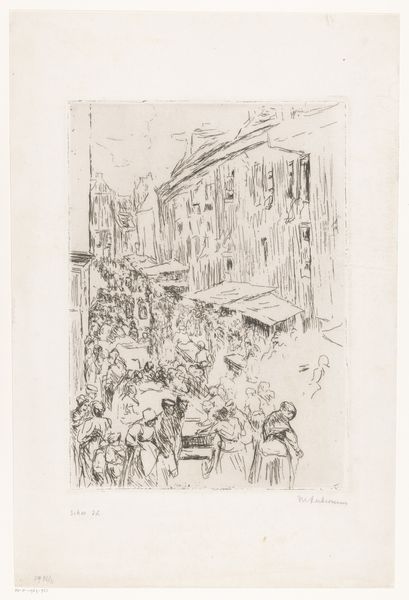
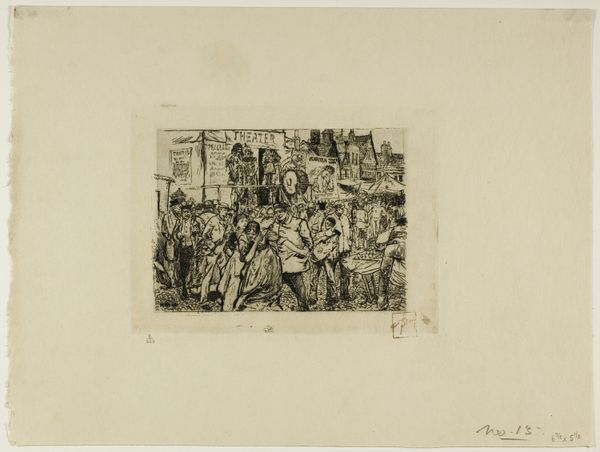
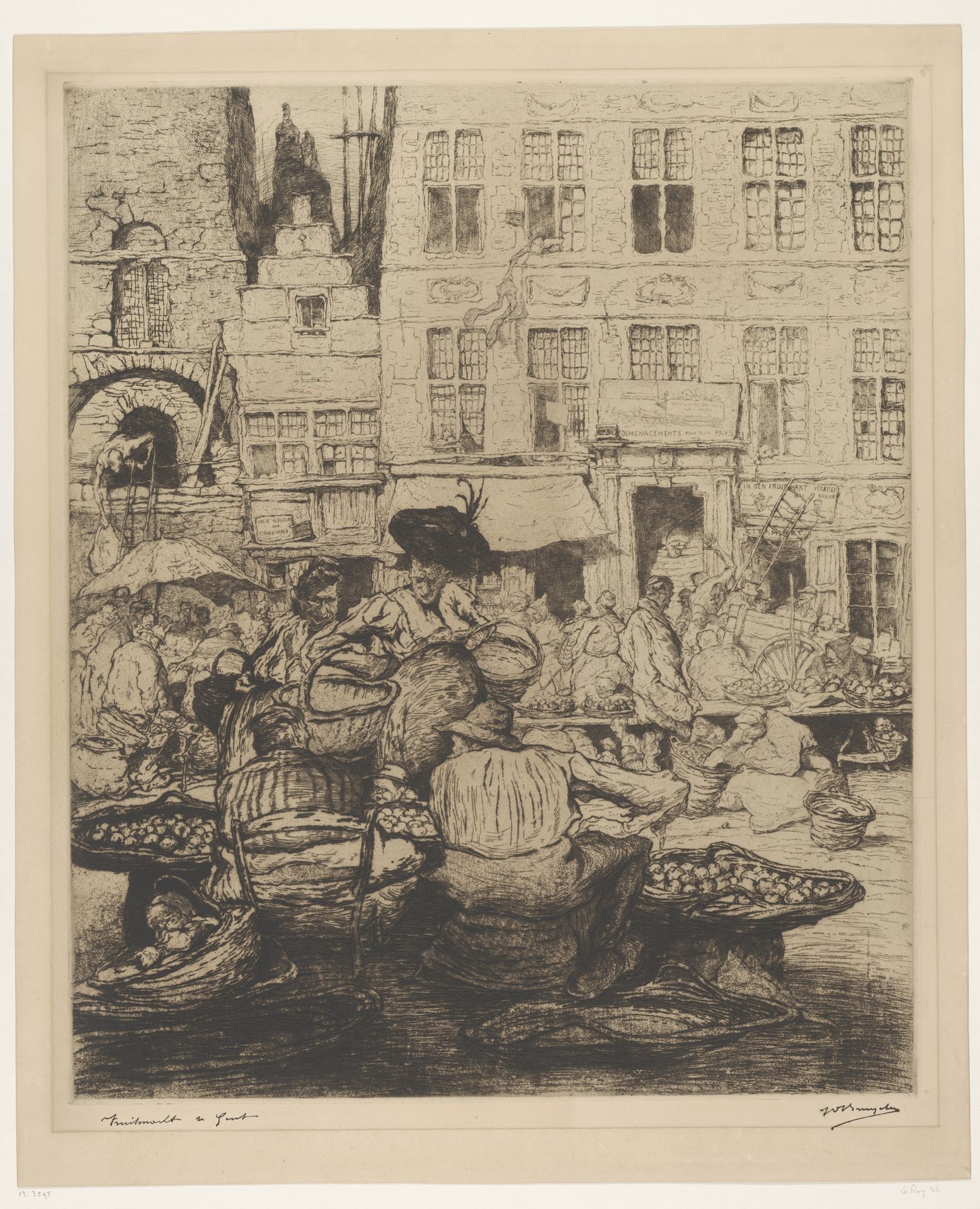
Jules de Bruycker created this print, "Cityscape with Fruit Market in Ghent," using etching techniques. De Bruycker, who lived through both World Wars, often depicted scenes of his native Ghent. Here, the dense and bustling marketplace comes alive, revealing a society stratified by gender and class. Notice the women, likely working-class, who are central to the commerce of the market. They are shown amidst an abundance of produce, which conveys the energy and labor of the market. De Bruycker often turned to the streets for subject matter, stating, "I search the streets...I need the emotion which the street alone can give." The artwork emphasizes the significance of markets as social and economic hubs, especially for women. Consider how De Bruycker’s etching captures both the communal spirit and the socio-economic realities of early 20th-century Ghent. The print provides a glimpse into the daily lives and the unspoken narratives of the working class during a transformative period in European history.

Artwork details
- Dimensions
- height 626 mm, width 516 mm
- Copyright
- Rijks Museum: Open Domain
Comments
Share your thoughts
About this artwork
Jules de Bruycker created this print, "Cityscape with Fruit Market in Ghent," using etching techniques. De Bruycker, who lived through both World Wars, often depicted scenes of his native Ghent. Here, the dense and bustling marketplace comes alive, revealing a society stratified by gender and class. Notice the women, likely working-class, who are central to the commerce of the market. They are shown amidst an abundance of produce, which conveys the energy and labor of the market. De Bruycker often turned to the streets for subject matter, stating, "I search the streets...I need the emotion which the street alone can give." The artwork emphasizes the significance of markets as social and economic hubs, especially for women. Consider how De Bruycker’s etching captures both the communal spirit and the socio-economic realities of early 20th-century Ghent. The print provides a glimpse into the daily lives and the unspoken narratives of the working class during a transformative period in European history.
Comments
Share your thoughts