1778
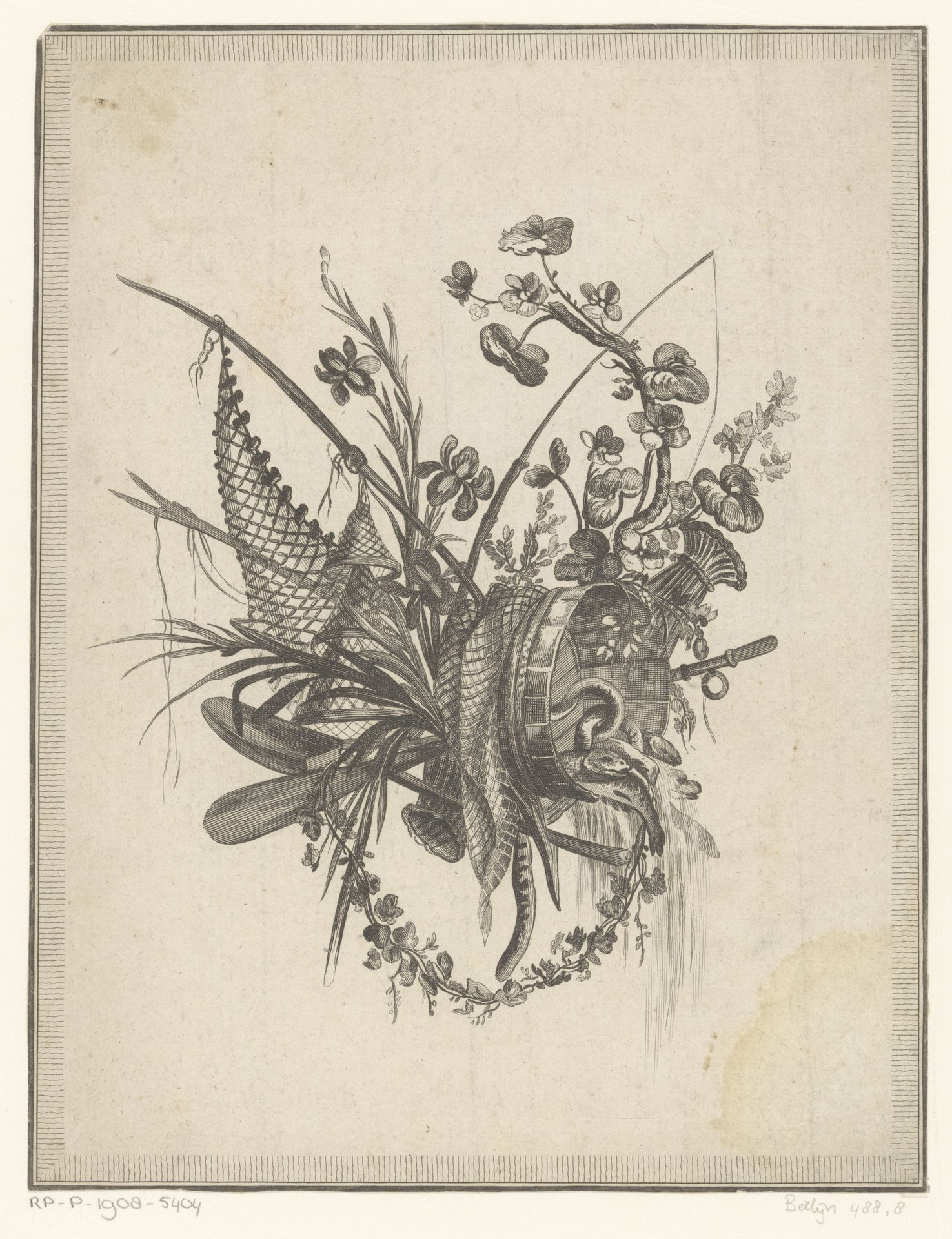
Trofee met vissersattributen

Etienne Claude Voysard
1746 - 1812Location
RijksmuseumListen to curator's interpretation
Curatorial notes
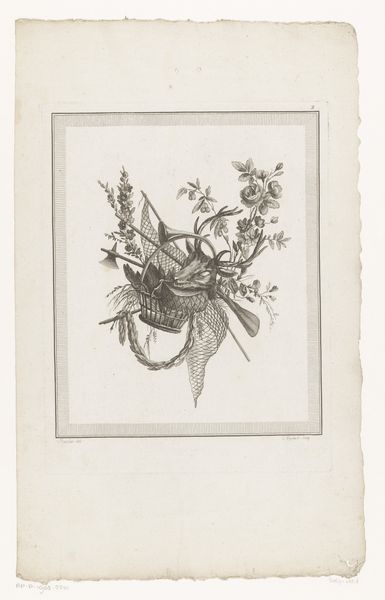
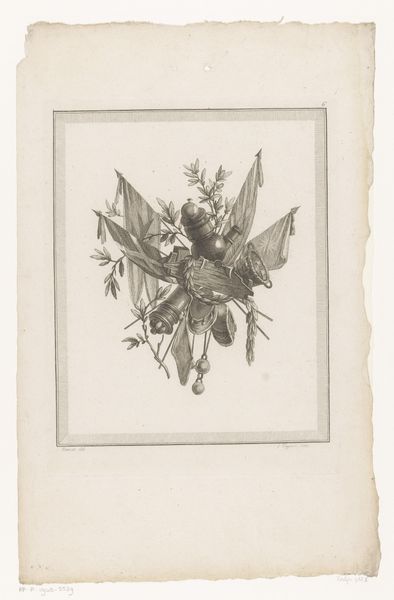
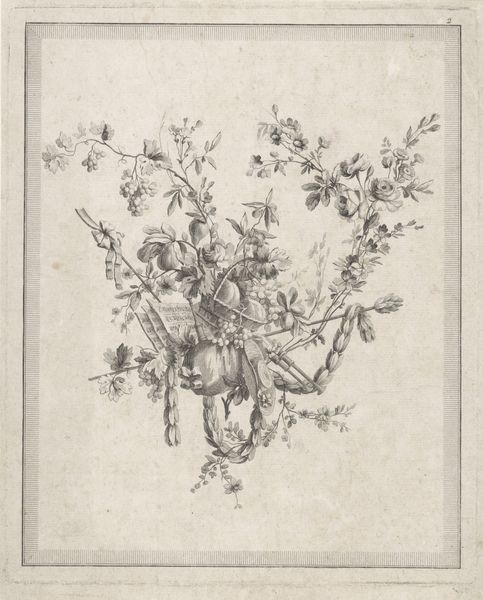
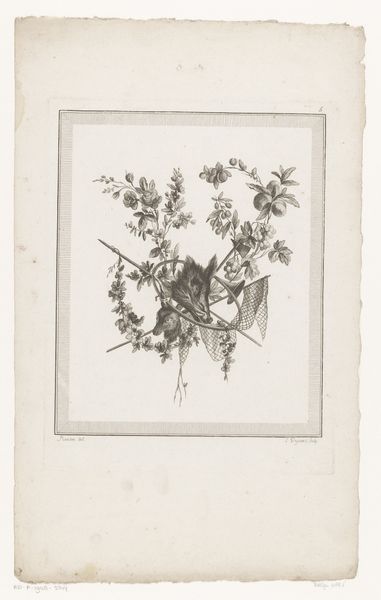
Editor: This is "Trofee met vissersattributen," or "Trophy with fishing attributes," an ink drawing by Etienne Claude Voysard from 1778. The Baroque line engraving is surprisingly detailed. What I notice most is how the composition brings together natural elements like flowers with symbols of fishing. How do you interpret the social meaning behind this unusual arrangement? Curator: It's a fascinating piece precisely because of that juxtaposition. Think about 18th-century society, the rise of the middle class, and how leisure activities like fishing were becoming more prominent. This "trophy" elevates a common activity into an emblem worthy of artistic representation. How do you think this kind of image functions within the broader political landscape of imagery at the time? Editor: So, it’s not just a pretty drawing. It reflects social mobility? Is Voysard perhaps commenting on how new social values are depicted? Curator: Exactly. Artworks like this demonstrate the democratizing influence on artistic subjects. Previously, trophies were associated with military victory or aristocratic hunts. Here, fishing, an activity accessible to a wider segment of the population, is glorified. This shift in representation suggests a change in societal values and power structures. Museums play a role too; why, in your opinion, do they highlight pieces such as this? Editor: It teaches us something! I thought this was just a drawing of fishing gear and flowers but it tells us about shifts in society and who gets celebrated. That’s definitely more than meets the eye. Curator: Precisely. It reveals how art, even seemingly decorative pieces, is entangled with the social and political currents of its time, which enriches how it’s shown in galleries even today.