Dimensions: height 74 mm, width 99 mm
Copyright: Rijks Museum: Open Domain
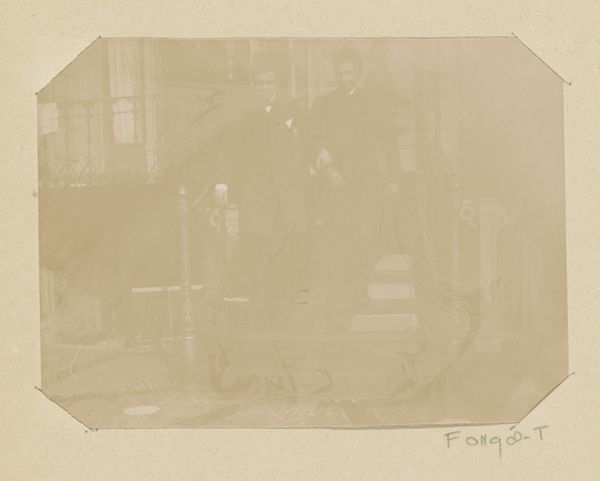
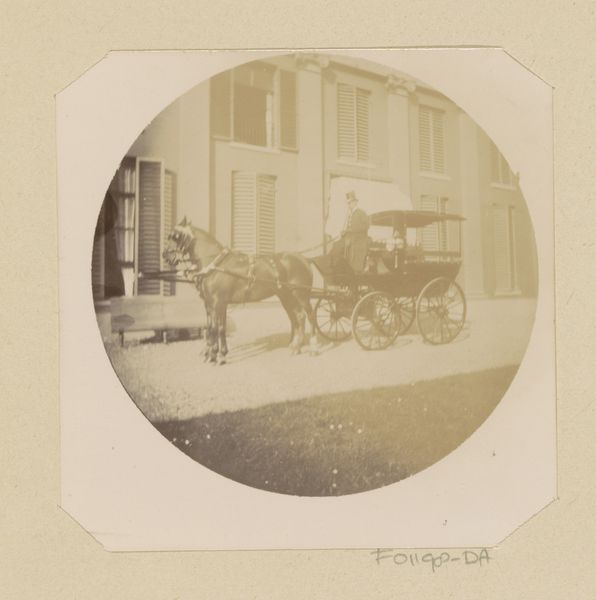
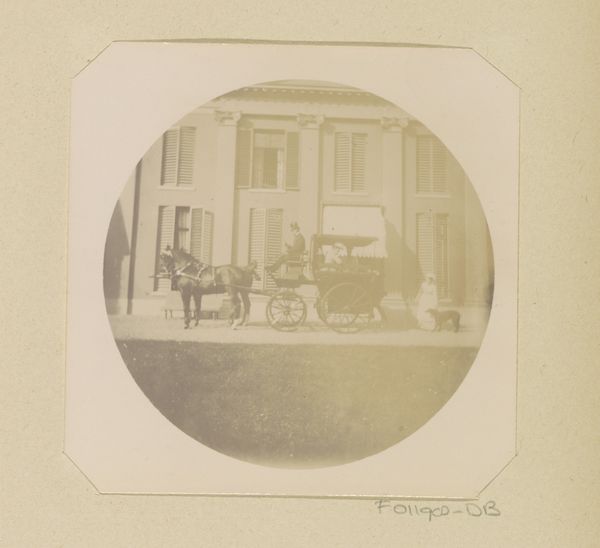
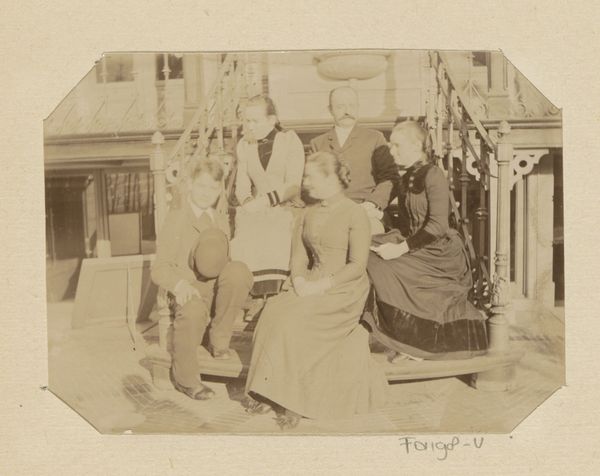
Editor: So, this is "Groep rondom een rijtuig," or "Group Around a Carriage," by Johanna Margaretha Piek, made sometime between 1889 and 1893, using a gelatin-silver print. The photograph has this dreamy, almost ghostly quality because of the light damage, but I'm drawn to the composition and the sense of occasion it evokes. What strikes you when you look at this piece? Curator: That 'dreamy' quality is fascinating, isn’t it? It obscures direct interpretation, demanding a deeper understanding. A key entry point for me is to look at how class is constructed. Photography during this era, even portraiture, was often a tool of representation for the dominant classes. Who had the resources to commission such images, and how did they choose to present themselves? Editor: So, it’s about power dynamics? Curator: Exactly. The very act of gathering 'around a carriage' speaks to a certain level of affluence and social standing. Who are these people, and what narratives are they attempting to construct through this photograph? Consider the limitations and biases inherent in photography at the time. Could Piek have challenged these conventions, or was she working within them? Editor: It’s interesting to consider the photographer’s role within these social constraints. Do you think the damage to the print adds another layer to that conversation, maybe disrupting those original intentions? Curator: Precisely! That damage, which you initially interpreted as 'dreamy,' can be seen as an act of resistance, or perhaps, a reminder of the fragility of power structures. Time itself has intervened, obscuring the clarity and certainty that these individuals likely sought to project. Perhaps the ghostly effect you noticed undermines its authority, shifting from documentation to ghostly speculation. Editor: That’s a compelling idea! I was so focused on the aesthetics; I hadn’t considered how the photograph, even unintentionally, challenges or reflects societal norms. Curator: Exactly! It is also interesting to remember Walter Benjamin’s thought on photography’s ability to democratize art and document social reality - do you think this piece succeeded in doing so? Editor: This has definitely changed how I see this photograph, the people and the artist. Thanks.
Comments
No comments
Be the first to comment and join the conversation on the ultimate creative platform.
 Collect
 React
React Comment
More like this