About this artwork
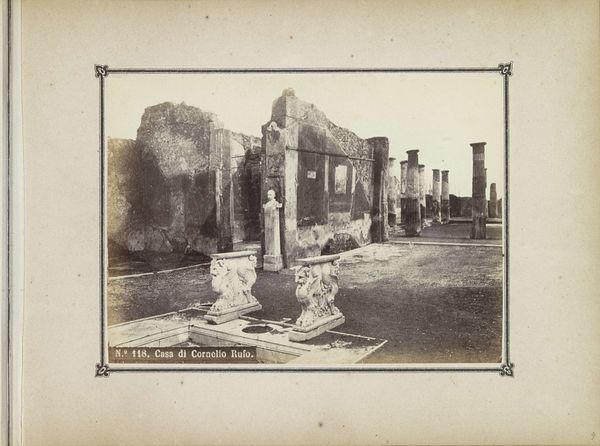
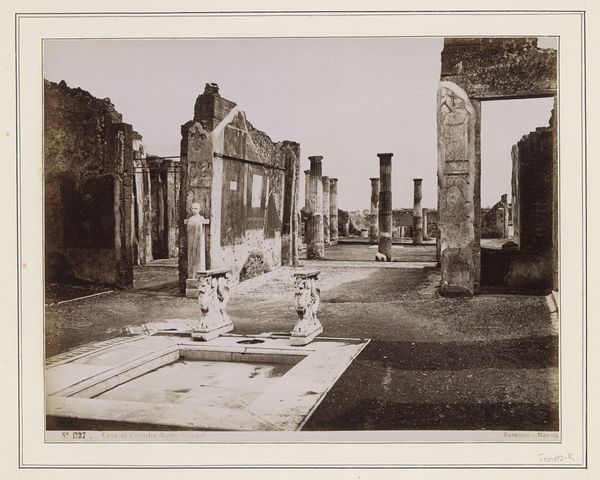
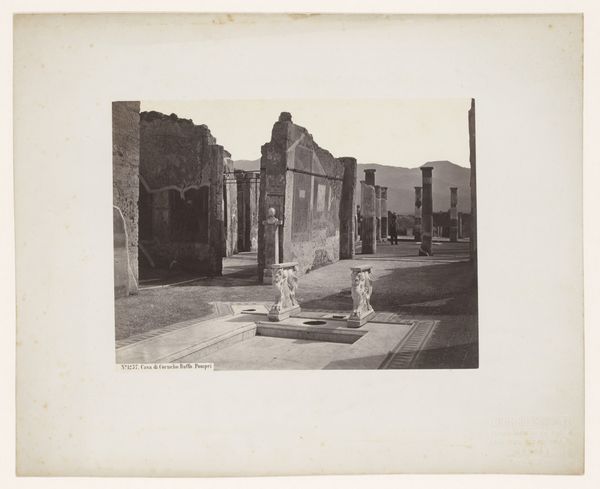
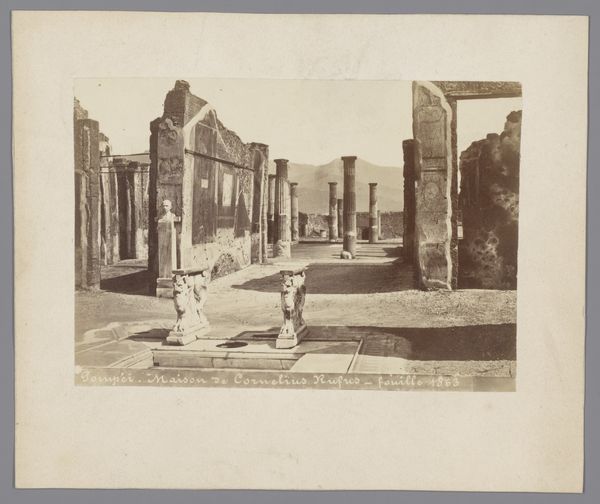
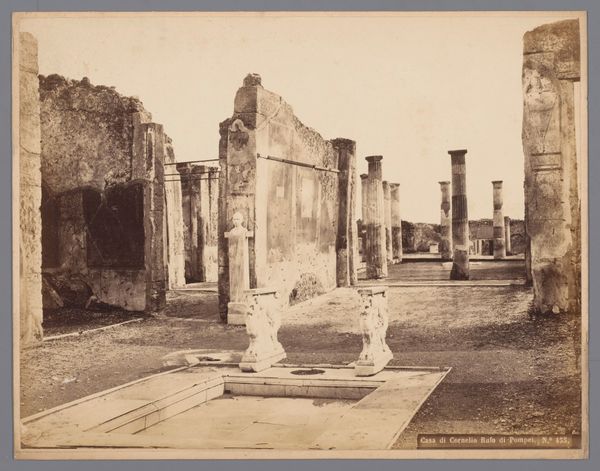
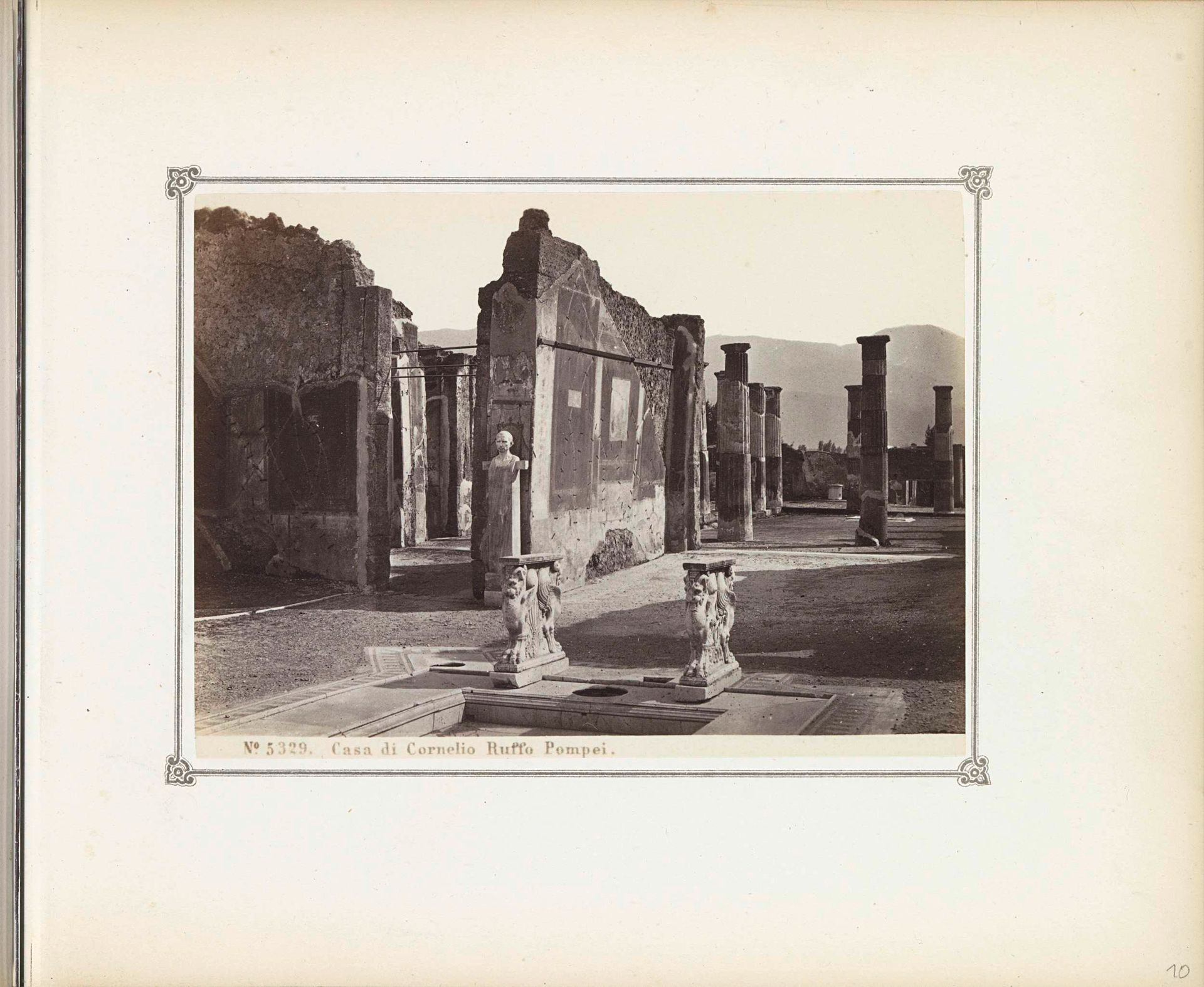
Curator: Before us is a photograph from somewhere between 1860 and 1900, taken by Giorgio Sommer, titled 'Restanten van het Casa di Cornelio Ruffo in Pompeï'. It's an albumen print. Editor: The light and shadow create a really strong diagonal composition. It gives an eerie feeling, doesn't it? Stark, even in ruin. Curator: Indeed. Consider how this image invites us to contemplate themes of impermanence and historical trauma, specifically through a post-colonial lens. Editor: Right, and that play of light emphasizes the geometry in such a striking manner; you’ve got the repetitive vertical lines of the columns contrasted against the broken horizontal walls. Semiotically speaking, the verticality could represent aspiration. Curator: Or even, the ambition of empire, set against the leveling forces of natural disaster. And of course, the historical context - Pompeii, a site of sudden devastation, forever capturing the last moments of a society stratified by class, rendered equal by catastrophe. The very materiality of the ruins tells this story, challenging hegemonic narratives about ancient grandeur. Editor: From a purely visual angle, I find the way the photographer captures depth impressive. The lines created by the pillars are receding into space; it all just seems carefully planned to the eye. Curator: Absolutely, and consider the political dimensions inherent in how these ruins are framed. Photography emerged during a period of intense archaeological exploration and colonial expansion, so consider this image, not merely a recording, but also a constructing of the ancient world for modern consumption, subtly reinforcing power structures of the time. Editor: Ultimately, you do feel this photograph invites you to delve into the past to examine this moment frozen in time from long ago. Curator: Precisely, inviting critical dialogue about our relationship to history and heritage, memory and obliteration.
Restanten van het Casa di Cornelio Ruffo in Pompeï c. 1860 - 1900

Giorgio Sommer
1834 - 1914Location
RijksmuseumArtwork details
- Medium
- photography, albumen-print
- Dimensions
- height 102 mm, width 141 mm
- Location
- Rijksmuseum
- Copyright
- Rijks Museum: Open Domain
Tags
landscape
photography
ancient-mediterranean
cityscape
albumen-print
Comments
No comments
About this artwork
Curator: Before us is a photograph from somewhere between 1860 and 1900, taken by Giorgio Sommer, titled 'Restanten van het Casa di Cornelio Ruffo in Pompeï'. It's an albumen print. Editor: The light and shadow create a really strong diagonal composition. It gives an eerie feeling, doesn't it? Stark, even in ruin. Curator: Indeed. Consider how this image invites us to contemplate themes of impermanence and historical trauma, specifically through a post-colonial lens. Editor: Right, and that play of light emphasizes the geometry in such a striking manner; you’ve got the repetitive vertical lines of the columns contrasted against the broken horizontal walls. Semiotically speaking, the verticality could represent aspiration. Curator: Or even, the ambition of empire, set against the leveling forces of natural disaster. And of course, the historical context - Pompeii, a site of sudden devastation, forever capturing the last moments of a society stratified by class, rendered equal by catastrophe. The very materiality of the ruins tells this story, challenging hegemonic narratives about ancient grandeur. Editor: From a purely visual angle, I find the way the photographer captures depth impressive. The lines created by the pillars are receding into space; it all just seems carefully planned to the eye. Curator: Absolutely, and consider the political dimensions inherent in how these ruins are framed. Photography emerged during a period of intense archaeological exploration and colonial expansion, so consider this image, not merely a recording, but also a constructing of the ancient world for modern consumption, subtly reinforcing power structures of the time. Editor: Ultimately, you do feel this photograph invites you to delve into the past to examine this moment frozen in time from long ago. Curator: Precisely, inviting critical dialogue about our relationship to history and heritage, memory and obliteration.
Comments
No comments