About this artwork
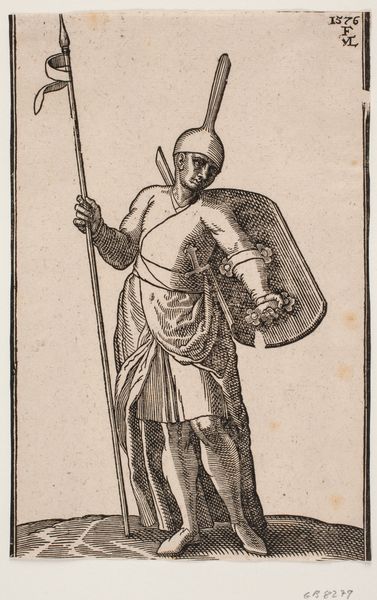
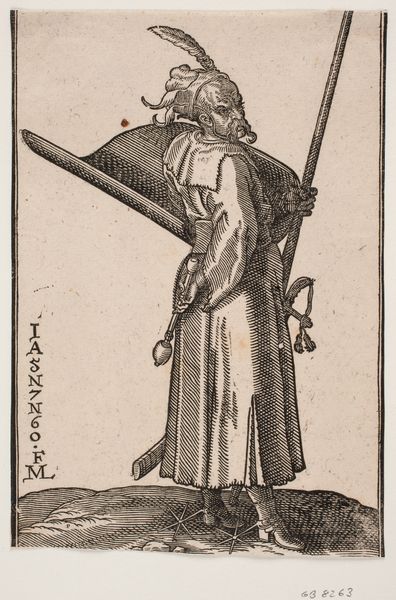
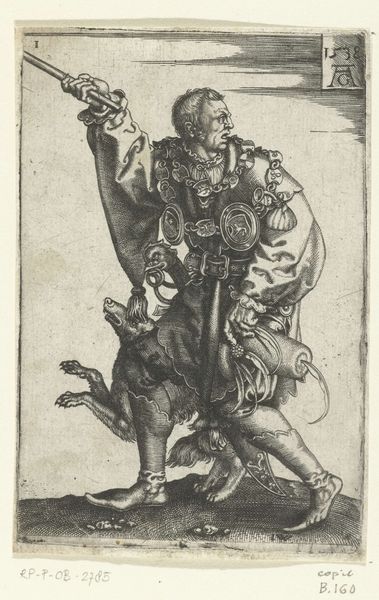
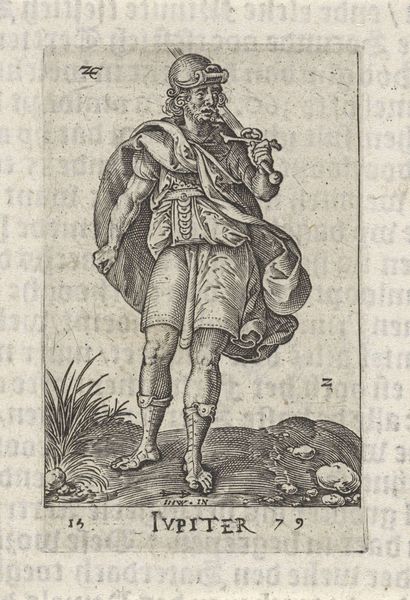
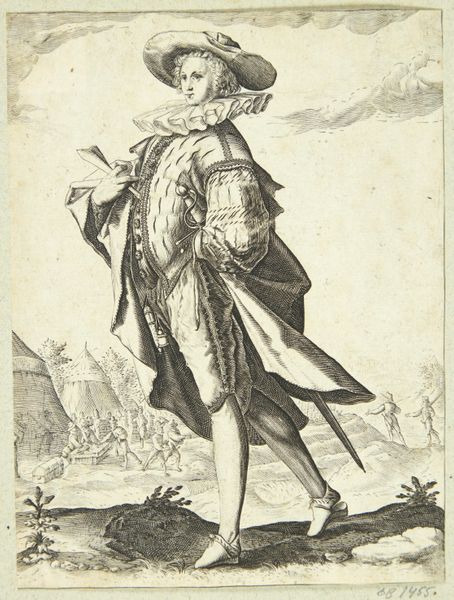
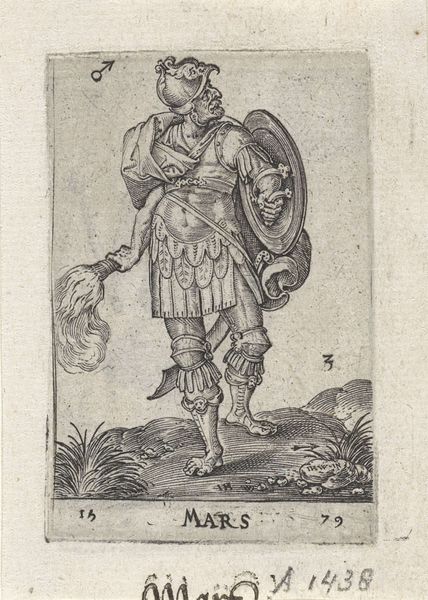
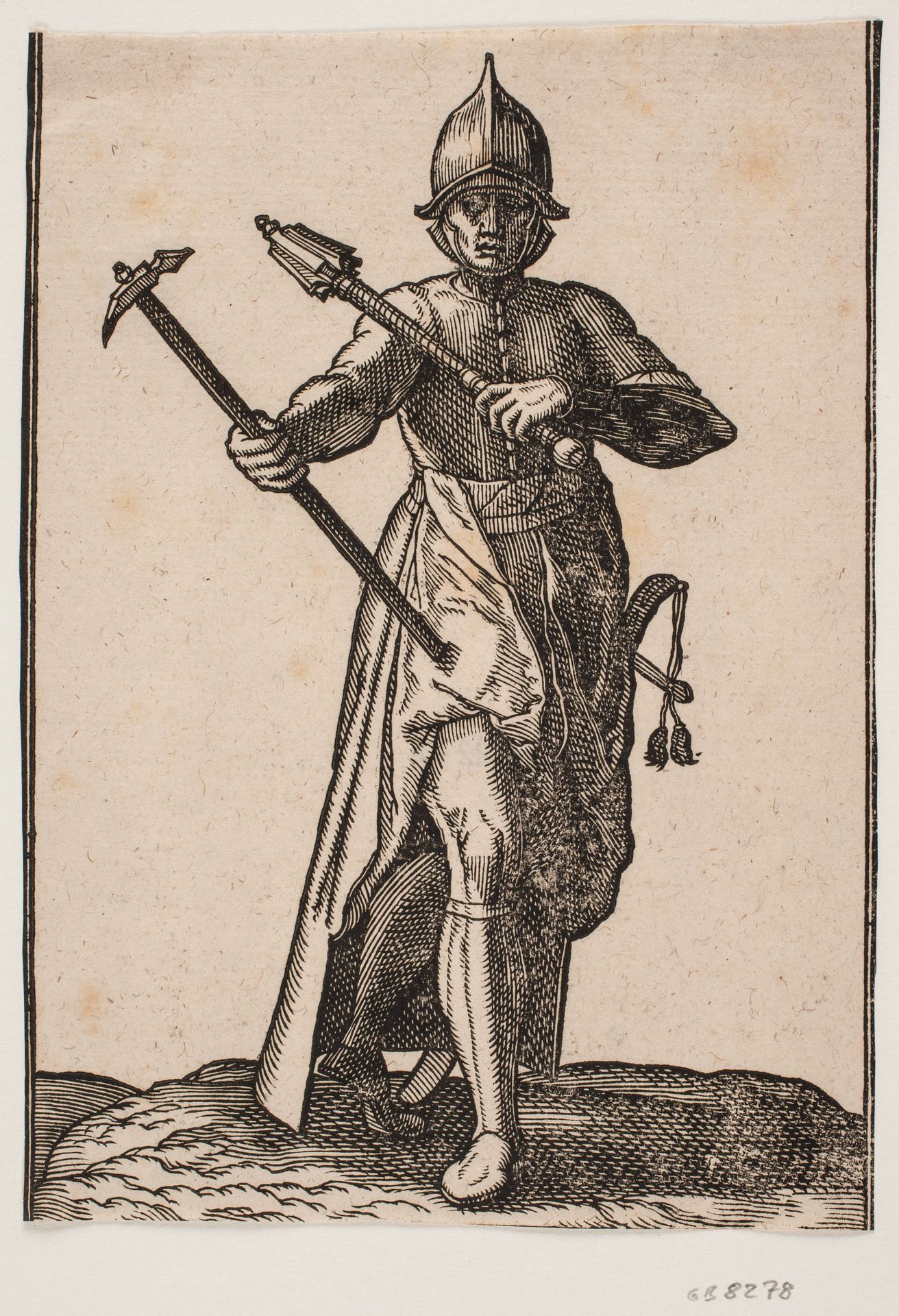
Melchior Lorck made this print of a helmeted soldier with a battle hammer and club in the mid-16th century. Lorck was a Danish artist who travelled widely in Europe and to Turkey, working for royal and aristocratic patrons. The image presents us with a puzzle: is it a generic representation of a soldier or a portrait of a specific individual? How does it comment on the social structures of its own time? The soldier is clearly armed for battle, but his stance is awkward and his gaze is averted. Is Lorck making a statement about the nature of warfare, or the role of the military in society? To understand this print better, we might turn to contemporary military manuals or look at the artist’s other works. Examining the social and political context in which Lorck was working can allow a deeper appreciation of the print’s meaning and significance.
Stående hjelmklædt soldat, frontalt set; i h. hånd en stridshammer, i v. hånd en stridskølle, bageste ben og fod forvredet i forhold til forreste; ved v. side et sværd
1576


Artwork details
- Medium
- print, woodcut, engraving
- Dimensions
- 210 mm (height) x 134 mm (width) (bladmaal)
- Location
- SMK - Statens Museum for Kunst
Tags
Comments
Share your thoughts
About this artwork
Melchior Lorck made this print of a helmeted soldier with a battle hammer and club in the mid-16th century. Lorck was a Danish artist who travelled widely in Europe and to Turkey, working for royal and aristocratic patrons. The image presents us with a puzzle: is it a generic representation of a soldier or a portrait of a specific individual? How does it comment on the social structures of its own time? The soldier is clearly armed for battle, but his stance is awkward and his gaze is averted. Is Lorck making a statement about the nature of warfare, or the role of the military in society? To understand this print better, we might turn to contemporary military manuals or look at the artist’s other works. Examining the social and political context in which Lorck was working can allow a deeper appreciation of the print’s meaning and significance.
Comments
Share your thoughts