About this artwork
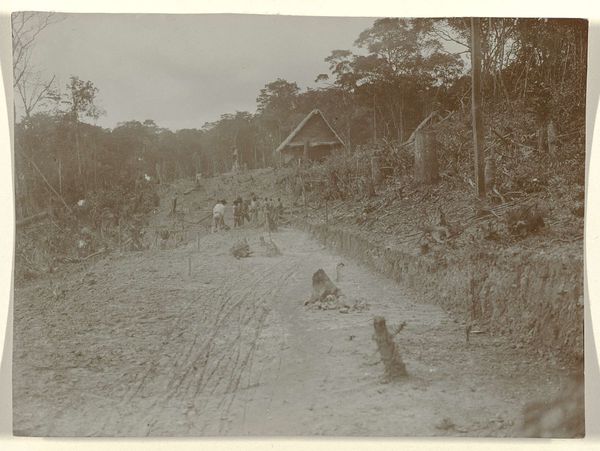
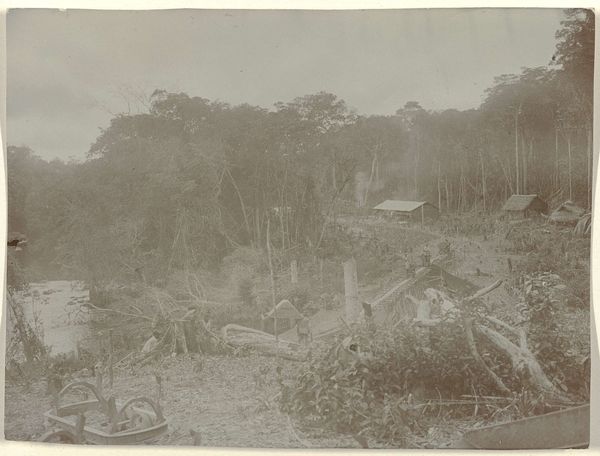
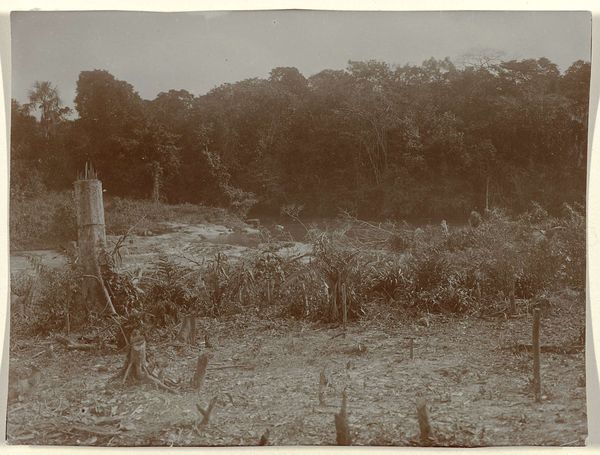
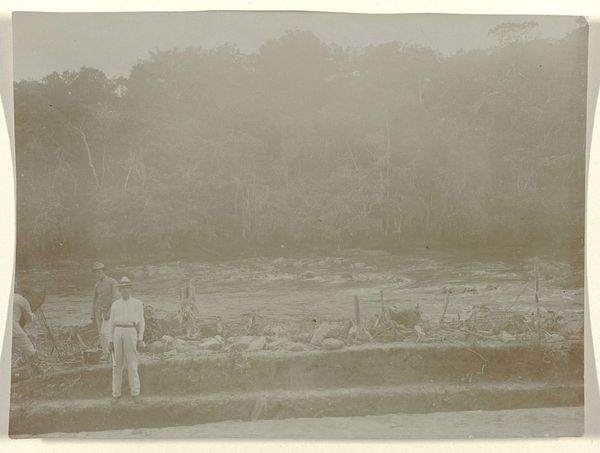
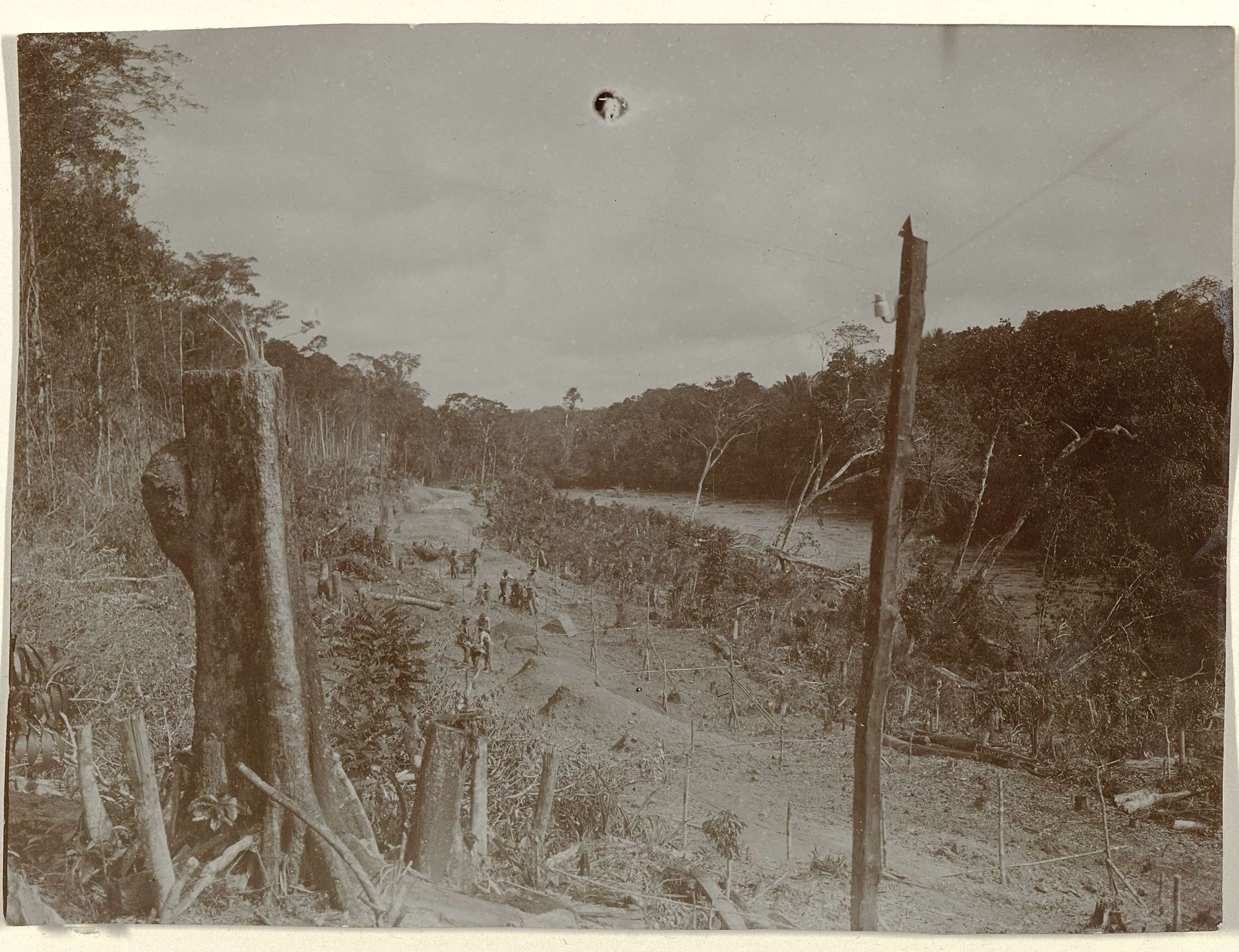
This small photograph captures the construction of a railway along the Sarakreek in Suriname, by Jacob Evert Wesenhagen. The sepia tone gives the image a sense of distance and timelessness, yet it's also a stark reminder of the labor and transformation of the landscape. There’s something haunting in the way Wesenhagen frames the felled trees, their raw stumps jutting out, contrasting with the density of the untouched forest in the background. You can almost feel the weight of the air, the humidity, and the sheer physical effort of those building the railway. I keep coming back to the lone pole standing at the edge of the frame, a vertical slash that seems to both mark progress and mourn what’s been lost. It reminds me a little of some of the Bechers’ industrial landscapes, where the man-made sits so uneasily within the natural world. Ultimately, art doesn't offer answers but allows a space to think about things.
Aanleg spoorweg langs de Sarakreek in Suriname
1905 - 1910

Jacob Evert Wesenhagen
1862 - 1924Location
RijksmuseumArtwork details
- Medium
- print, photography
- Dimensions
- height 84 mm, width 113 mm
- Location
- Rijksmuseum
- Copyright
- Rijks Museum: Open Domain
Tags
landscape
nature
photography
realism
Comments
Be the first to share your thoughts about this work.
About this artwork
This small photograph captures the construction of a railway along the Sarakreek in Suriname, by Jacob Evert Wesenhagen. The sepia tone gives the image a sense of distance and timelessness, yet it's also a stark reminder of the labor and transformation of the landscape. There’s something haunting in the way Wesenhagen frames the felled trees, their raw stumps jutting out, contrasting with the density of the untouched forest in the background. You can almost feel the weight of the air, the humidity, and the sheer physical effort of those building the railway. I keep coming back to the lone pole standing at the edge of the frame, a vertical slash that seems to both mark progress and mourn what’s been lost. It reminds me a little of some of the Bechers’ industrial landscapes, where the man-made sits so uneasily within the natural world. Ultimately, art doesn't offer answers but allows a space to think about things.
Comments
Be the first to share your thoughts about this work.