About this artwork
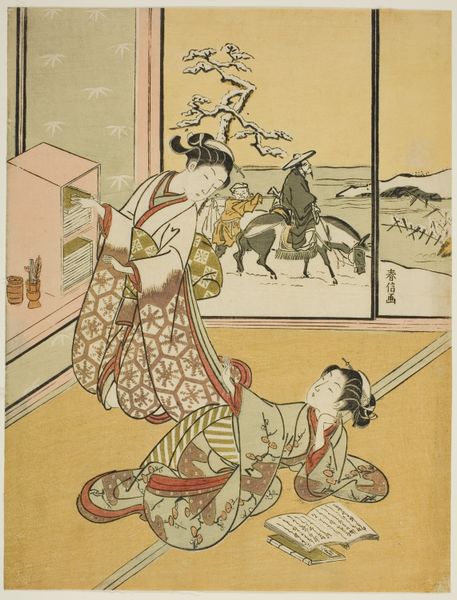
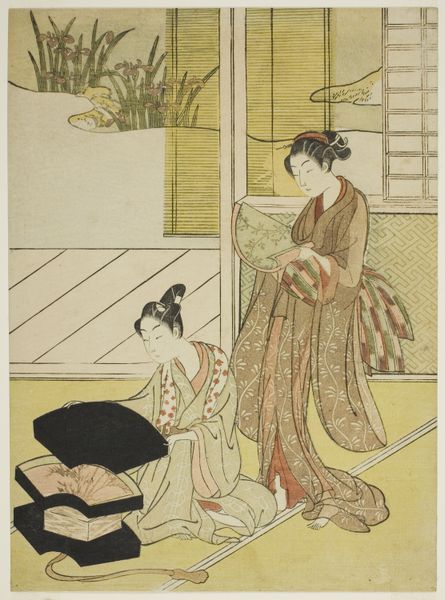
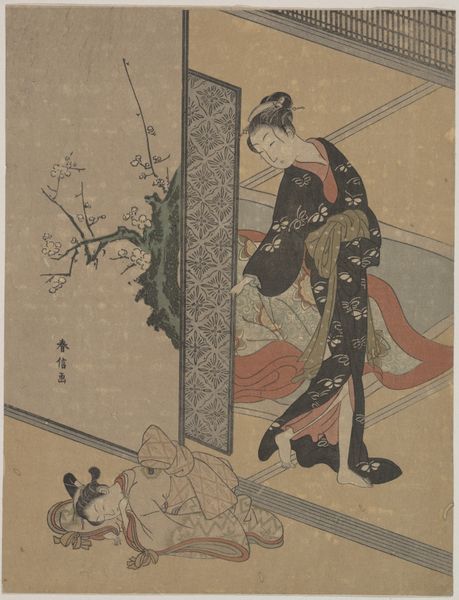
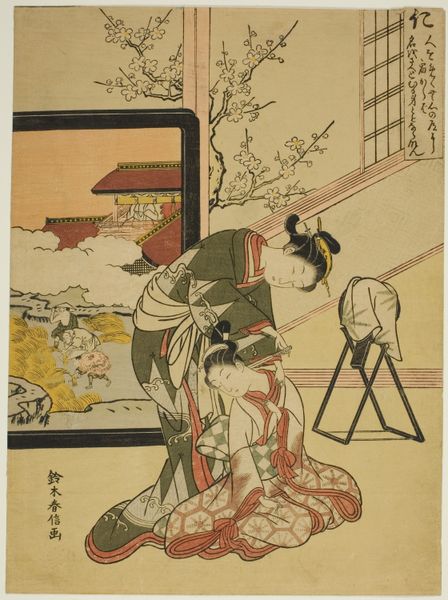
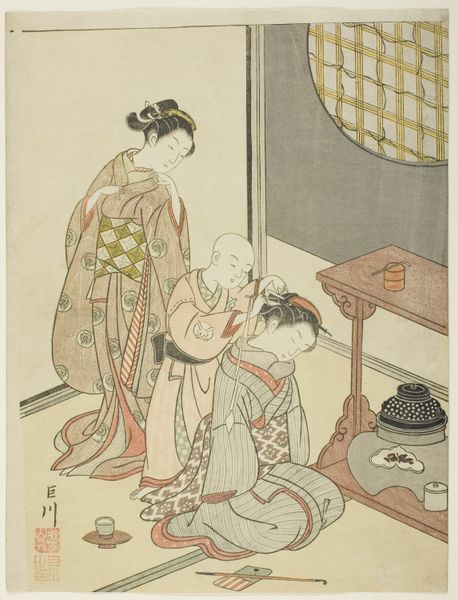
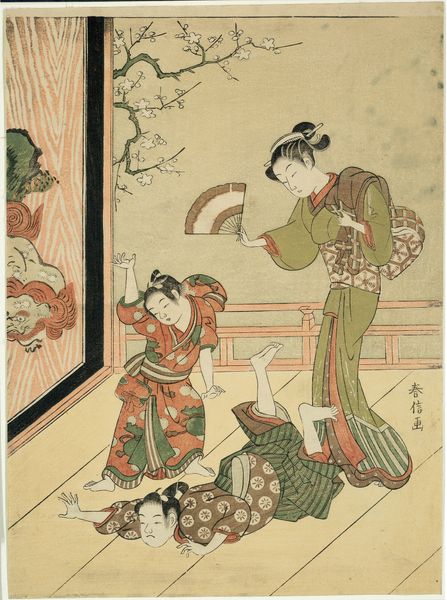
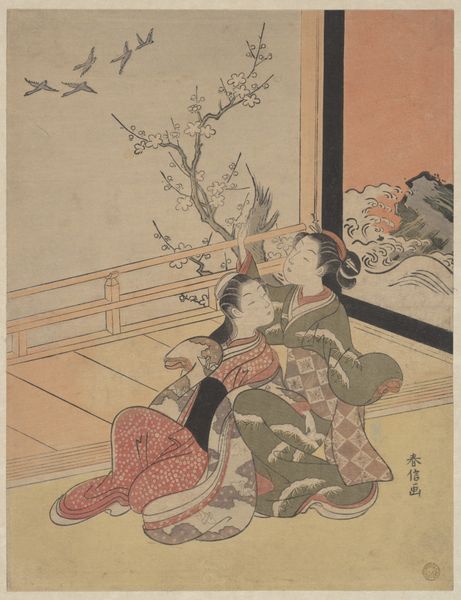
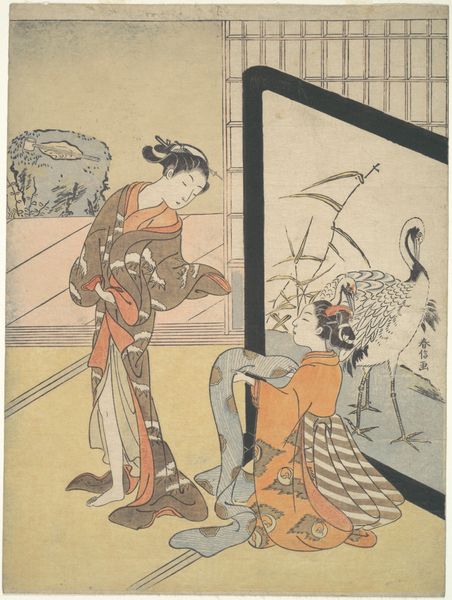
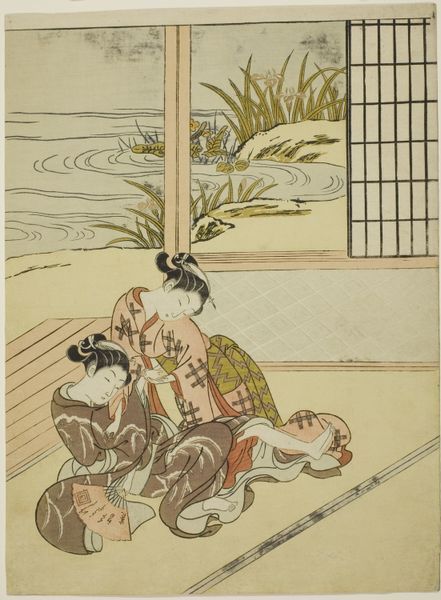
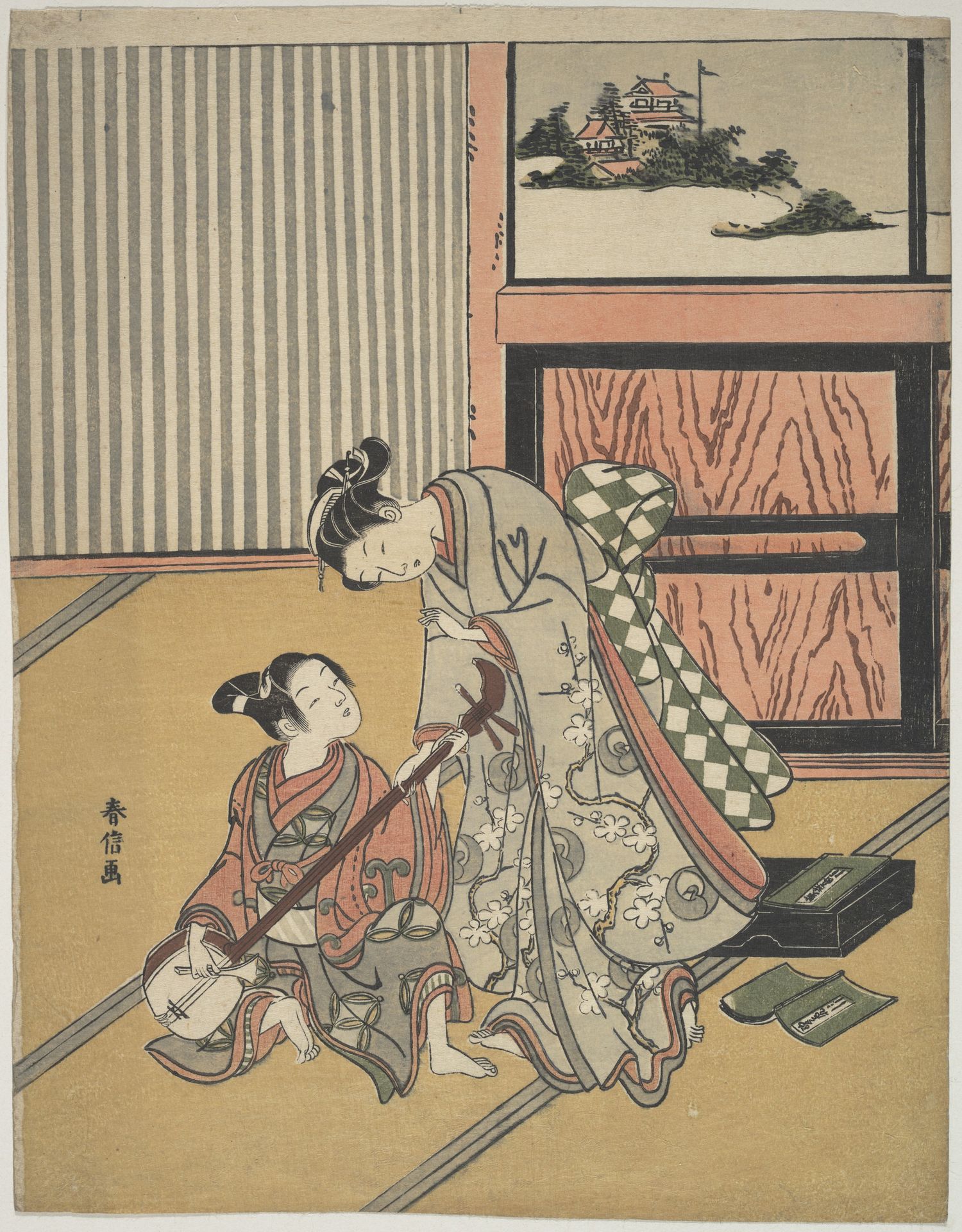
This is "The Music Lesson," a woodblock print by Suzuki Harunobu, created sometime in the 1760s. Harunobu was a leading artist in Edo-period Japan, a time of economic growth and cultural flourishing, but also rigid social hierarchies. Harunobu is renowned for his depictions of daily life, especially those featuring women. Here, a young girl is receiving instruction on the shamisen. The image provides a glimpse into the world of women and girls, whose lives were often confined to domestic spaces. The presence of the shamisen, along with the elegant setting, indicates a level of cultural refinement and leisure. It also reinforces traditional gender roles of the time, where music was often seen as a desirable accomplishment for women. This print also reflects the growing popularity of *ukiyo-e*, or "pictures of the floating world," which celebrated the ephemeral pleasures of urban life. But by depicting the interiority of women's lives, Harunobu also subtly challenged the male gaze that often dominated traditional art forms. It's an intimate moment, rendered with sensitivity and grace.
The Music Lesson 1725 - 1770

Suzuki Harunobu 鈴木春信
1725 - 1770
The Metropolitan Museum of Art
Metropolitan Museum of Art, New York, NYArtwork details
- Medium
- Dimensions
- H. 10 3/4 in. (27.3 cm); W. 8 7/16 in. (21.4 cm)
- Location
- Metropolitan Museum of Art, New York, NY
- Copyright
- Public Domain
Tags
asian-art
ukiyo-e
figuration
genre-painting
musical-instrument
Comments
No comments
About this artwork
This is "The Music Lesson," a woodblock print by Suzuki Harunobu, created sometime in the 1760s. Harunobu was a leading artist in Edo-period Japan, a time of economic growth and cultural flourishing, but also rigid social hierarchies. Harunobu is renowned for his depictions of daily life, especially those featuring women. Here, a young girl is receiving instruction on the shamisen. The image provides a glimpse into the world of women and girls, whose lives were often confined to domestic spaces. The presence of the shamisen, along with the elegant setting, indicates a level of cultural refinement and leisure. It also reinforces traditional gender roles of the time, where music was often seen as a desirable accomplishment for women. This print also reflects the growing popularity of *ukiyo-e*, or "pictures of the floating world," which celebrated the ephemeral pleasures of urban life. But by depicting the interiority of women's lives, Harunobu also subtly challenged the male gaze that often dominated traditional art forms. It's an intimate moment, rendered with sensitivity and grace.
Comments
No comments