About this artwork
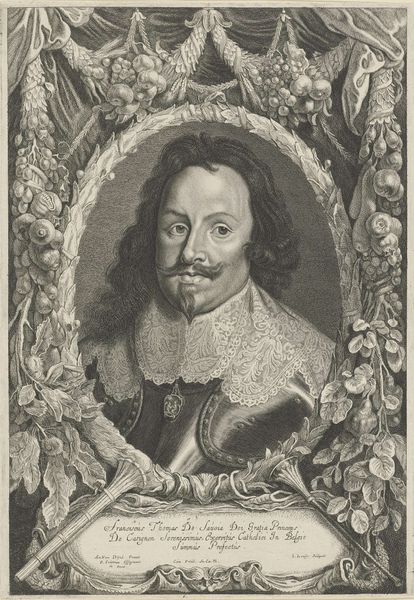
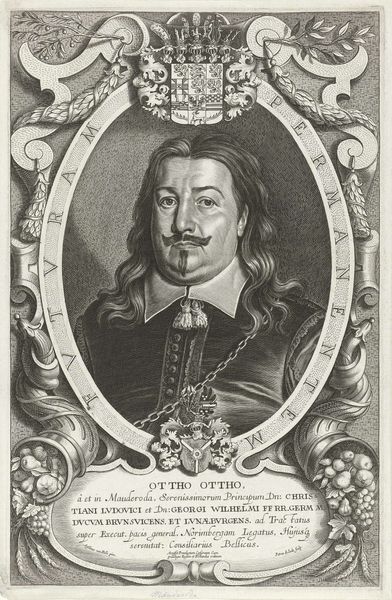
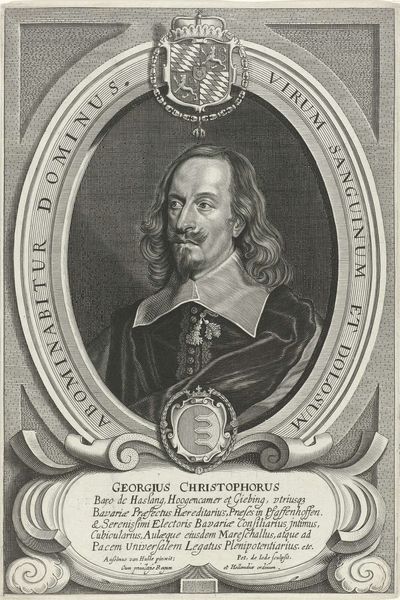
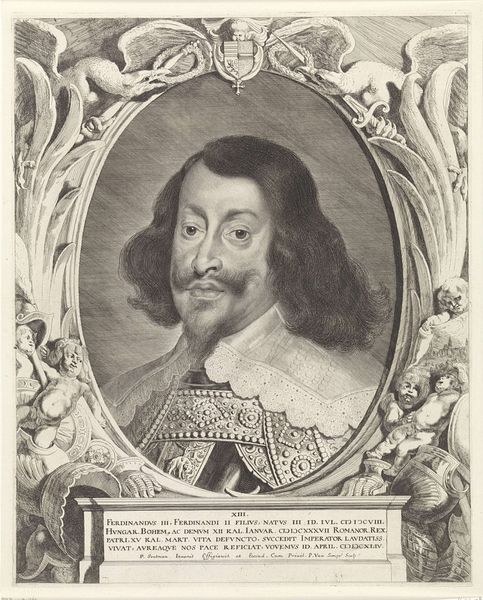
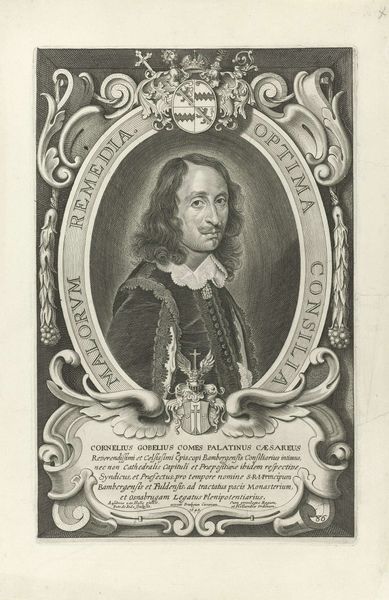
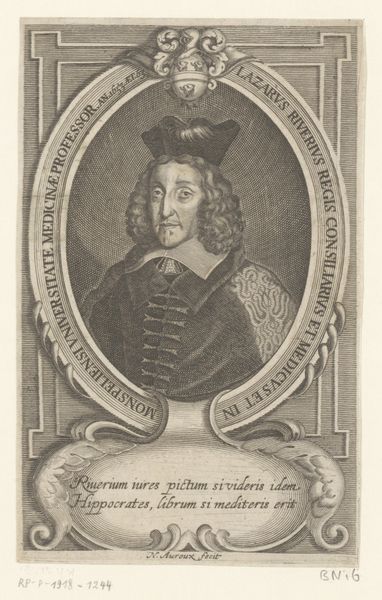
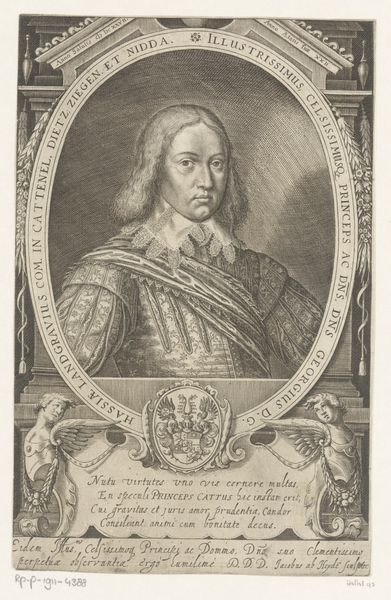
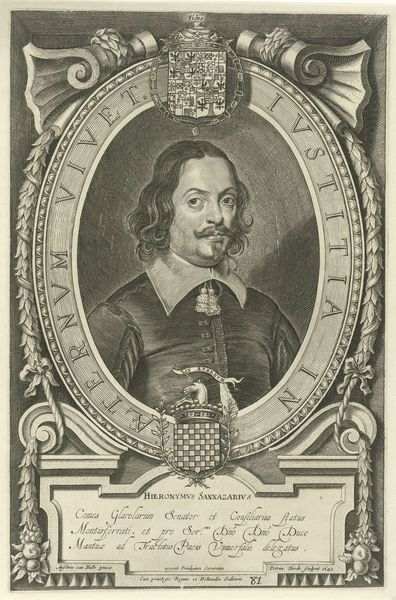
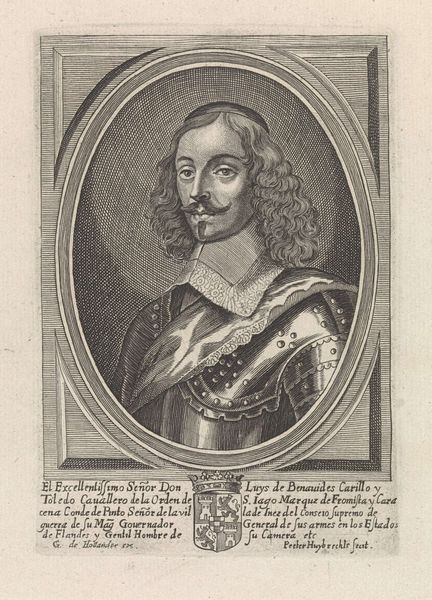
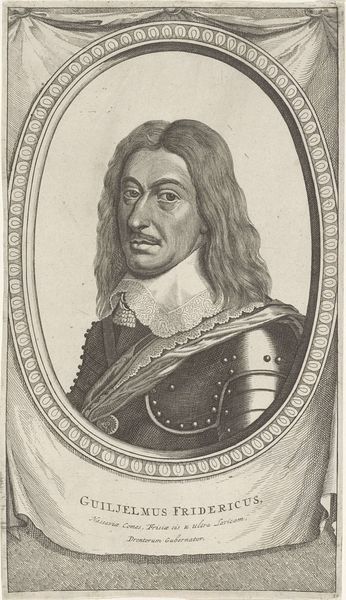
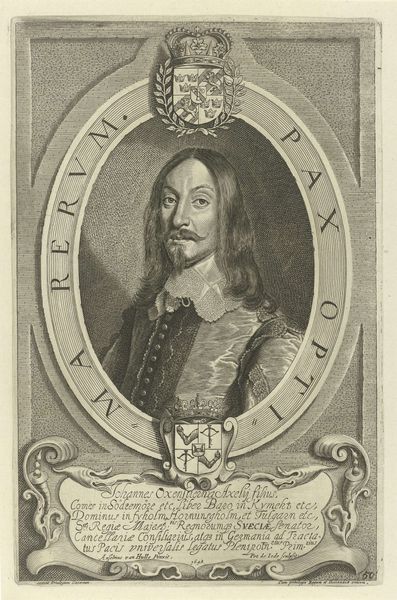
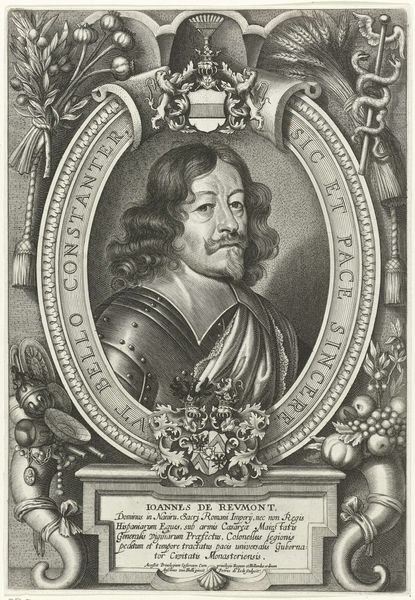
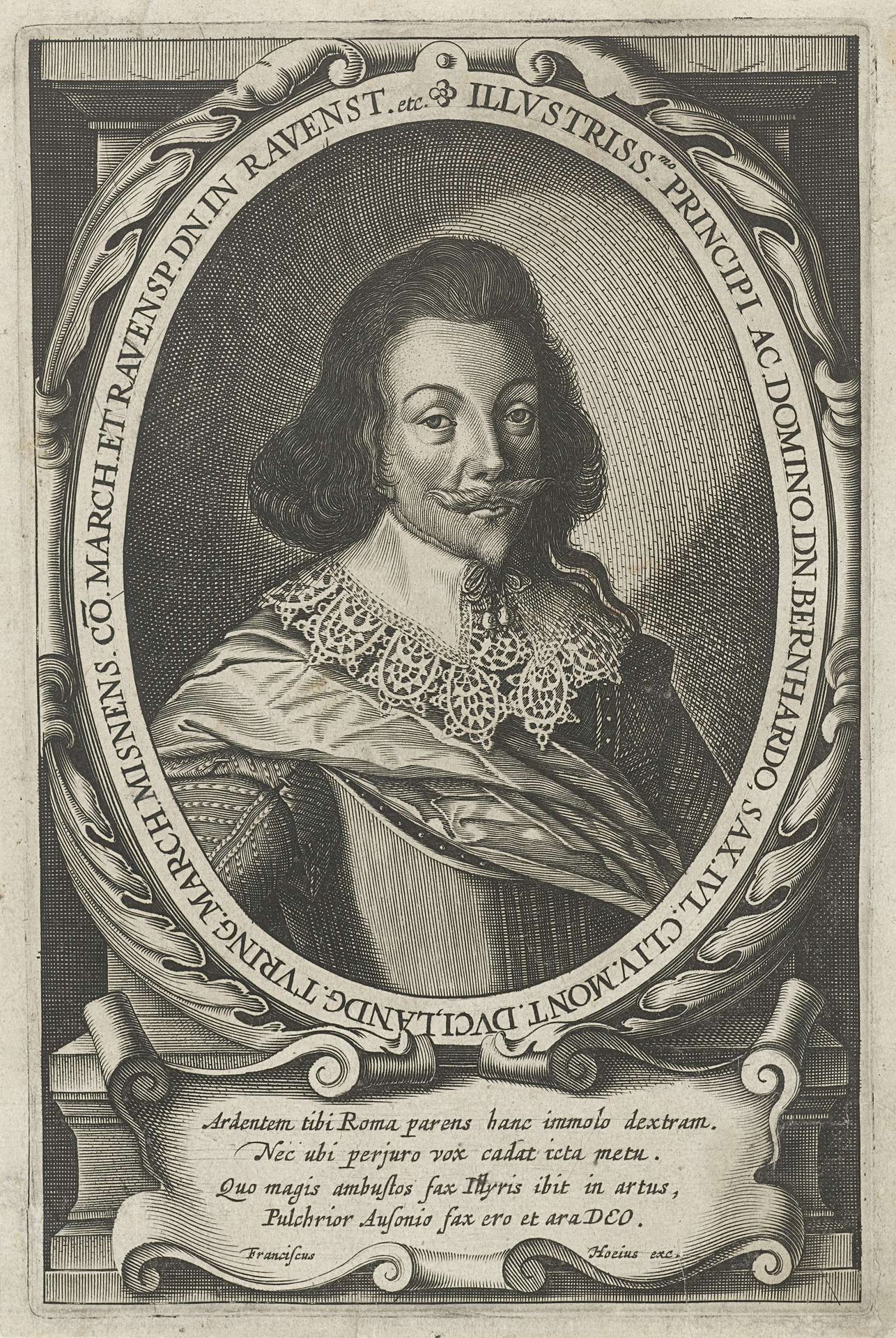
This is François van den Hoeye’s "Portret van Bernhard, hertog van Saksen-Weimar," an engraving, diminutive in scale, yet monumental in its design. The portrait is encased in an oval frame, which immediately draws our focus. The meticulous detail in the engraved lines creates a compelling texture. The subject, Bernhard, is rendered with precision. Note how the intricate lace collar provides a stark contrast to the smooth, shaded face, creating a compelling visual tension. The surrounding frame, adorned with inscriptions and decorative elements, adds layers of meaning. The text, in Latin, suggests a narrative, possibly alluding to Bernhard's virtues or achievements. This interplay between image and text is typical of emblems, where visuals and words combine to convey complex ideas. The composition invites us to interpret the subject not just as an individual but as a symbol within a larger cultural and historical context.
Portret van Bernhard, hertog van Saksen-Weimar 1601 - 1636

François van den Hoeye
1591 - 1636Location
RijksmuseumArtwork details
- Medium
- print, engraving
- Dimensions
- height 192 mm, width 127 mm
- Location
- Rijksmuseum
- Copyright
- Rijks Museum: Open Domain
Tags
portrait
baroque
old engraving style
history-painting
engraving
Comments
No comments
About this artwork
This is François van den Hoeye’s "Portret van Bernhard, hertog van Saksen-Weimar," an engraving, diminutive in scale, yet monumental in its design. The portrait is encased in an oval frame, which immediately draws our focus. The meticulous detail in the engraved lines creates a compelling texture. The subject, Bernhard, is rendered with precision. Note how the intricate lace collar provides a stark contrast to the smooth, shaded face, creating a compelling visual tension. The surrounding frame, adorned with inscriptions and decorative elements, adds layers of meaning. The text, in Latin, suggests a narrative, possibly alluding to Bernhard's virtues or achievements. This interplay between image and text is typical of emblems, where visuals and words combine to convey complex ideas. The composition invites us to interpret the subject not just as an individual but as a symbol within a larger cultural and historical context.
Comments
No comments