About this artwork
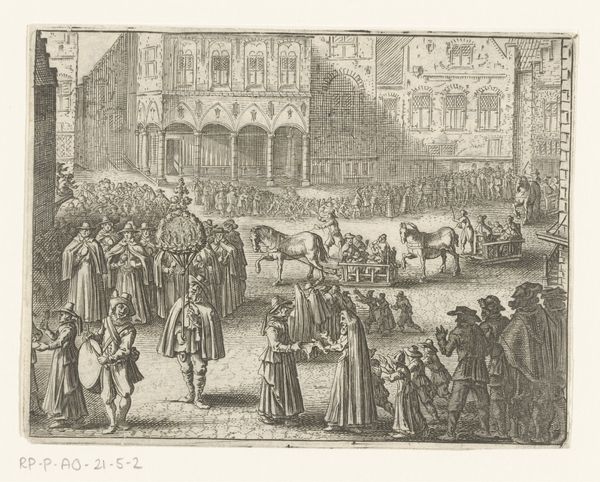
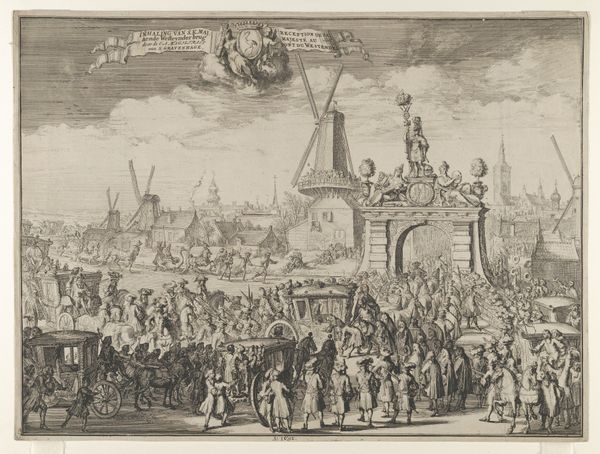
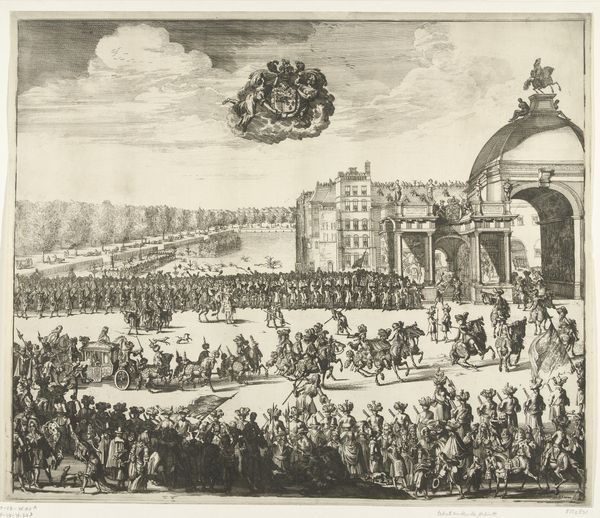
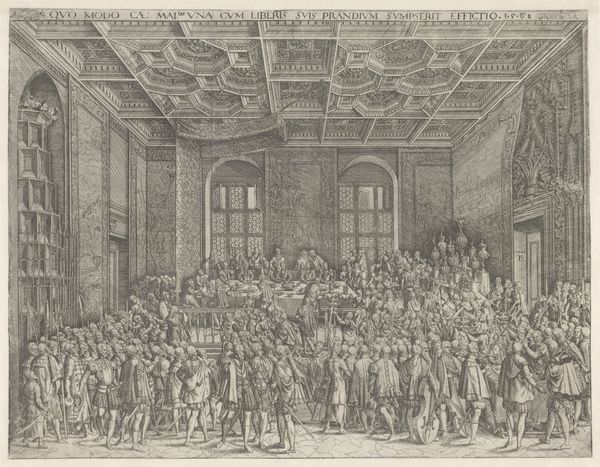
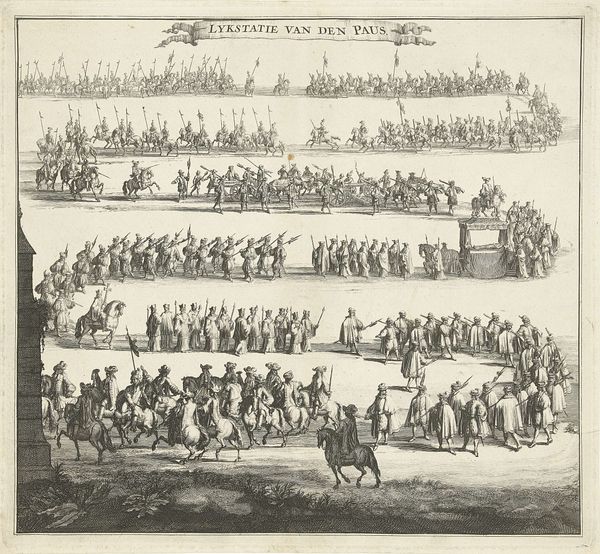
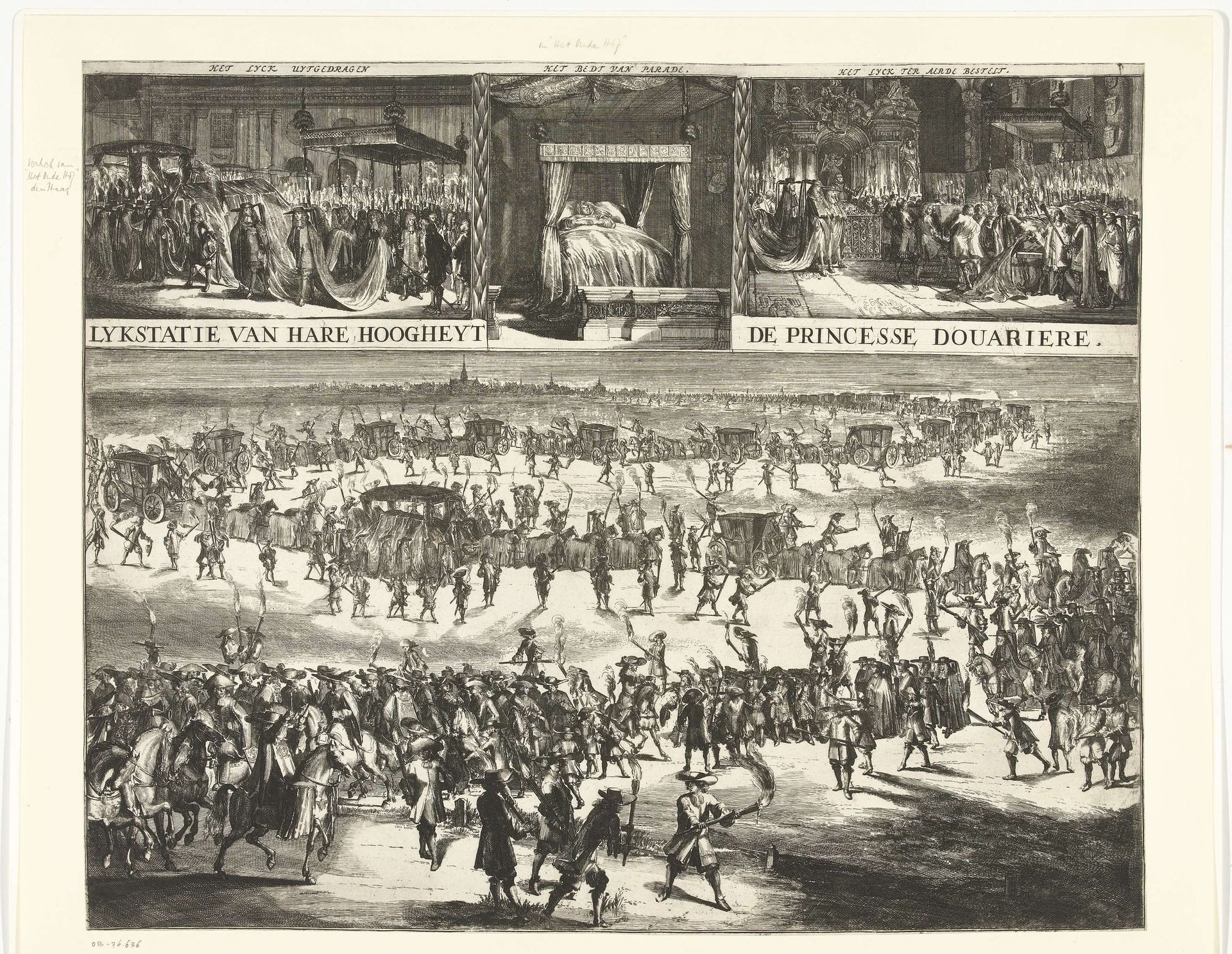
Curator: We’re standing before Romeyn de Hooghe’s engraving, “Praalbed en lijkstatie van Amalia van Solms, 1675," depicting the funeral procession of Amalia van Solms. It's quite a sight, isn’t it? Editor: Striking, yet grim. All those figures meticulously rendered in line. It speaks volumes, doesn’t it, about the spectacle of power, even in death? And look at all the coaches… the scale is immense. Curator: Indeed. De Hooghe has really captured the opulence of the Baroque, haven't they? The detail in the funeral bedchamber alone is incredible – the drapery, the symbols... all point to status and lineage. I almost feel the chill in the air, despite it just being a print. Editor: And printed for whom? This wasn't just art for art’s sake. This was mass production, aimed at circulating a specific narrative, cementing a certain image of the deceased and the continuing power of her family. How many hands were involved in creating and distributing this image, and what were their roles? Curator: That’s a vital perspective. It reminds us of the skilled craftsmanship, not just in De Hooghe’s artistry but in the printing process itself. You feel the labor, the technique involved with the engraving, right? Think about the artisan painstakingly carving into that copperplate... It makes the work breathe. Editor: Absolutely, from the source of the paper, to the ink, to the press itself and the bodies who operated it... each element leaves its trace. But what I keep coming back to is the almost absurd contrast: such immense, material wealth displayed at the very moment of loss. Did no one question the implications, I wonder? Curator: It does trigger reflections. Beyond just historical document, maybe this image tries to teach us something about acceptance, the theatrical, fleeting nature of grandeur? Amalia van Solms certainly made an impact in her time. Her legacy, now, also resides in how she continues to inspire us to think critically about her context. Editor: Precisely. It's an object deeply embedded in the complex networks of material culture. That collision, between private grief and public performance, renders it endlessly intriguing.
Praalbed en lijkstatie van Amalia van Solms, 1675 1675

Romeyn de Hooghe
1645 - 1708Location
RijksmuseumArtwork details
- Medium
- print, engraving
- Dimensions
- height 460 mm, width 560 mm
- Location
- Rijksmuseum
- Copyright
- Rijks Museum: Open Domain
Tags
baroque
pen drawing
mechanical pen drawing
pen illustration
pen sketch
pencil sketch
old engraving style
figuration
personal sketchbook
pen-ink sketch
line
pen work
sketchbook drawing
history-painting
engraving
Comments
No comments
About this artwork
Curator: We’re standing before Romeyn de Hooghe’s engraving, “Praalbed en lijkstatie van Amalia van Solms, 1675," depicting the funeral procession of Amalia van Solms. It's quite a sight, isn’t it? Editor: Striking, yet grim. All those figures meticulously rendered in line. It speaks volumes, doesn’t it, about the spectacle of power, even in death? And look at all the coaches… the scale is immense. Curator: Indeed. De Hooghe has really captured the opulence of the Baroque, haven't they? The detail in the funeral bedchamber alone is incredible – the drapery, the symbols... all point to status and lineage. I almost feel the chill in the air, despite it just being a print. Editor: And printed for whom? This wasn't just art for art’s sake. This was mass production, aimed at circulating a specific narrative, cementing a certain image of the deceased and the continuing power of her family. How many hands were involved in creating and distributing this image, and what were their roles? Curator: That’s a vital perspective. It reminds us of the skilled craftsmanship, not just in De Hooghe’s artistry but in the printing process itself. You feel the labor, the technique involved with the engraving, right? Think about the artisan painstakingly carving into that copperplate... It makes the work breathe. Editor: Absolutely, from the source of the paper, to the ink, to the press itself and the bodies who operated it... each element leaves its trace. But what I keep coming back to is the almost absurd contrast: such immense, material wealth displayed at the very moment of loss. Did no one question the implications, I wonder? Curator: It does trigger reflections. Beyond just historical document, maybe this image tries to teach us something about acceptance, the theatrical, fleeting nature of grandeur? Amalia van Solms certainly made an impact in her time. Her legacy, now, also resides in how she continues to inspire us to think critically about her context. Editor: Precisely. It's an object deeply embedded in the complex networks of material culture. That collision, between private grief and public performance, renders it endlessly intriguing.
Comments
No comments