About this artwork
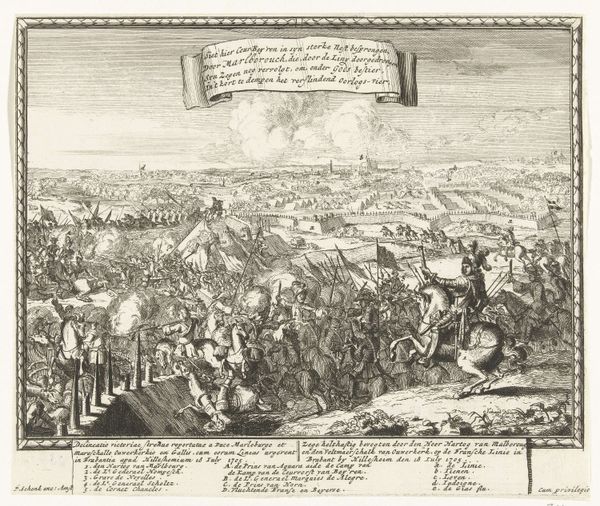
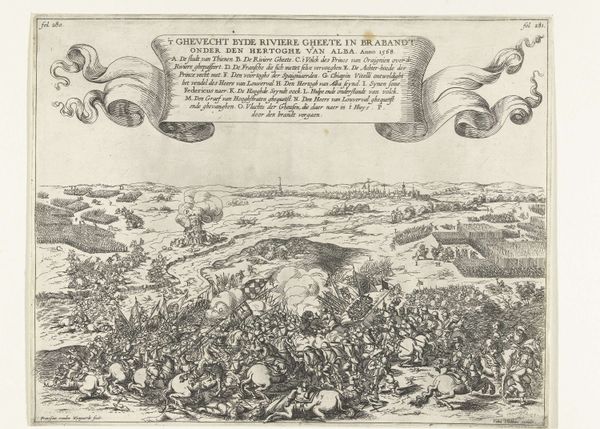
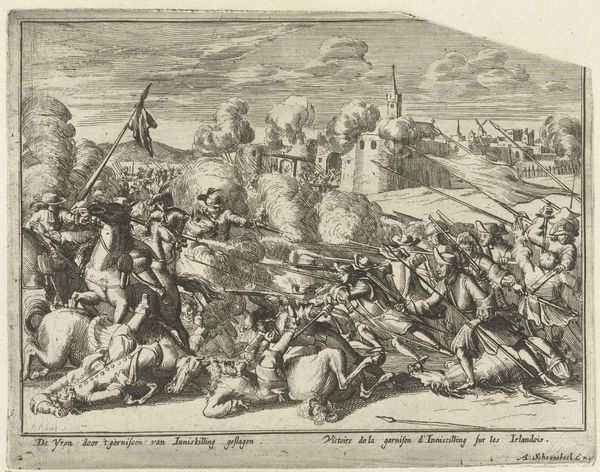
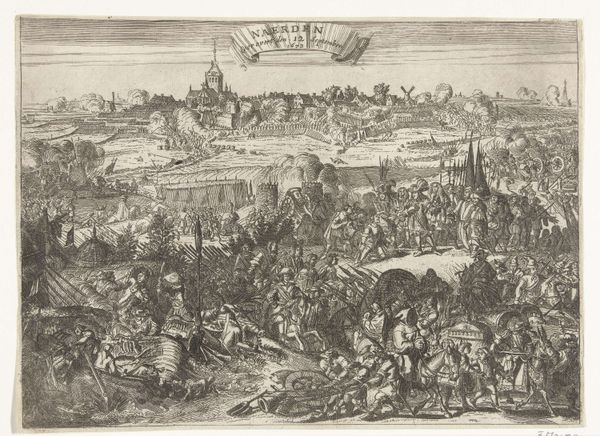
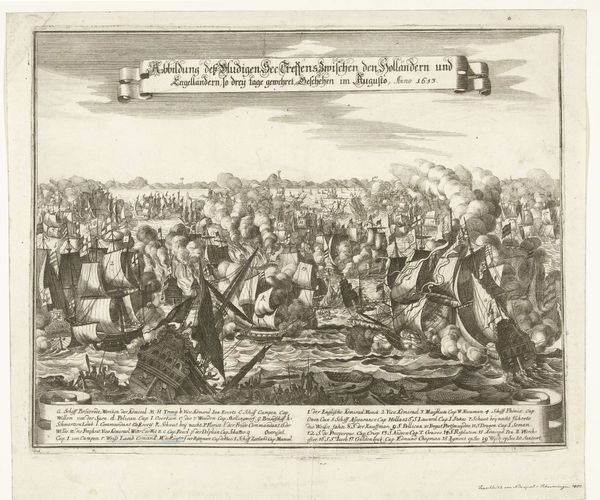
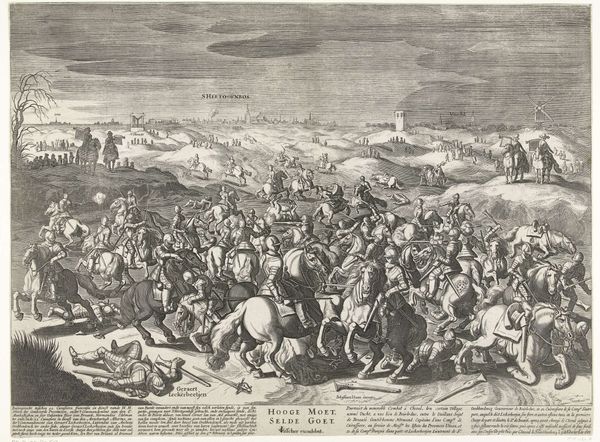
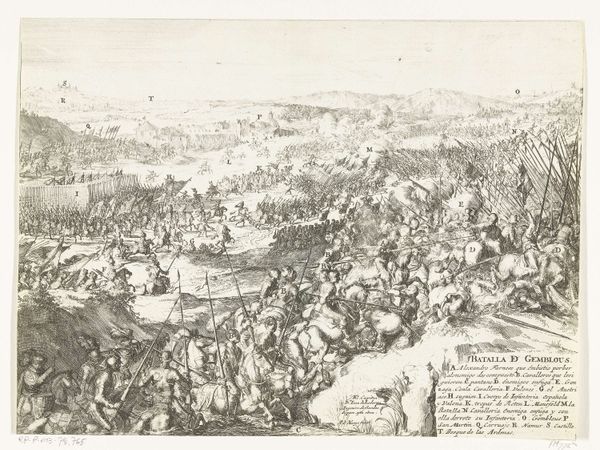
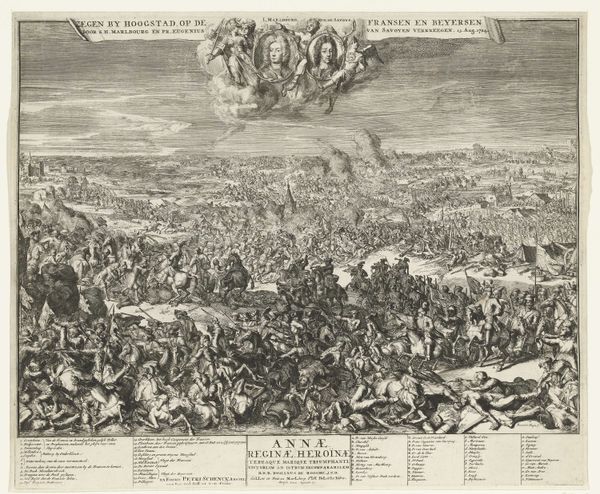
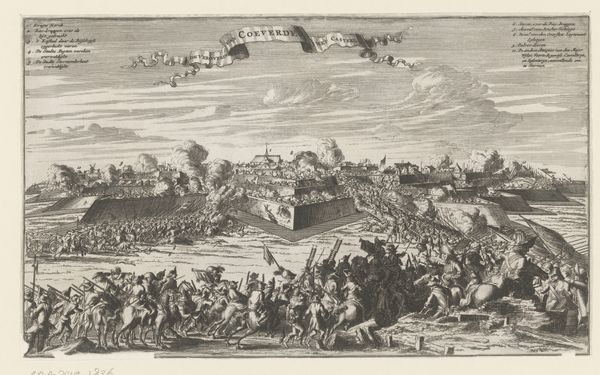
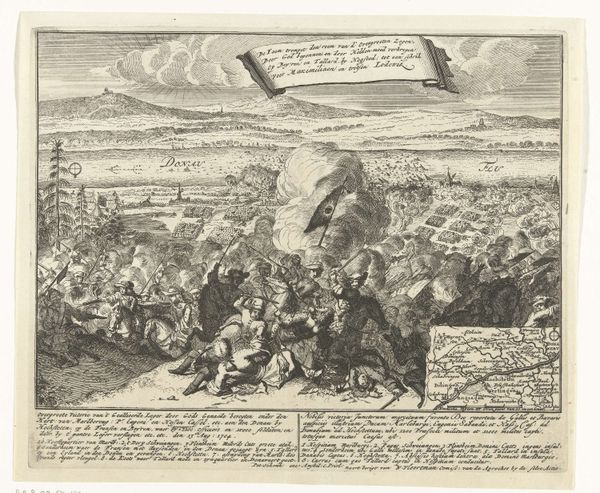
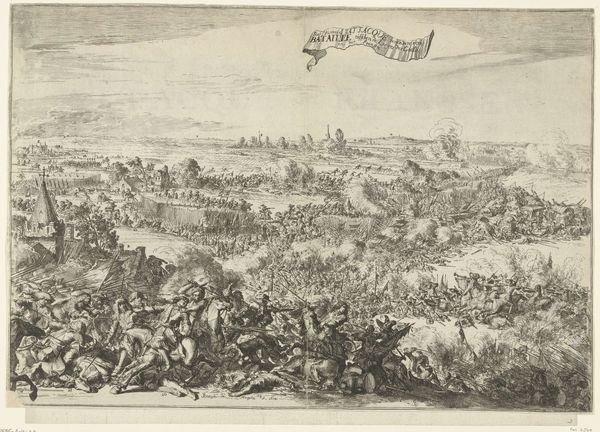
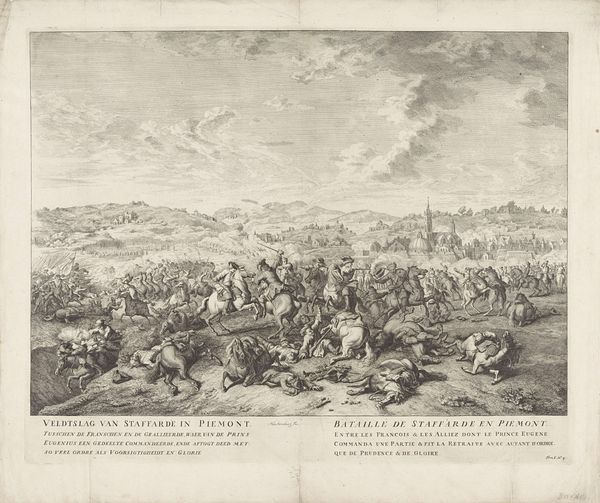
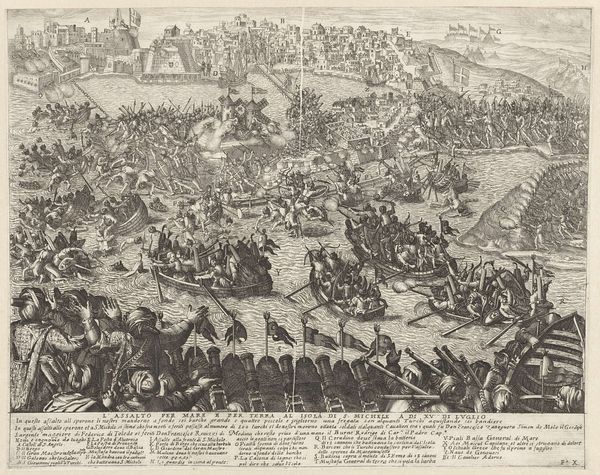
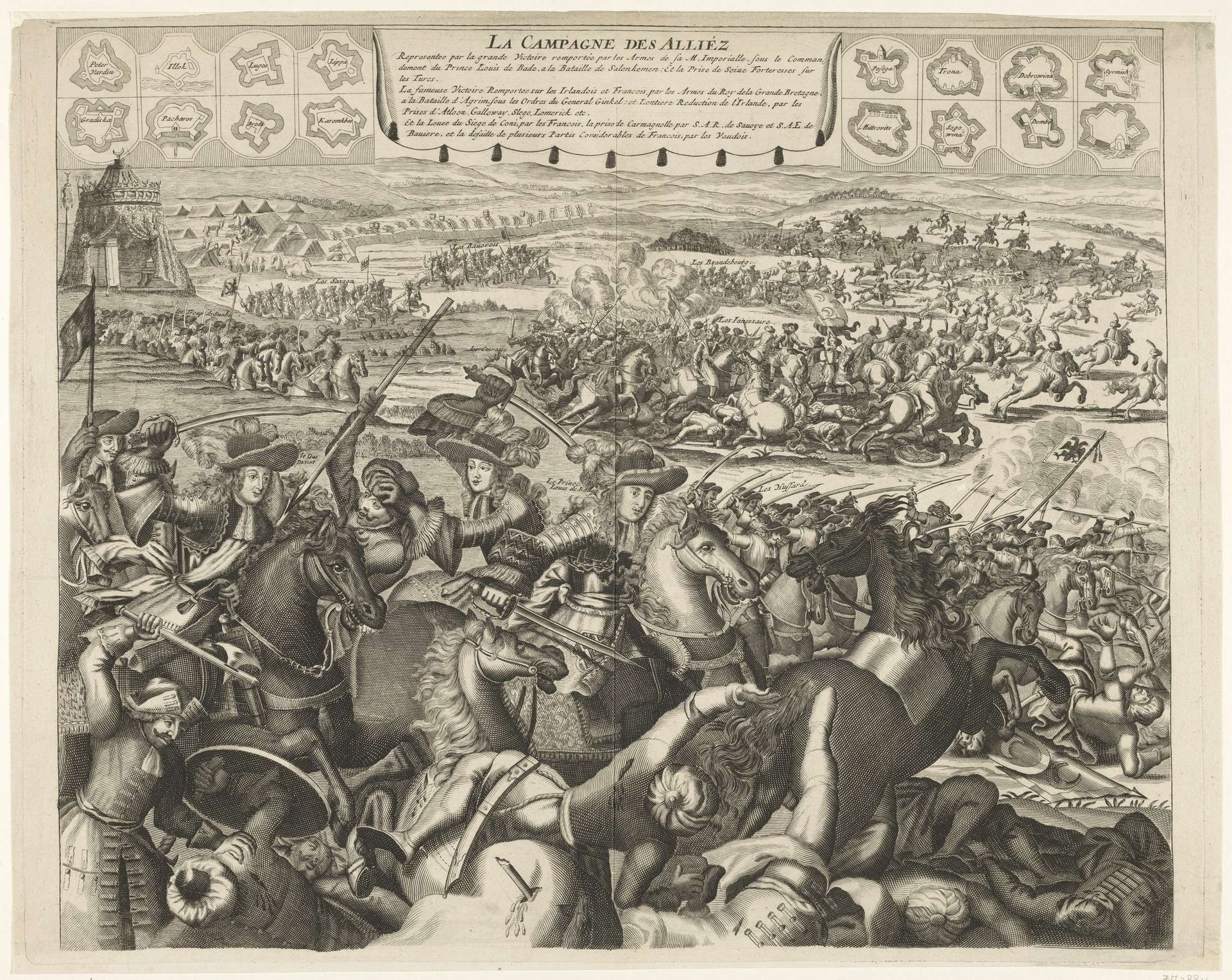
Daniel de Lafeuille’s “Overwinningen van de Geallieerden,” created in 1691, captures a moment during the Nine Years' War, a conflict shaped by shifting alliances and dynastic ambitions in late 17th-century Europe. This detailed engraving reflects the period’s glorification of military might and the complex politics of the era. Battles were as much about territorial expansion as they were about establishing religious and political dominance. Lafeuille’s choice to depict the ‘Allied’ victories underscores a specific narrative—a deliberate construction of heroism and triumph, even as the human cost of war remained a stark reality for many. Consider how the detailed rendering of battle scenes—the clash of soldiers, the fallen horses—contrasts with the more abstract maps at the top, symbolizing the territories at stake. What does it mean to reduce lives and landscapes to mere strategic assets? This work invites us to reflect on the stories we tell about war, and who gets to tell them.
Overwinningen van de Geallieerden (bovenste helft), 1691 1691

Daniel de Lafeuille
1640 - 1709Location
RijksmuseumArtwork details
- Dimensions
- height 467 mm, width 585 mm
- Location
- Rijksmuseum
- Copyright
- Rijks Museum: Open Domain
Tags
pencil drawn
light pencil work
pencil sketch
old engraving style
charcoal drawing
pencil drawing
pen-ink sketch
pen work
pencil work
pencil art
Comments
No comments
About this artwork
Daniel de Lafeuille’s “Overwinningen van de Geallieerden,” created in 1691, captures a moment during the Nine Years' War, a conflict shaped by shifting alliances and dynastic ambitions in late 17th-century Europe. This detailed engraving reflects the period’s glorification of military might and the complex politics of the era. Battles were as much about territorial expansion as they were about establishing religious and political dominance. Lafeuille’s choice to depict the ‘Allied’ victories underscores a specific narrative—a deliberate construction of heroism and triumph, even as the human cost of war remained a stark reality for many. Consider how the detailed rendering of battle scenes—the clash of soldiers, the fallen horses—contrasts with the more abstract maps at the top, symbolizing the territories at stake. What does it mean to reduce lives and landscapes to mere strategic assets? This work invites us to reflect on the stories we tell about war, and who gets to tell them.
Comments
No comments