1681 - 1737
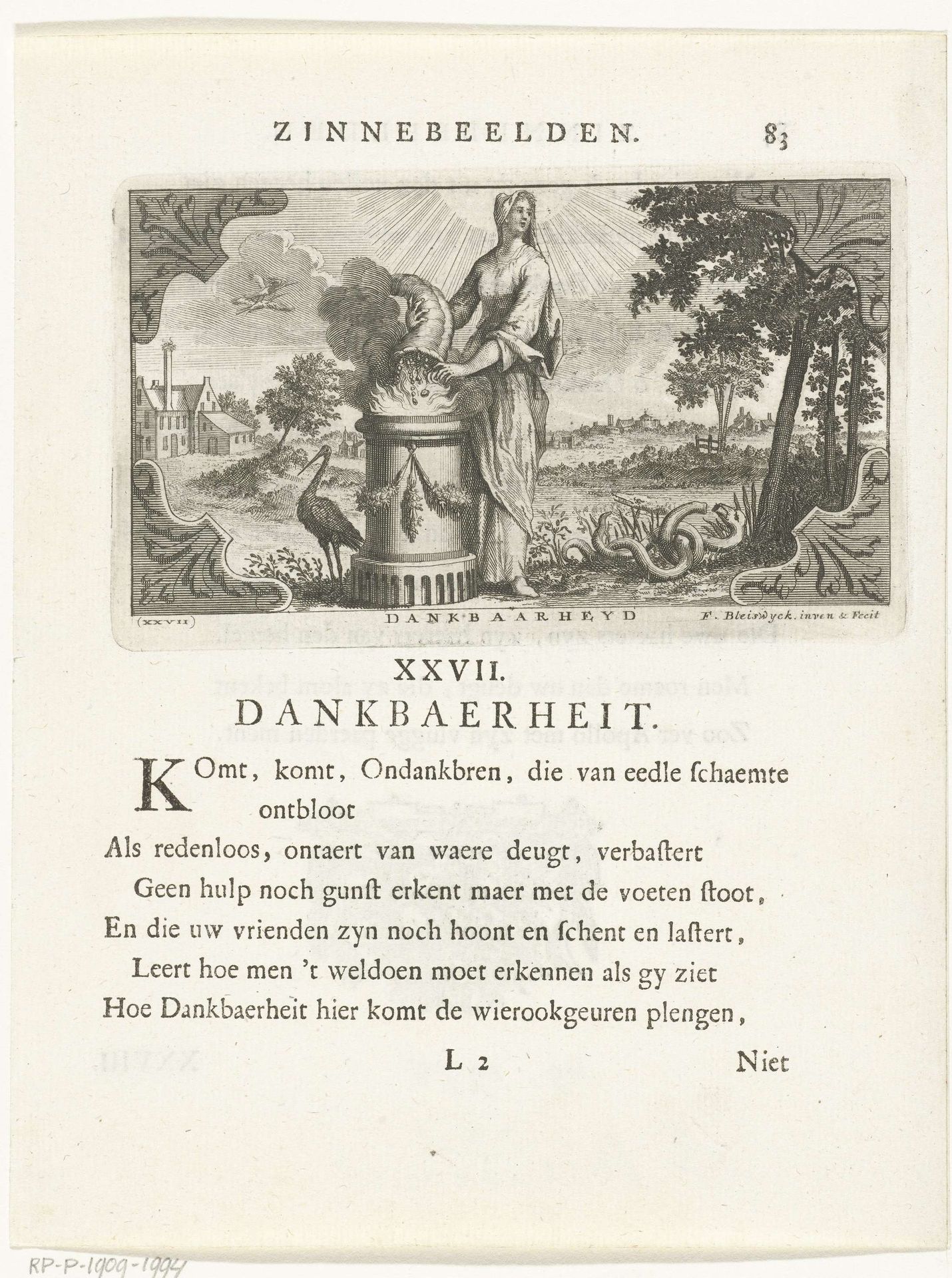
Embleem met allegorie op dankbaarheid

François van Bleyswijck
1671 - 1746Location
RijksmuseumListen to curator's interpretation
Curatorial notes
This is an emblem with an allegory on gratitude, created by François van Bleyswijck. In the print, a female figure embodies gratitude, standing beside an altar where incense burns. Consider the symbolic weight of gratitude during the Dutch Golden Age, a period marked by economic prosperity and colonial expansion, but also stark social stratification. How might gratitude function as a social expectation, particularly for those dependent on the patronage of the wealthy elite? The poem beneath the image speaks of ingratitude stripping away shame and trampling on kindness. It's as if Bleyswijck asks us to reflect on the complex dance between power, obligation, and the performance of thankfulness. What does it mean to express gratitude when one's livelihood or social standing is at stake? How do these societal expectations affect our understanding of personal autonomy and emotional expression?