About this artwork
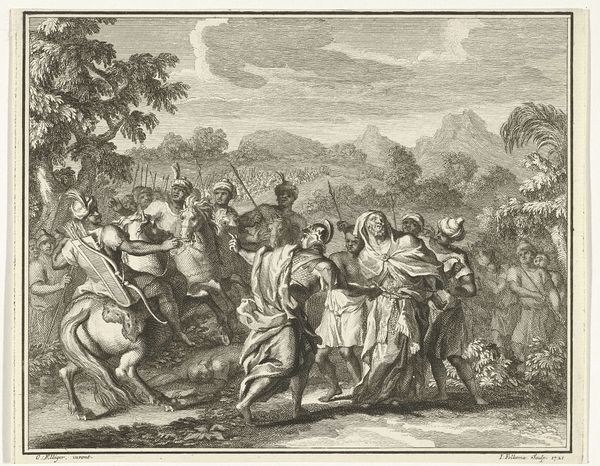
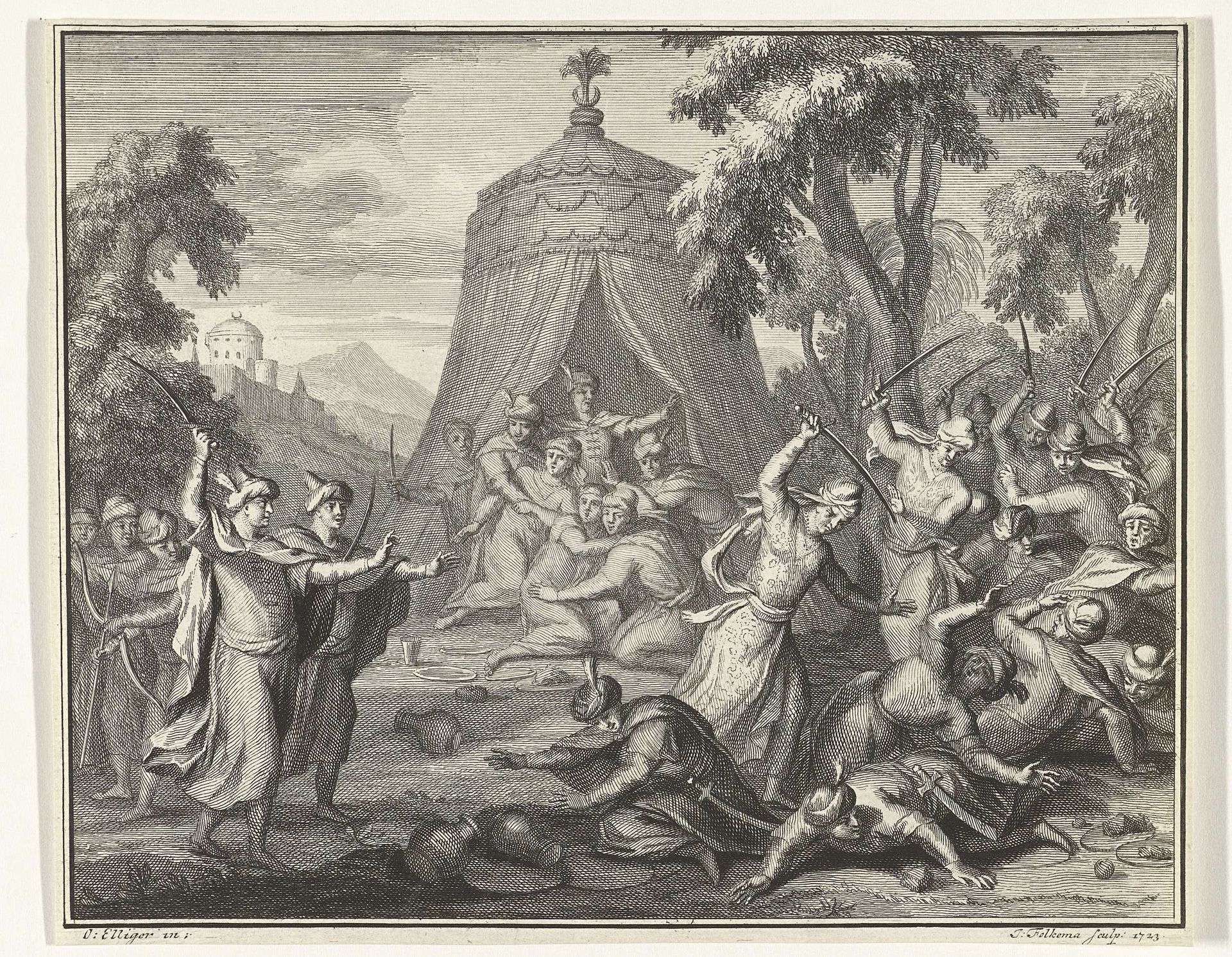
Jacob Folkema created this print, “Combat between Orientals,” using etching techniques, likely in the Netherlands in the first half of the 18th century. It depicts a violent clash between two groups of men, identified by the artist as ‘Oosterlingen,’ or ‘Easterners.’ The scene is likely inspired by European encounters with the Ottoman Empire and other Middle Eastern cultures, filtered through a lens of orientalism. Note the costumes and weaponry used to signify their ‘eastern’ identity. The print participates in a long history of representing the ‘Orient’ as exotic and often violent. These images reinforced a sense of European superiority and justified colonial ambitions. This artwork presents an opportunity to think about the politics of imagery and the role of art in shaping cultural perceptions. Researching the history of Dutch trade and diplomacy with the Ottoman Empire and other Middle Eastern powers would shed further light on the context in which this print was created and consumed.

Artwork details
- Medium
- print, engraving
- Dimensions
- height 151 mm, width 187 mm
- Location
- Rijksmuseum
- Copyright
- Rijks Museum: Open Domain
Tags
Comments
Share your thoughts
About this artwork
Jacob Folkema created this print, “Combat between Orientals,” using etching techniques, likely in the Netherlands in the first half of the 18th century. It depicts a violent clash between two groups of men, identified by the artist as ‘Oosterlingen,’ or ‘Easterners.’ The scene is likely inspired by European encounters with the Ottoman Empire and other Middle Eastern cultures, filtered through a lens of orientalism. Note the costumes and weaponry used to signify their ‘eastern’ identity. The print participates in a long history of representing the ‘Orient’ as exotic and often violent. These images reinforced a sense of European superiority and justified colonial ambitions. This artwork presents an opportunity to think about the politics of imagery and the role of art in shaping cultural perceptions. Researching the history of Dutch trade and diplomacy with the Ottoman Empire and other Middle Eastern powers would shed further light on the context in which this print was created and consumed.
Comments
Share your thoughts