About this artwork
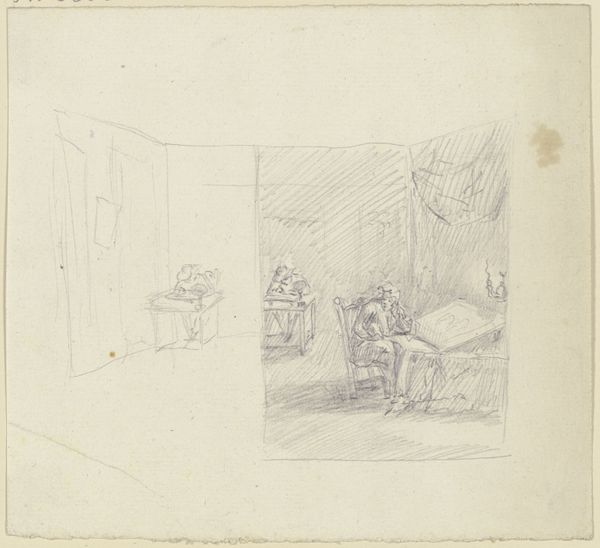
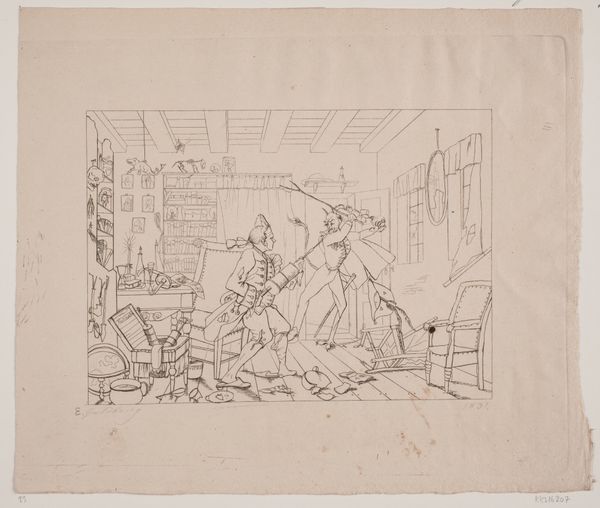
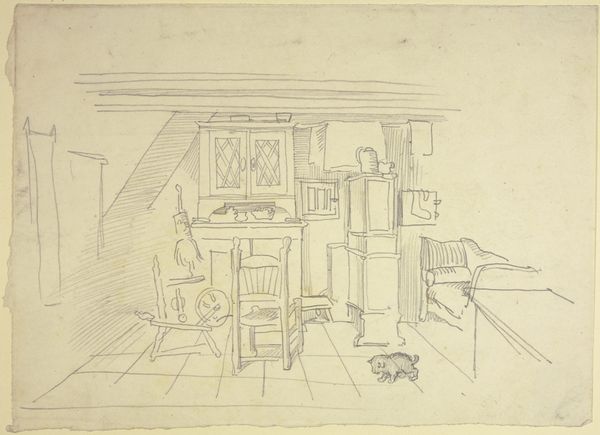
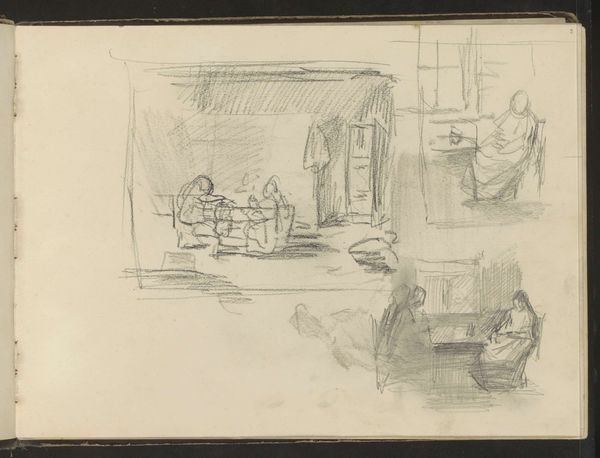
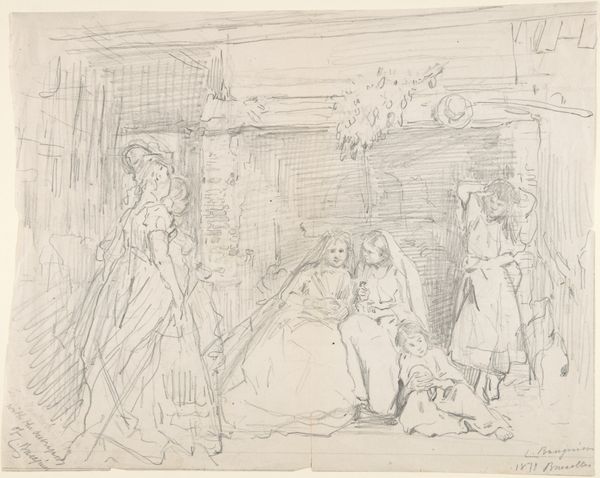
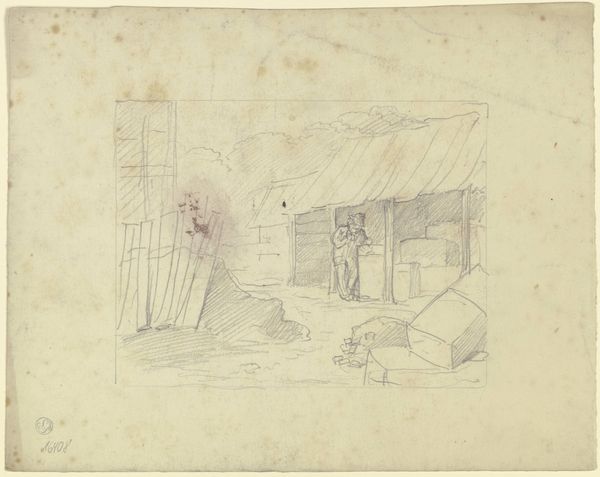
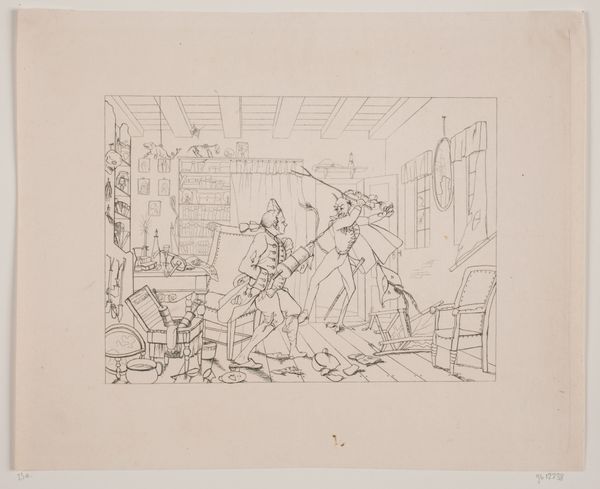
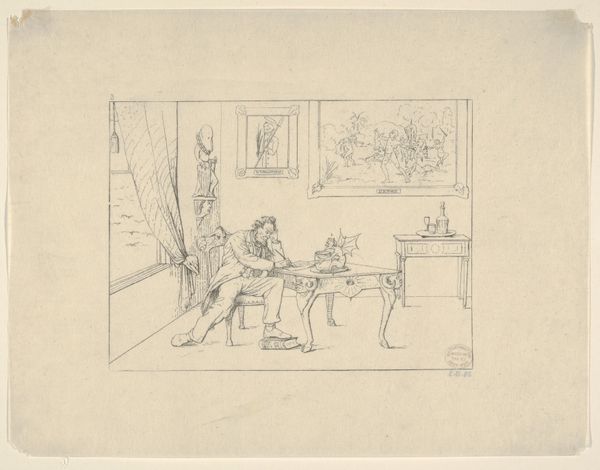
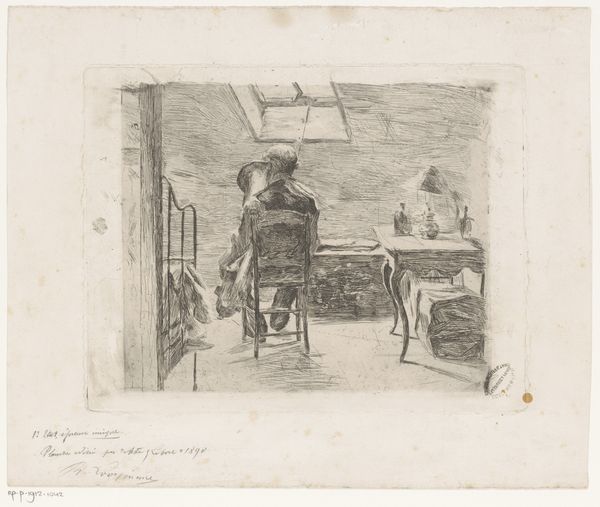
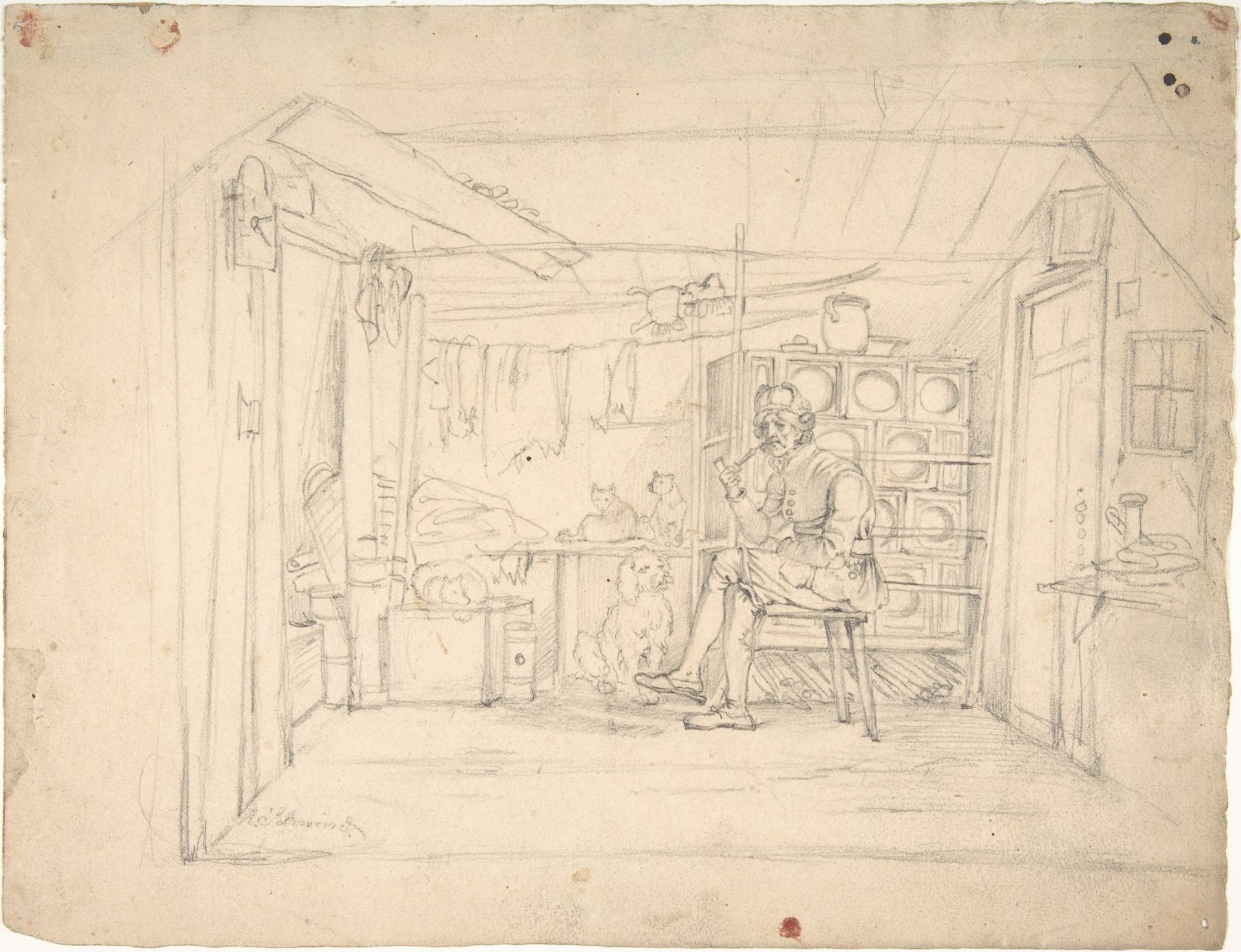
Moritz von Schwind created "The Dog's Friend," a drawing, with graphite on paper. The composition, though seemingly simple, draws us into a rustic interior. The sparse lines sketch out a room filled with everyday objects, yet it's the arrangement that intrigues. Notice how von Schwind uses linear perspective to structure the space. Our eyes are drawn to the seated man, pipe in hand, surrounded by the modest trappings of his life: shelves stacked with dishware, simple furniture, and of course, his canine companions. The rapid, sketchy lines give us a sense of immediacy, as if we've stumbled upon a private moment. The rough, unfinished quality destabilizes any attempt at idealization, instead presenting a candid slice of life. In its form, "The Dog's Friend" is a testament to the beauty found in the unadorned, prompting us to reconsider the value we place on the polished versus the raw. It invites us to find meaning not in grand gestures, but in the quiet corners of existence, in the simple act of companionship.
Der Hundefreund (The Dog's Friend)
1824 - 1871


Artwork details
- Medium
- drawing, pencil
- Dimensions
- 8 1/8 x 10 5/8 in. (20.7 x 27.0 cm)
- Location
- Metropolitan Museum of Art, New York, NY
- Copyright
- Public Domain
Tags
Comments
Share your thoughts
About this artwork
Moritz von Schwind created "The Dog's Friend," a drawing, with graphite on paper. The composition, though seemingly simple, draws us into a rustic interior. The sparse lines sketch out a room filled with everyday objects, yet it's the arrangement that intrigues. Notice how von Schwind uses linear perspective to structure the space. Our eyes are drawn to the seated man, pipe in hand, surrounded by the modest trappings of his life: shelves stacked with dishware, simple furniture, and of course, his canine companions. The rapid, sketchy lines give us a sense of immediacy, as if we've stumbled upon a private moment. The rough, unfinished quality destabilizes any attempt at idealization, instead presenting a candid slice of life. In its form, "The Dog's Friend" is a testament to the beauty found in the unadorned, prompting us to reconsider the value we place on the polished versus the raw. It invites us to find meaning not in grand gestures, but in the quiet corners of existence, in the simple act of companionship.
Comments
Share your thoughts