About this artwork
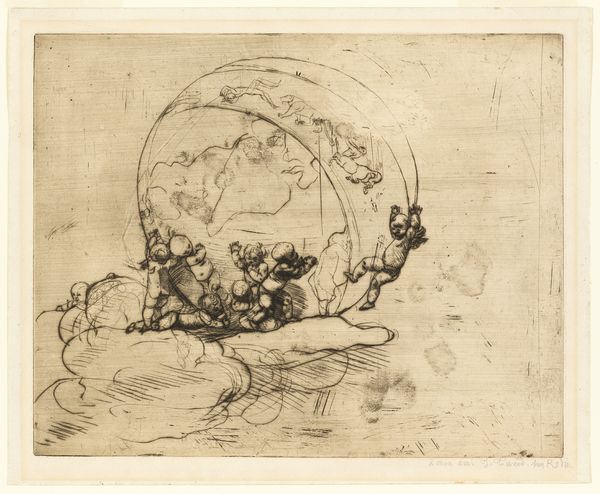
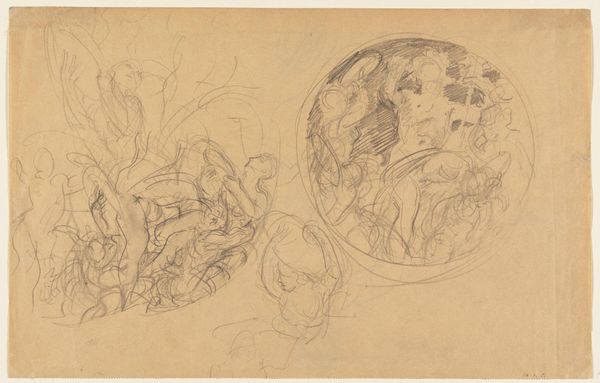
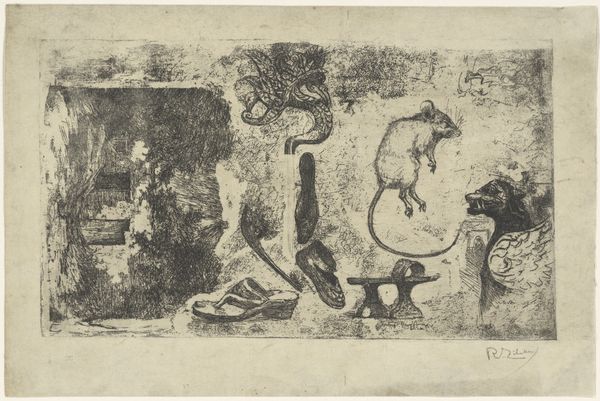
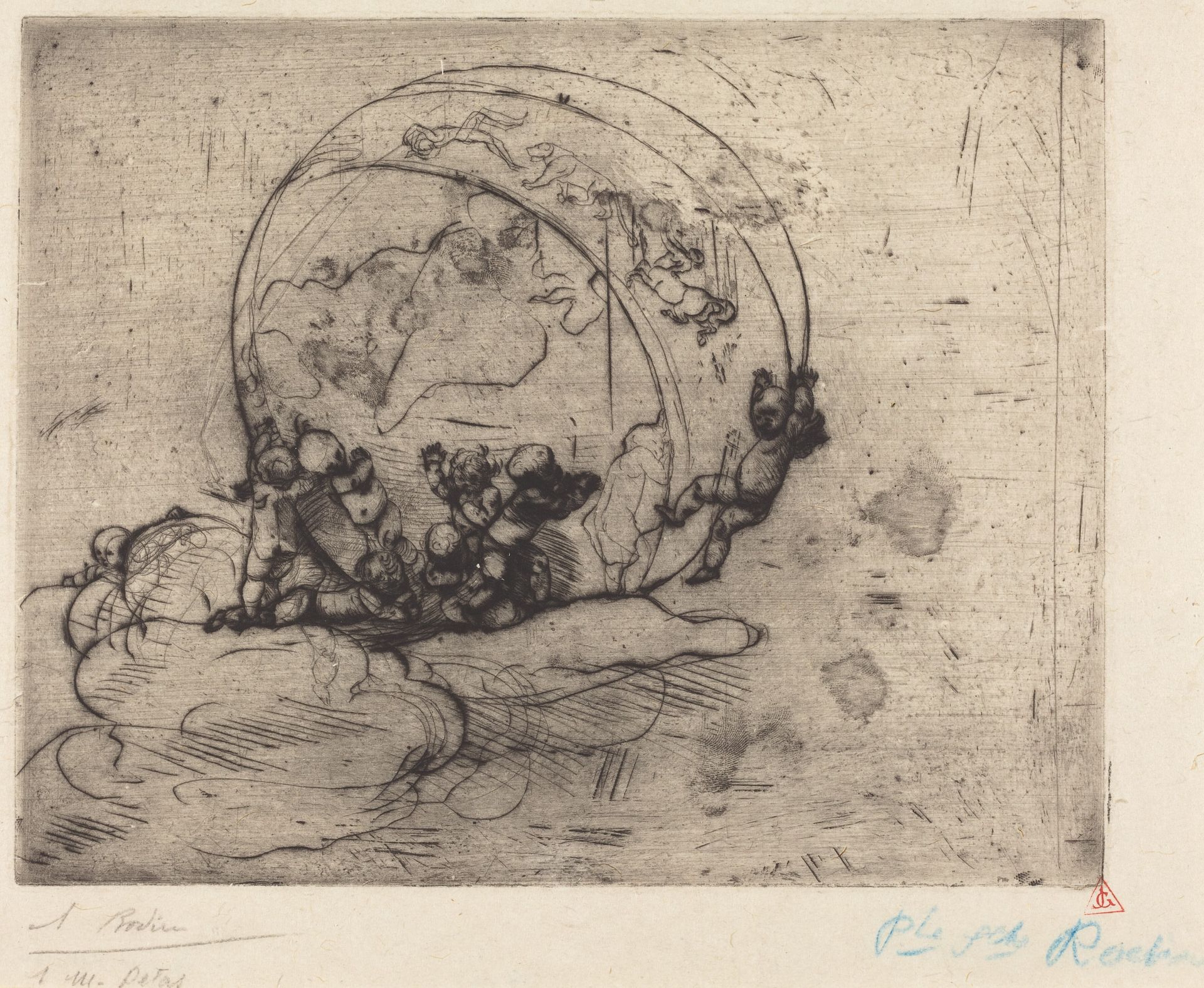
Auguste Rodin created this print, "Love Turning the World", using etching, a process dating back centuries. It involves covering a metal plate with a waxy ground, scratching an image into it, and then bathing the plate in acid, which bites into the exposed lines. The plate would have been prepared with care, then inked and printed onto paper, bearing the marks of its making. Notice the network of fine lines that define the cherubic figures struggling to turn the globe. These are not spontaneous gestures; they are the product of labor. This intaglio printmaking technique, in contrast to sculpture, is more easily reproducible, and lends itself to distribution. The work hints at the tension between manual skill and industrialized production, as Rodin sought to explore love as a force shaping human destiny. Though made with traditional methods, Rodin's print allowed his art to reach a wider audience, beyond the elite circles of sculpture patronage.
Les Amours Conduisant le Monde (Love Turning the World)
1881


Artwork details
- Medium
- drawing, print, etching, intaglio, pencil, engraving
- Dimensions
- plate: 20.2 × 25.4 cm (7 15/16 × 10 in.) sheet: 24.6 × 33.6 cm (9 11/16 × 13 1/4 in.) mount (irregular): 28.5 × 37.6 cm (11 1/4 × 14 13/16 in.)
- Copyright
- National Gallery of Art: CC0 1.0
Tags
Comments
Share your thoughts
About this artwork
Auguste Rodin created this print, "Love Turning the World", using etching, a process dating back centuries. It involves covering a metal plate with a waxy ground, scratching an image into it, and then bathing the plate in acid, which bites into the exposed lines. The plate would have been prepared with care, then inked and printed onto paper, bearing the marks of its making. Notice the network of fine lines that define the cherubic figures struggling to turn the globe. These are not spontaneous gestures; they are the product of labor. This intaglio printmaking technique, in contrast to sculpture, is more easily reproducible, and lends itself to distribution. The work hints at the tension between manual skill and industrialized production, as Rodin sought to explore love as a force shaping human destiny. Though made with traditional methods, Rodin's print allowed his art to reach a wider audience, beyond the elite circles of sculpture patronage.
Comments
Share your thoughts