About this artwork
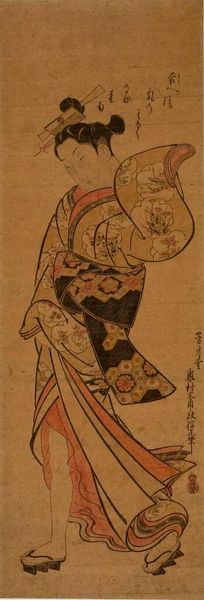
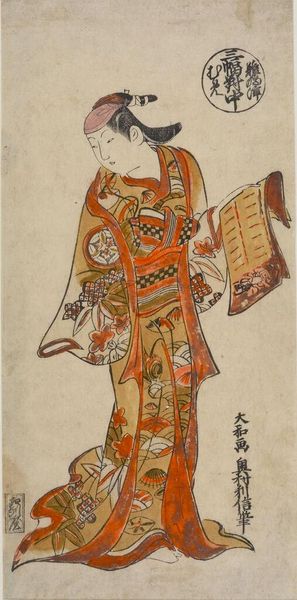
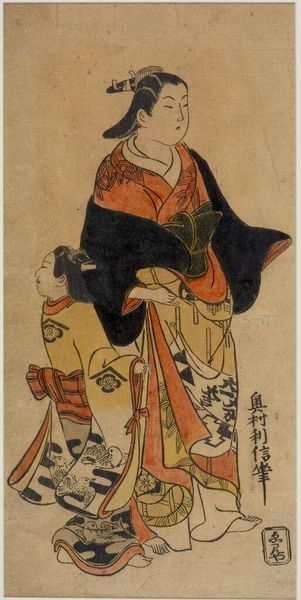
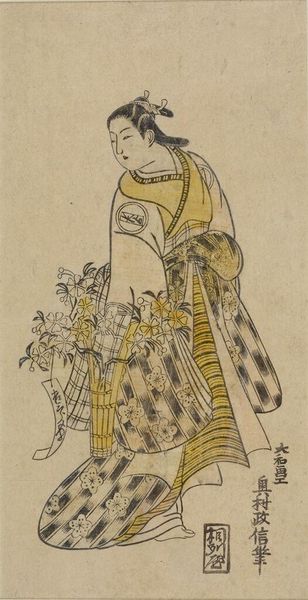
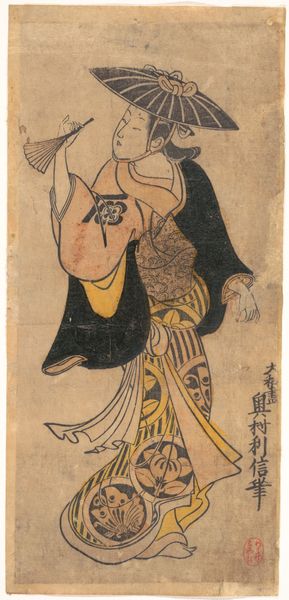
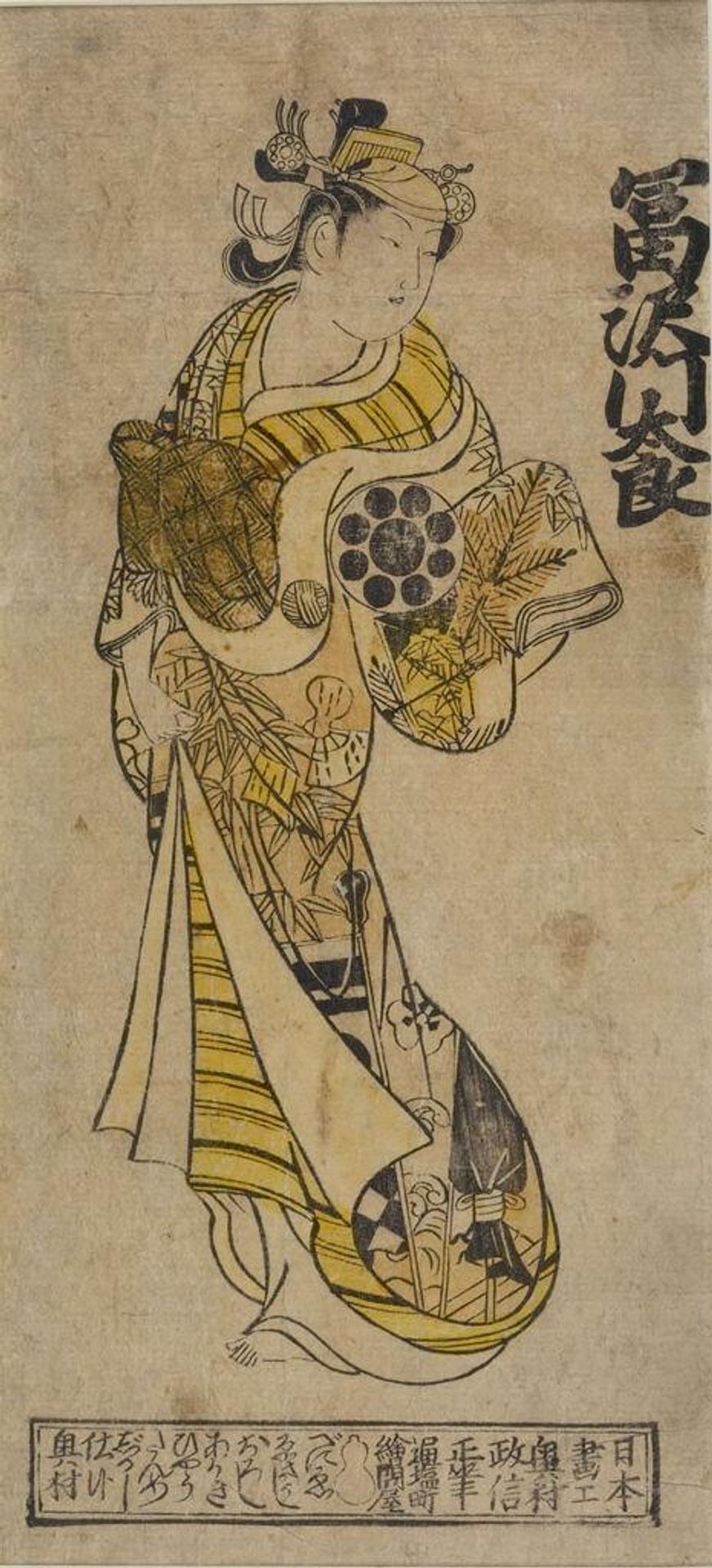
Curator: This print by Okumura Masanobu portrays the actor Tomizawa Montarō in the guise of an oiran, a high-ranking courtesan. Editor: The intricate patterns and the deliberate use of line give it a striking, almost dreamlike quality. Curator: Yes, and this blurring of gender roles, with the actor portraying a female character, raises important questions about identity and performance in Edo-period Japan. Kabuki theater, in particular, often challenged social norms through cross-dressing and the portrayal of marginalized figures. Editor: Absolutely, and the artist's focus on the actor's costume, the kimono and elaborate headdress, elevates the print into a study of form and design. Curator: Placing this print within the broader history of gender and representation provides a critical lens through which to examine not only the artwork itself, but the complex societal structures that shaped its creation and reception. Editor: Indeed, and analyzing those forms allows us to appreciate how artists reflected—and sometimes subverted—those very structures.
Actor Tomizawa MontarÅ as an Oiran
Possibly 1735


Artwork details
- Dimensions
- Paper: H. 32.0 cm x W. 14.9 cm (12 5/8 x 5 7/8 in.)
- Location
- Harvard Art Museums
- Copyright
- CC0 1.0
Comments
Share your thoughts
About this artwork
Curator: This print by Okumura Masanobu portrays the actor Tomizawa Montarō in the guise of an oiran, a high-ranking courtesan. Editor: The intricate patterns and the deliberate use of line give it a striking, almost dreamlike quality. Curator: Yes, and this blurring of gender roles, with the actor portraying a female character, raises important questions about identity and performance in Edo-period Japan. Kabuki theater, in particular, often challenged social norms through cross-dressing and the portrayal of marginalized figures. Editor: Absolutely, and the artist's focus on the actor's costume, the kimono and elaborate headdress, elevates the print into a study of form and design. Curator: Placing this print within the broader history of gender and representation provides a critical lens through which to examine not only the artwork itself, but the complex societal structures that shaped its creation and reception. Editor: Indeed, and analyzing those forms allows us to appreciate how artists reflected—and sometimes subverted—those very structures.
Comments
Share your thoughts