About this artwork
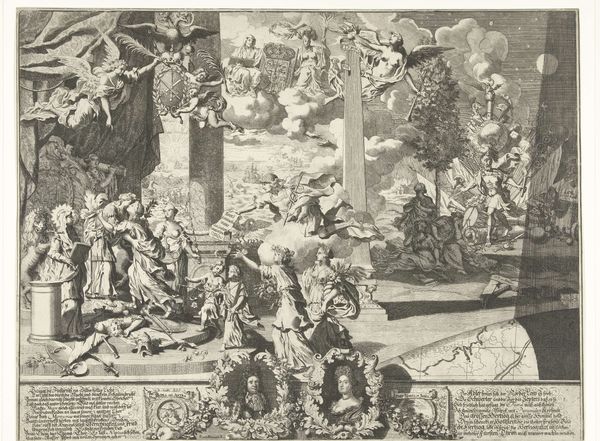
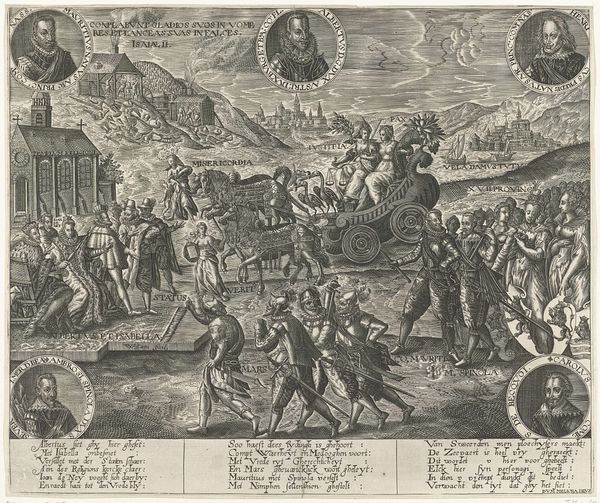
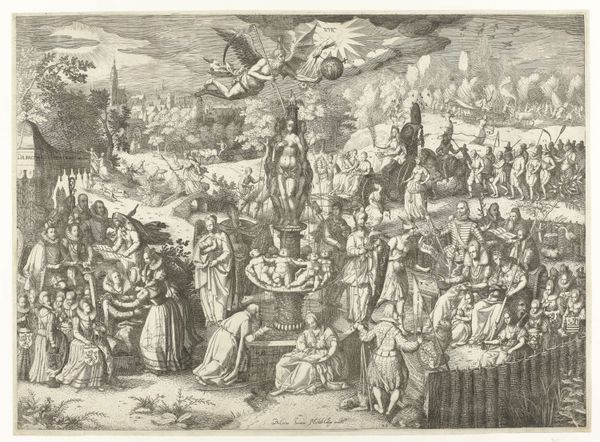
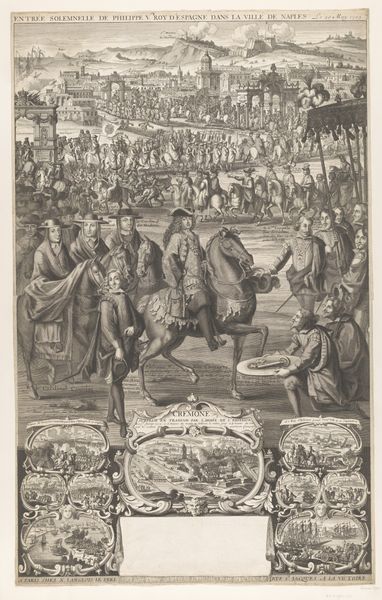
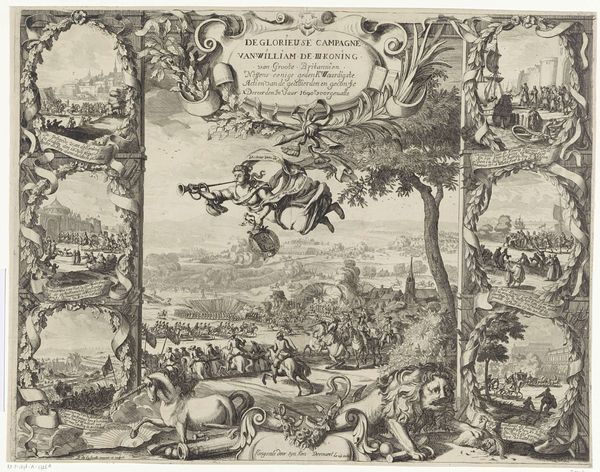
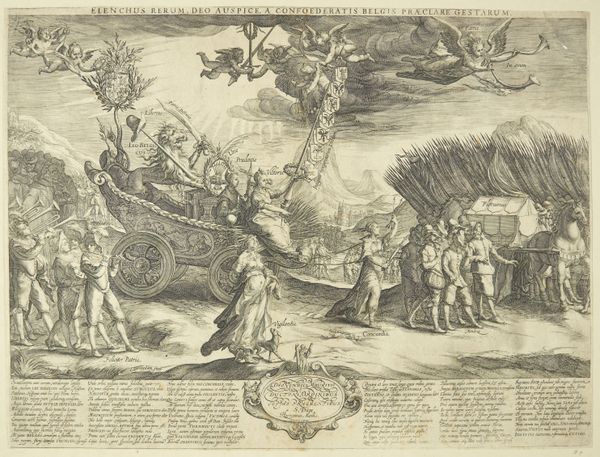
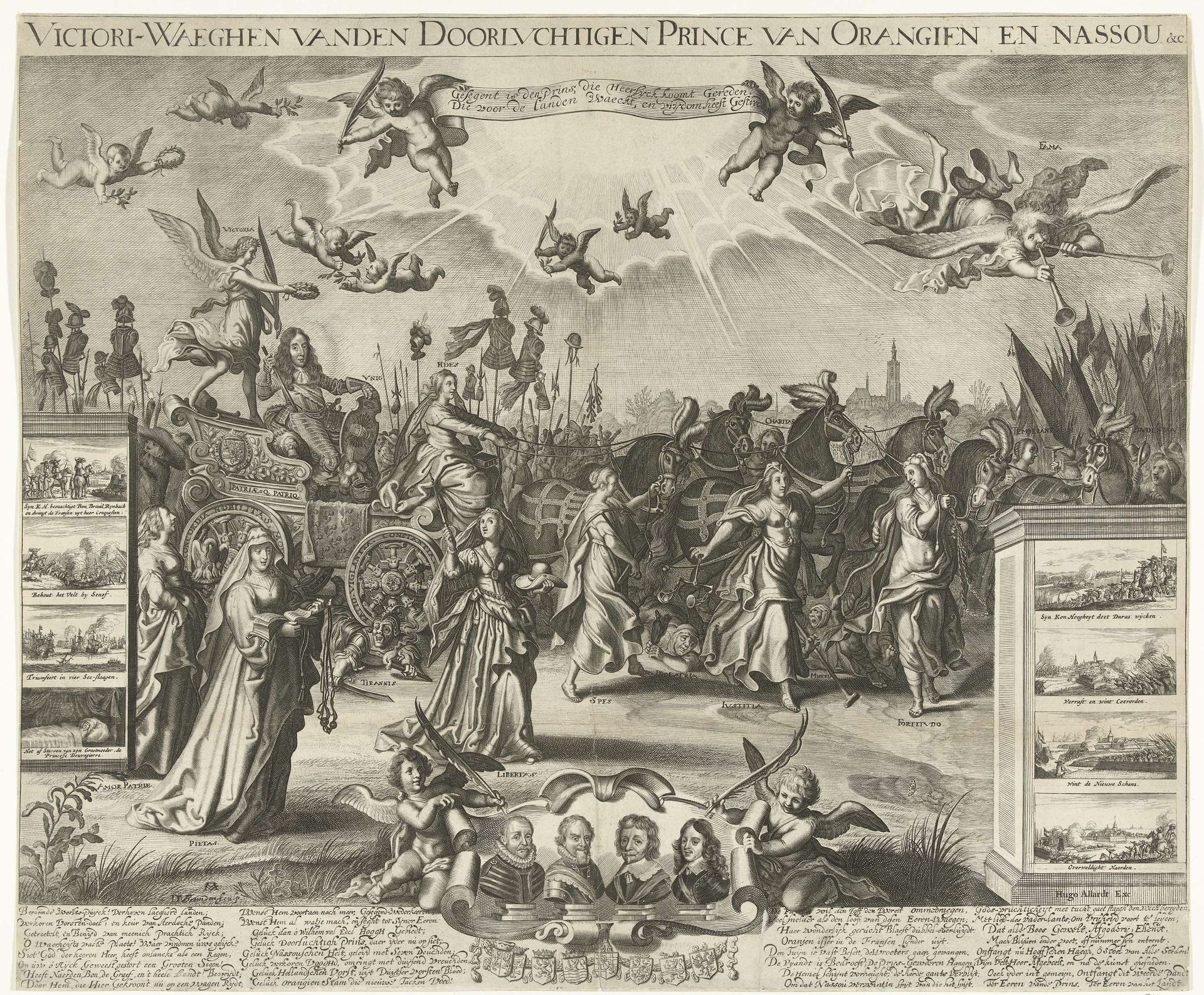
Daniël van den Bremden created this print titled 'Triumph of the Prince of Orange' in 1675 using etching. This print presents Prince William III as a triumphant hero, a clear piece of political propaganda designed to bolster his image. The allegorical figures and classical references elevate William's status, associating him with victory and divine favor. Consider the context: The Dutch Republic was a major European power, deeply involved in trade, colonization, and warfare. William's role as Stadtholder was crucial, and images like this helped solidify his power base among the population. Prints like these circulated widely and shaped public opinion. The Rijksmuseum, where this print is housed today, plays a vital role in preserving and interpreting these historical documents. To fully understand this print, we need to delve into the history of the Dutch Republic, studying its political structures, its relationship with the House of Orange, and the role of visual culture in shaping national identity. Art history is as much about understanding the past as it is about interpreting the present.
Triomfwagen van de prins van Oranje, 1675
1630 - 1675

Daniël van den Bremden
1587Location
RijksmuseumArtwork details
- Medium
- engraving
- Dimensions
- height 458 mm, width 550 mm
- Location
- Rijksmuseum
- Copyright
- Rijks Museum: Open Domain
Tags
Comments
Share your thoughts
About this artwork
Daniël van den Bremden created this print titled 'Triumph of the Prince of Orange' in 1675 using etching. This print presents Prince William III as a triumphant hero, a clear piece of political propaganda designed to bolster his image. The allegorical figures and classical references elevate William's status, associating him with victory and divine favor. Consider the context: The Dutch Republic was a major European power, deeply involved in trade, colonization, and warfare. William's role as Stadtholder was crucial, and images like this helped solidify his power base among the population. Prints like these circulated widely and shaped public opinion. The Rijksmuseum, where this print is housed today, plays a vital role in preserving and interpreting these historical documents. To fully understand this print, we need to delve into the history of the Dutch Republic, studying its political structures, its relationship with the House of Orange, and the role of visual culture in shaping national identity. Art history is as much about understanding the past as it is about interpreting the present.
Comments
Share your thoughts